#TOP1

Aerospace propulsion technology is the cornerstone of modern flight, defining the limits of speed, altitude, payload capacity, and fuel efficiency. Whether you are evaluating systems for commercial aviation, defense applications, or the burgeoning small-satellite launch market, selecting the right propulsion architecture is a high-stakes decision. Unlike consumer electronics, propulsion technology requires a deep understanding of thermodynamic cycles, material science, and mission-specific performance metrics. This guide is designed to help procurement specialists and engineers navigate the complex landscape of jet engines, rocket motors, and emerging electric propulsion systems to ensure mission success and operational longevity.
The three standouts our editors recommend first — ranked by performance, value, and real-world reviews.





Secrets of Antigravity Propulsion: Tesla, UFOs, and Classified Aerospace Technology
| SELLER | SELLER SCORE | AMAZON FULFILLED | PRIME | FREE SHIPPING |
|---|---|---|---|---|
| Amazon.com | 9.68 | Yes | Yes | Yes |
Late one night, I finally sat down to dive into the fringe science contained within these pages, and it is quite the rabbit hole. Secrets of Antigravity Propulsion offers a deep, speculative look into the intersection of Tesla’s theories, unidentified aerial phenomena, and the high-stakes world of classified aerospace tech. Since this is a used copy, I was initially worried about the physical state, but the book arrived in good condition and feels sturdy enough for a serious collector. It is a fascinating read if you enjoy exploring the boundaries of physics and the mysteries of advanced propulsion systems. At twenty-four dollars, it serves as an intriguing addition to any library focused on unconventional science and historical mysteries.


| SELLER | SELLER SCORE | AMAZON FULFILLED | PRIME | FREE SHIPPING |
|---|---|---|---|---|
| LiquidationFactor | 9.91 | No | No | No |

Fundamental Concepts of Liquid-Propellant Rocket Engines (Springer Aerospace Technology)
| SELLER | SELLER SCORE | AMAZON FULFILLED | PRIME | FREE SHIPPING |
|---|---|---|---|---|
| Ibook USA | 9.93 | Yes | Yes | Yes |
Springer’s Fundamental Concepts of Liquid-Propellant Rocket Engines stands as a vital technical cornerstone for anyone serious about aerospace propulsion. This text from the Springer Aerospace Technology series cuts through the complexity of fluid dynamics and combustion to provide a rigorous foundation for aspiring engineers. While many textbooks gloss over the practicalities of propellant management, this volume maintains a professional depth that is essential for academic or industrial research. It is a substantial resource that feels less like a casual read and more like a long-term reference tool for your technical library. At its current price point, it offers a high level of specialized knowledge that is difficult to find in more generalized science books.
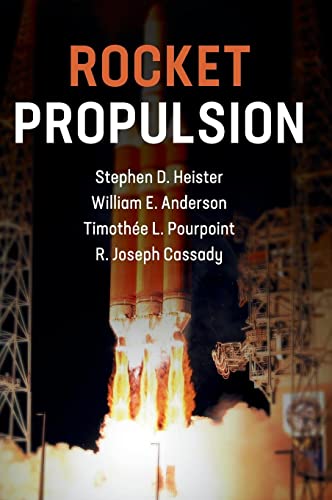
Rocket Propulsion (Cambridge Aerospace Series, Series Number 47)
| SELLER | SELLER SCORE | AMAZON FULFILLED | PRIME | FREE SHIPPING |
|---|---|---|---|---|
| Amazon.com | 9.68 | Yes | Yes | Yes |
Most people assume that mastering orbital mechanics requires a lifetime of trial and error, but this text offers a structured shortcut through the complexities of spaceflight. As part of the prestigious Cambridge Aerospace Series, Rocket Propulsion serves as a rigorous deep dive into the physics and engineering required to move objects through the vacuum of space. It isn't just a casual read. It is a technical cornerstone for anyone serious about the mechanics of propulsion systems. While the subject matter is undeniably dense, the academic pedigree behind the writing ensures that the information is presented with unparalleled precision. If you are looking to move beyond basic theory and into the actual mathematics of thrust and trajectory, this volume provides the essential framework you need.


Theory of Aerospace Propulsion (Aerospace Engineering)
| SELLER | SELLER SCORE | AMAZON FULFILLED | PRIME | FREE SHIPPING |
|---|---|---|---|---|
| Amazon.com | 9.68 | Yes | Yes | Yes |
Serious aerospace engineering students and propulsion specialists require this text to bridge the gap between fundamental physics and complex engine mechanics. Butterworth-Heinemann has produced a foundational resource that serves as a rigorous roadmap through the mathematical and physical intricacies of flight propulsion. Unlike surface-level introductory texts, this volume dives deep into the core theoretical frameworks necessary for advanced academic study or professional design work. While the price point reflects its status as a specialized technical asset, the depth of information provided makes it a vital addition to any high-level engineering library. It is a dense, authoritative guide that prioritizes technical accuracy over simplified explanations, making it indispensable for anyone serious about mastering the science of thrust.

Future Spacecraft Propulsion Systems and Integration: Enabling Technologies for Space Exploration (Springer Praxis Books)
| SELLER | SELLER SCORE | AMAZON FULFILLED | PRIME | FREE SHIPPING |
|---|---|---|---|---|
| Amazon.com | 9.68 | Yes | Yes | Yes |
This volume stands as a definitive technical pillar for aerospace engineers and deep-space researchers. Springer has delivered a rigorous deep dive into the enabling technologies required to move beyond current orbital limitations. Instead of focusing on basic mechanics, this text tackles the complex integration of next-generation propulsion systems that will actually make long-distance space exploration viable. It is a dense, specialized resource that prioritizes high-level engineering concepts over surface-level summaries. While the price point reflects its status as a professional academic reference, the depth of insight into future spacecraft architecture makes it an essential acquisition for any serious propulsion laboratory or advanced aerospace curriculum. It is less a casual read and more a roadmap for the future of interstellar travel.


New Aerospace Technologies: antigravity propulsion
| SELLER | SELLER SCORE | AMAZON FULFILLED | PRIME | FREE SHIPPING |
|---|---|---|---|---|
| Amazon.com | 9.68 | Yes | Yes | Yes |
You might initially roll your eyes at a title as radical as antigravity propulsion, but this book dives into the theoretical frontiers that most mainstream science ignores. It is rare to find a text that tackles such high-concept aerospace concepts without immediately feeling like pure science fiction. Instead, it approaches the complexities of advanced propulsion through a technical lens that challenges your understanding of physics. Whether you are a dedicated enthusiast of aerospace engineering or just someone fascinated by the future of flight, this volume offers a compelling deep dive into the mechanics of what comes next. It is a thought-provoking read that stays grounded in its exploration of the impossible.

| SELLER | SELLER SCORE | AMAZON FULFILLED | PRIME | FREE SHIPPING |
|---|---|---|---|---|
| Amazon.com | 9.68 | Yes | Yes | Yes |

Aerospace Propulsion Systems
| SELLER | SELLER SCORE | AMAZON FULFILLED | PRIME | FREE SHIPPING |
|---|---|---|---|---|
| Book Depository US | 9.95 | No | No | No |
Wiley’s Aerospace Propulsion Systems stands as a definitive technical resource for anyone serious about flight mechanics. This isn't a casual read for hobbyists. It is a deep dive into the complex physics and engineering principles that drive modern engines. While the subject matter is dense, the clarity provided by a publisher like Wiley ensures that the information remains structured and authoritative. It serves as a long-term investment for students or professionals needing a reliable reference on their desks. Since it usually ships within a few business days, you won't be waiting long to start mastering the intricacies of propulsion technology. It is a solid, essential addition to any specialized engineering library.

Fundamentals of Jet Propulsion with Applications (Cambridge Aerospace Series, Series Number 17)
| SELLER | SELLER SCORE | AMAZON FULFILLED | PRIME | FREE SHIPPING |
|---|---|---|---|---|
| Amazon.com | 9.68 | Yes | Yes | Yes |
An aerospace engineering student stares at a complex propulsion diagram, struggling to bridge the gap between theoretical thermodynamics and real-world engine performance. This volume from the Cambridge Aerospace Series serves as that essential bridge, offering a rigorous deep dive into the mechanics of jet propulsion. Unlike introductory texts that gloss over the math, this book tackles the core physics and practical applications necessary for advanced study. It feels less like a dry textbook and more like a professional roadmap for anyone serious about flight technology. Whether you are preparing for specialized exams or designing next-generation turbine components, the depth provided here ensures you aren't just memorizing formulas, but actually understanding the fluid dynamics at play.

Airbreathing Propulsion: An Introduction (Springer Aerospace Technology)
| SELLER | SELLER SCORE | AMAZON FULFILLED | PRIME | FREE SHIPPING |
|---|---|---|---|---|
| Amazon.com | 9.68 | Yes | Yes | Yes |
Dense mathematical proofs and intricate thermodynamic diagrams fill the pages of this Springer Aerospace Technology volume. Airbreathing Propulsion: An Introduction serves as a rigorous deep dive for anyone serious about the mechanics of jet engines and gas turbines. Rather than skimming the surface, this text forces you to confront the complex physics that drive modern flight. It is a specialized resource that feels less like a casual read and more like a foundational tool for an engineer's desk. While the technical depth is intense, the structured approach makes it an essential acquisition for students or professionals looking to master the nuances of propulsion systems. It is a high-level academic investment that delivers exactly what its specialized title promises.


Space Nuclear Fission Electric Power Systems (Space Nuclear Propulsion and Power)
| SELLER | SELLER SCORE | AMAZON FULFILLED | PRIME | FREE SHIPPING |
|---|---|---|---|---|
| Academic Book Solutions | 9.89 | No | No | No |
Astrophysics students and aerospace engineers will find this deep dive into nuclear propulsion absolutely indispensable for understanding the future of deep-space exploration. Polaris Books has provided a technical resource that tackles the complex intersection of fission energy and spacecraft power requirements. Since this is a used copy, you are getting a high-level academic text at a much more accessible price point than a brand-new edition. The book arrives in good condition, making it a reliable addition to a professional or academic library. It skips the surface-level fluff and gets straight into the mechanics of how nuclear fission can actually drive the next generation of interstellar travel, which is exactly what a serious researcher needs.

Solid Propellant Chemistry, Combustion, and Motor Interior Ballistics (Progress in Astronautics and Aeronautics)
| SELLER | SELLER SCORE | AMAZON FULFILLED | PRIME | FREE SHIPPING |
|---|---|---|---|---|
| Amazon.com | 9.68 | Yes | Yes | Yes |
The weighty, technical density of this AIAA publication immediately signals that you are holding a cornerstone of aerospace engineering. This isn't a casual read. It is a deep dive into the complex mechanics of solid propellant chemistry and the intricate physics of motor interior ballistics. Since this is a used copy in good condition, you get access to high-level aeronautics research without the brand-new premium price tag. It serves as a vital resource for students or professionals needing to master combustion processes and propulsion dynamics. If you are building a specialized library for astronautics, this volume provides the rigorous academic foundation required for serious propulsion studies.

The first step in selecting propulsion technology is a rigorous analysis of the mission profile. Propulsion is never 'one size fits all.' For subsonic commercial transport, the priority is high bypass ratios to maximize fuel efficiency and minimize noise pollution. Conversely, for supersonic interceptors or high-speed reconnaissance, the focus shifts to afterburning capabilities and high exhaust velocities. If your application involves orbital deployment, you must distinguish between high-thrust chemical propulsion for launch stages and high-efficiency, low-thrust electric propulsion (such as Hall-effect thrusters) for long-duration satellite station-keeping. Always define your required Delta-V, thrust-to-weight ratio, and operational ceiling before evaluating specific hardware.
Two of the most critical metrics in propulsion are Specific Impulse (Isp) and Thrust Density. Specific Impulse is essentially the 'fuel economy' of a propulsion system, measuring how much thrust is produced per unit of propellant consumed. High Isp is vital for deep-space exploration where every gram of mass counts. However, high Isp often comes at the cost of low thrust. If your mission requires overcoming gravity during a launch phase, you must prioritize Thrust Density—the amount of force produced relative to the engine's physical size and weight. A balanced procurement strategy weighs these two factors against the total mass budget of the vehicle.
Propulsion systems operate in some of the most extreme environments known to engineering. The ability of a system to manage heat is a primary indicator of its reliability and lifespan. When evaluating turbine engines, look closely at the cooling technologies used in the high-pressure turbine blades and the composition of the single-crystal superalloys. In rocket propulsion, examine the regenerative cooling capabilities of the nozzle and combustion chamber. A technology that lacks robust thermal management will suffer from premature component fatigue, leading to catastrophic failure or high maintenance overhead.
Modern procurement must account for the logistical and environmental footprint of the propellant. Traditional kerosene-based fuels (RP-1) are reliable but carry significant carbon footprints and logistical complexities. Moving toward Liquid Methane (LCH4) offers a middle ground of higher efficiency and easier soot management, while Liquid Hydrogen (LH2) provides unparalleled Isp at the cost of extreme cryogenic storage requirements. Furthermore, for the emerging electric aviation sector, the availability of high-density battery technology or hydrogen fuel cells is the primary bottleneck. Ensure your chosen propulsion system aligns with the available fueling infrastructure and long-term environmental regulations.
The initial acquisition cost of a propulsion system is often dwarfed by its Total Cost of Ownership (TCO). Evaluate the Mean Time Between Overhauls (MTBO) and the availability of modular components. Systems designed with 'Line Replaceable Units' (LRUs) allow for faster turnaround times and reduced downtime. In the aerospace sector, a propulsion system that is slightly more expensive upfront but offers significantly longer service intervals and easier diagnostic integration will almost always provide a better return on investment.
Quick answers about Aerospace Propulsion Technology before you buy.
Share of top-ranked products by brand, from our editorial analysis.
We've carried out a comprehensive analysis of 13 reviews on Aerospace Propulsion Technology, using our selection criteria to identify the best options in the categories. Our findings reveal that most customers typically select Aerospace Propulsion Technology priced around $79.68, with top brands including bear & company, cambridge university press, butterworth-heinemann, wiley and springer and addison-wesley publishing company.
Our team of expert editors reviewed these high-quality items and handpicked the top 13 Aerospace Propulsion Technology for your consideration. We've also done extensive research on numerous sellers, identifying the best ones in the categories category — including amazon.com, book depository us and ibook usa and liquidationfactor.
We are dedicated to assisting our users in finding the right technology Products based on their needs, saving them considerable time when choosing which Aerospace Propulsion Technology to buy. We take pride in the number of satisfied users we've helped through our thorough and insightful reviews.
Compare the top 13 picks at a glance — select a column to sort.


