Understanding Spine and Stiffness
The most vital technical specification in any arrow is the 'spine.' Spine refers to the longitudinal stiffness of the arrow shaft. When you release a bowstring, the arrow undergoes a momentary bending force known as dynamic oscillation. If the spine is too weak (too flexible), the arrow will wobble excessively, leading to poor accuracy and potential gear damage. If the spine is too stiff, the arrow won't flex enough to clear the bow riser, also resulting in erratic flight. For target archery, you might prioritize a consistent spine for repeatable accuracy, whereas hunting requires a spine that can handle the high-impact energy of a heavy broadhead without shattering.
Material Composition: Carbon vs. Aluminum
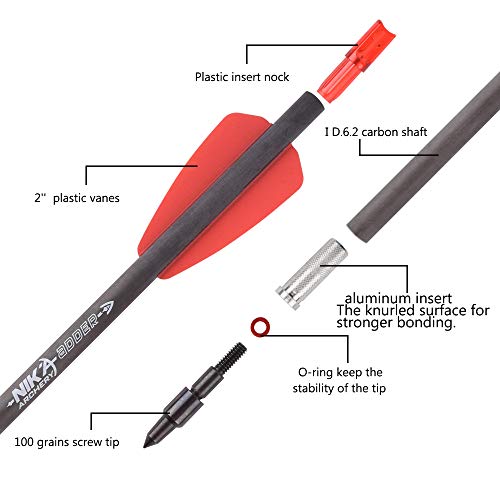
Modern archery has been revolutionized by carbon fiber technology. Carbon arrows are the industry standard because they are lightweight, incredibly fast, and highly durable. They allow for higher arrow speeds, which flattens the trajectory—a massive advantage for hunters. Aluminum arrows, while heavier, offer unmatched straightness and consistency, which is why they are often favored by elite competitive target archers. Some high-end shafts use a hybrid construction, featuring an aluminum core wrapped in carbon. This provides the weight and straightness of metal with the speed and impact resistance of carbon, making them the gold standard for serious hunters.
Weight and FOC (Front of Center)
Weight is a balancing act. Heavier arrows carry more momentum and penetrate deeper into targets, which is essential for hunting large game. However, heavier arrows move slower, meaning you have to account for more 'drop' over long distances. A critical concept to master is FOC, or Front of Center. This refers to the percentage of the arrow's total weight located in the front half of the shaft. A higher FOC (achieved by using heavier points or inserting weights into the shaft) creates a more stable flight path, especially in windy conditions, and improves penetration during a hunt. For target shooting, a lower, more balanced FOC might be preferred for ease of handling.
Diameter and Wind Drift
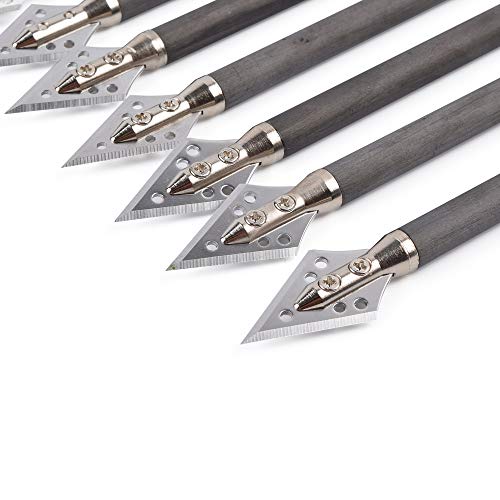
When choosing an arrow, consider the shaft diameter. Micro-diameter arrows are thinner and much more aerodynamic, meaning they are less affected by crosswinds. This is a significant advantage for long-range target shooting and field archery. However, for hunting, many archers prefer a slightly larger diameter to maximize 'cutting surface' upon impact. While thinner arrows penetrate deeper, wider arrows create a larger wound channel. You must decide whether your priority is wind resistance and speed or maximum impact trauma.
Fletching and Stabilization
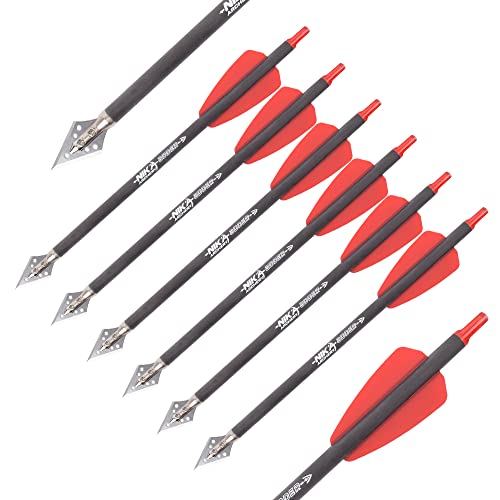
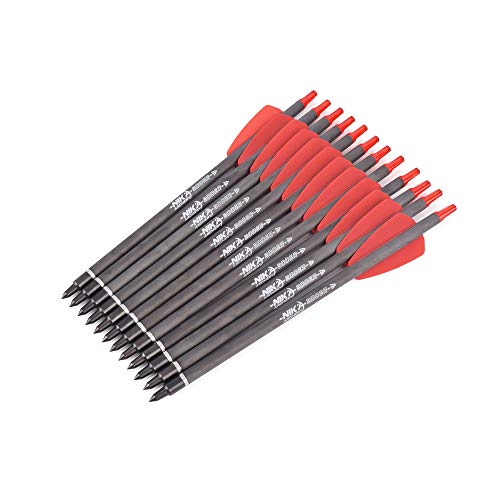
The vanes (fletching) on your arrow act as the stabilizers. Large, high-profile vanes provide more drag, which helps stabilize the arrow quickly after launch—ideal for beginners or windy outdoor conditions. Low-profile, small vanes reduce drag and increase arrow speed, which is preferred by experienced shooters looking for maximum velocity. When selecting arrows, consider if you are buying them pre-fletched or if you plan to custom-build your setup, as the fletching choice will ultimately dictate the arrow's flight characteristics.