Understanding Nock Types and Engagement
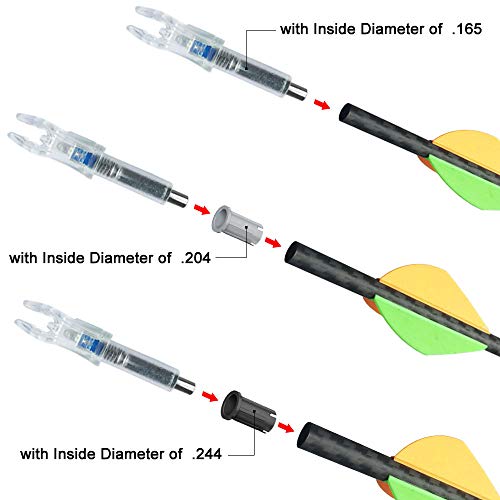
The first decision you must make is determining which style of nock fits your specific bow setup. Linpeng offers various configurations, but they generally fall into two categories: integral nocks and insert nocks. Integral nocks are molded directly onto the end of the arrow shaft, providing a seamless, lightweight connection that is ideal for traditional or recreational archery. Insert nocks, on the other hand, are pressed into the shaft. These are often preferred by competitive archers because they allow for easier replacement if a nock is damaged during a shot, and they can offer a more secure fit for high-poundage bows. When choosing, consider the diameter of your arrow shaft to ensure the nock provides a snug, centered fit that prevents 'walking' during the shot.
Material Composition and Durability
The material of the nock influences how much energy is absorbed versus how much is transferred to the arrow. Most high-performance nocks are crafted from advanced polymers or reinforced plastics designed to withstand the high-velocity impact of a release. You should look for materials that offer a balance of rigidity and slight elasticity. A nock that is too brittle may shatter upon impact with a target or during a heavy draw, while one that is too soft may deform, leading to inconsistent flight paths. Linpeng’s focus on precision molding means you should look for nocks that show no signs of uneven thickness or air bubbles, as these imperfections can cause micro-vibrations that ruin your grouping.
Nock Groove and String Compatibility
One of the most technical aspects of selecting a nock is the groove width. The groove is the notch where the bowstring sits. If the groove is too wide, the arrow may wobble or tilt upon release. If it is too narrow, it can create excessive friction, slowing the arrow and causing premature wear on your string. You must match your nock groove to the thickness of your bowstring. This is especially critical for those using high-performance, multi-strand strings or heavy-duty Dacron strings. A precise fit ensures that the string sits deep and centered in the groove, facilitating a clean, straight launch every time.
Weight and Aerodynamic Impact
In archery, weight is everything. The weight of your nock contributes to the overall 'Front of Center' (FOC) balance of your arrow. A heavier nock can shift the center of gravity toward the rear, which might stabilize certain arrow shafts but can also make the arrow feel sluggish. Conversely, ultra-lightweight nocks are excellent for maximizing speed, but they must be robust enough to handle the kinetic energy of the shot. When choosing your nocks, consider your overall arrow build: if you are shooting heavy, hunting-style arrows, a slightly more substantial nock may provide better stability. If you are shooting for maximum velocity in a target setting, prioritize low-mass nocks that maintain structural integrity.
Color and Visibility for Target Acquisition
While often overlooked, the color of your nocks plays a functional role in target acquisition and tracking. High-visibility colors like neon orange, bright yellow, or fluorescent green make it significantly easier to spot your arrows in the target face, especially during long practice sessions or in low-light conditions. This reduces eye strain and allows for faster scoring. When selecting your set, choose a color that contrasts sharply with your target material to ensure you can quickly identify your groupings and assess your performance.