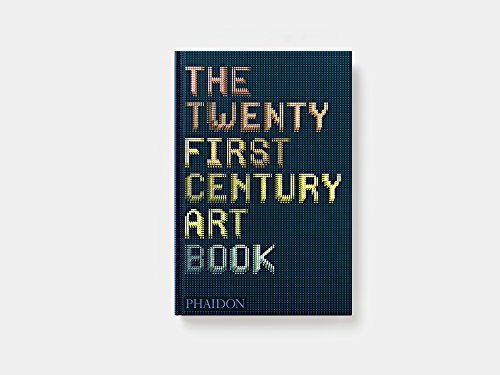
Determine Your Scope: Survey vs. Deep Dive
The first decision you must make is whether you want a macro-view of human creativity or a microscopic look at a specific movement. Phaidon offers massive, comprehensive surveys that attempt to trace the lineage of art from prehistoric cave paintings to the contemporary era. These are ideal for those who want a foundational understanding of how different eras influence one another. On the other hand, their specialized monographs and movement-specific histories focus on a single thread—such as Impressionism or Surrealism—providing a much deeper level of analysis, archival detail, and contextual nuance. If you are building a collection, start with a broad survey and then 'fill in the gaps' with specialized volumes.
Evaluate Visual Density and Production Quality
When purchasing Phaidon, you are not just buying information. You are buying a physical object of art. Because art history is a visual discipline, the quality of color reproduction is paramount. Look closely at the publication's intent: some volumes are 'text-heavy,' designed for serious research where the prose carries the weight, while others are 'image-centric,' prioritizing large-scale, high-fidelity plates that allow you to study brushstrokes and textures. For a home library, a balance of both is best. Ensure the binding and paper stock are suitable for the weight of the book. High-quality art histories are often heavy, oversized volumes that require sturdy construction to prevent spine damage over years of leafing through.
Assess the Curatorial Perspective
Not all art history is written from the same angle. Some Phaidon titles lean toward a traditional Western canon, focusing heavily on the evolution of European and American masters. Others are part of a more modern, globalized effort to re-center art history by highlighting non-Western traditions, indigenous crafts, and contemporary global movements. Before purchasing, check the table of contents to see if the book offers a diverse range of voices or if it adheres to a more classical chronological structure. This will determine if the book serves as a corrective to your existing knowledge or a reinforcement of established historical timelines.
Consider the 'Living History' Factor
Art history is a constantly evolving field. A book published twenty years ago may lack the critical discourse surrounding gender, identity, and post-colonialism that defines modern scholarship. When selecting a volume, look for recent editions or titles that promise a contemporary perspective. A great Phaidon book doesn't just tell you what happened in the past. It explains why those movements still resonate in our current cultural landscape. If you are looking for a gift or a centerpiece for a study, prioritize volumes that integrate modern critical theory with high-quality historical documentation.