#TOP1

Exploring Asian art history is a journey through millennia of spiritual evolution, dynastic shifts, and unparalleled aesthetic mastery. Unlike Western art history, which often follows a linear progression of movements, Asian art history is a complex tapestry of religious influence—primarily Buddhism, Taoism, Confucianism, and Shintoism—intertwined with sophisticated craftsmanship in ceramics, calligraphy, and ink wash painting. Whether you are a scholar looking for deep archival analysis or a casual enthusiast seeking a visual introduction to the Silk Road, selecting the right historical text requires understanding the nuance of regionality and medium.
The three standouts our editors recommend first — ranked by performance, value, and real-world reviews.


History of Art in Japan
| SELLER | SELLER SCORE | AMAZON FULFILLED | PRIME | FREE SHIPPING |
|---|---|---|---|---|
| Amazon.com | 9.68 | Yes | Yes | Yes |
History of Art in Japan serves as a definitive scholarly gateway into one of the world's most visually stunning cultural lineages. Published by Columbia University Press, this volume avoids the fluff of casual coffee table books to provide a rigorous, academic perspective on Japanese aesthetic evolution. Whether you are a student of fine arts or a dedicated enthusiast, the depth of insight offered here makes investment feel incredibly worthwhile. It manages to balance complex historical contexts with a clear narrative flow that keeps you engaged through every era. This isn't just a collection of images. It is a deep dive into the soul of Japanese creativity that stays in your mind long after you close the cover.


Art in China (Oxford History of Art)
| SELLER | SELLER SCORE | AMAZON FULFILLED | PRIME | FREE SHIPPING |
|---|---|---|---|---|
| Amazon.com | 9.68 | Yes | Yes | Yes |
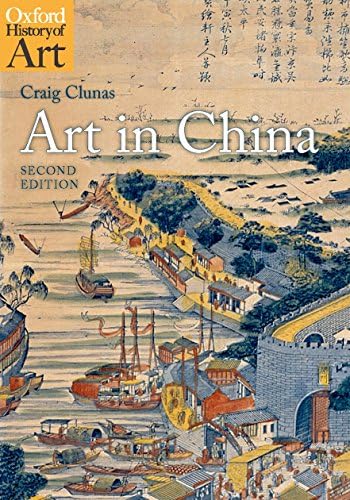
Serious art historians and students of Eastern aesthetics require this volume to bridge the gap between visual beauty and deep cultural context. Published by Oxford University Press, this installment in the renowned Oxford History of Art series offers a sophisticated lens through which to view the vast evolution of Chinese creative expression. It is not a mere coffee table book. It is a rigorous scholarly resource designed for those who want to understand the philosophical and historical threads that tie centuries of craftsmanship together. If you are building a serious academic library or simply want to master the complexities of Chinese art history, this is an essential cornerstone.

A Brief History of the Martial Arts: East Asian Fighting Styles, from Kung Fu to Ninjutsu (Brief Histories)
| SELLER | SELLER SCORE | AMAZON FULFILLED | PRIME | FREE SHIPPING |
|---|---|---|---|---|
| Hachette Book Group | 0.00 | No | No | No |
A Brief History of the Martial Arts offers a concentrated deep dive into combat traditions when most history books provide nothing but vague, surface-level generalizations. Instead of getting lost in massive, expensive encyclopedias, you get a streamlined digital journey through the evolution of styles ranging from Kung Fu to the secretive arts of Ninjutsu. It is an incredibly accessible way to understand the cultural lineage of East Asian fighting systems without feeling overwhelmed by academic jargon. This ebook serves as a perfect primer for martial arts enthusiasts or history buffs looking to build a foundational knowledge base quickly. It is a smart, low-cost entry point into a complex and fascinating subject.


Tea Ceremony: Explore the unique Japanese tradition of sharing tea (Asian Arts And Crafts For Creative Kids)
| SELLER | SELLER SCORE | AMAZON FULFILLED | PRIME | FREE SHIPPING |
|---|---|---|---|---|
| Amazon.com | 9.68 | Yes | Yes | Yes |
Tea Ceremony by Tuttle Publishing offers a captivating gateway into the meditative world of Japanese tradition for young, creative minds. This book stands out because it transforms a complex cultural practice into an accessible, hands-on experience specifically designed for children. Instead of just reading about history, kids get to engage with the artistic side of the tea ritual, making it a perfect resource for curious learners. It hits that sweet spot between an educational guide and a creative activity book, ensuring that the intricate details of Asian arts and crafts remain engaging rather than overwhelming. If you are looking to introduce your family to new cultural perspectives through tactile learning, this title provides a wonderful, low-cost starting point.

A Companion to Asian Art and Architecture (Blackwell Companions to Art History Book 5)
| SELLER | SELLER SCORE | AMAZON FULFILLED | PRIME | FREE SHIPPING |
|---|---|---|---|---|
| JOHN WILEY AND SONS INC | 0.00 | No | No | No |
Most people assume that a comprehensive art history guide needs to be a heavy, physical tome to feel authoritative, but this digital ebook proves that depth doesn't require shelf space. A Companion to Asian Art and Architecture serves as a sophisticated intellectual anchor for anyone diving into the complexities of Eastern aesthetics. Instead of flipping through hundreds of pages of paper, you get immediate, portable access to high-level scholarly insights. It functions less like a standard textbook and more like a curated digital mentor that you can carry in your pocket. Whether you are a student or a lifelong enthusiast, the ability to download this resource instantly makes it a surprisingly agile tool for serious academic study.

Animated Encounters: Transnational Movements of Chinese Animation, 1940s–1970s (Asia Pop!)
| SELLER | SELLER SCORE | AMAZON FULFILLED | PRIME | FREE SHIPPING |
|---|---|---|---|---|
| Amazon.com | 9.68 | Yes | Yes | Yes |
Picture yourself sitting in a university seminar or a quiet corner of a film archive, trying to untangle the complex web of how Chinese animation traveled across borders during the mid-twentieth century. Animated Encounters provides the exact scholarly roadmap you need to navigate those decades of transnational movement. This University of Hawaii Press release moves beyond simple history to explore the deeper cultural exchanges that shaped the medium between the 1940s and the 1970s. It is a dense, rewarding read for anyone fascinated by the intersection of politics and art history. Instead of a dry timeline, you get a nuanced look at how animation functioned as a global player during a transformative era of Asian pop culture.

Asia is a vast continent with distinct artistic traditions that rarely overlap perfectly. The first decision factor is deciding whether you want a continental overview or a deep dive into a specific culture. If you are interested in the delicate balance of landscape and philosophy, look for texts focusing on East Asian traditions (China, Japan, Korea). If your interest lies in the intricate stone carvings, monumental architecture, and vibrant textiles of the subcontinent, prioritize South Asian studies (India, Pakistan, Sri Lanka). For a different perspective on spiritual iconography and bronze work, Southeast Asian history offers a unique intersection of Hindu and Buddhist influences. Avoid 'general' books that attempt to cover the entire continent in one volume unless you are a beginner, as these often sacrifice necessary depth for breadth.
Art history books generally fall into three categories: visual surveys, formal academic monographs, and thematic studies. Visual surveys are heavy on high-resolution imagery and provide a broad chronological sweep, making them ideal for coffee table collections or introductory learning. Formal monographs are written by specialists and focus on a specific era, artist, or dynasty. These are essential for researchers but can be dense and jargon-heavy. Thematic studies are perhaps the most engaging for modern readers, as they connect art to broader concepts like 'The Role of Zen in Muromachi Period Painting' or 'Silk Road Trade and Iconography.' Choose based on whether you want to see the art, study the technique, or understand the cultural context.
In art history, the quality of the plates and reproductions is non-negotiable. Because much of Asian art relies on subtle gradations of ink, the texture of silk, or the glaze of celadon ceramics, low-quality printing can render a book useless. Look for books that feature full-color reproductions and, ideally, include close-up details of brushwork or sculptural textures. A guide that fails to provide high-fidelity images will prevent you from truly appreciating the nuances of the subject matter. Check the index and the bibliography to ensure the book is supported by recent archaeological findings or museum-grade research.
When reading about Asian art, you are often reading about works that were originally described in classical Chinese, Sanskrit, or Japanese. High-quality history books will provide insightful translations of inscriptions or poems that accompany the artwork. A superior guide does not just tell you what an object looks like. It explains the philosophical 'why' behind the aesthetic. Look for authors who bridge the gap between technical art analysis and the profound spiritual or social motivations that drove the creation of these masterpieces.
Quick answers about Asian Art History before you buy.
Share of top-ranked products by brand, from our editorial analysis.
We've carried out a comprehensive analysis of 321 reviews on Asian Art History, using our selection criteria to identify the best options in the categories. Our findings reveal that most customers typically select Asian Art History priced around $22.56.
Our team of expert editors reviewed these high-quality items and handpicked the top 6 Asian Art History for your consideration..
We are dedicated to assisting our users in finding the right history Products based on their needs, saving them considerable time when choosing which Asian Art History to buy. We take pride in the number of satisfied users we've helped through our thorough and insightful reviews.
Compare the top 6 picks at a glance — select a column to sort.