#TOP1
Exploring the cosmos is no longer a pursuit reserved solely for researchers in high-altitude observatories. From the backyard astronomer tracking Jupiter’s moons to the student diving into the mathematical complexities of general relativity, the field of astrophysics and space science offers a diverse spectrum of tools. Whether you are looking for high-fidelity optical instruments, immersive educational simulations, or deep-dive academic literature, selecting the right equipment requires a nuanced understanding of both the physics involved and your own technical proficiency. This guide is designed to help you navigate the specialized landscape of space science products, ensuring your investment translates into genuine discovery and clarity.
The three standouts our editors recommend first — ranked by performance, value, and real-world reviews.


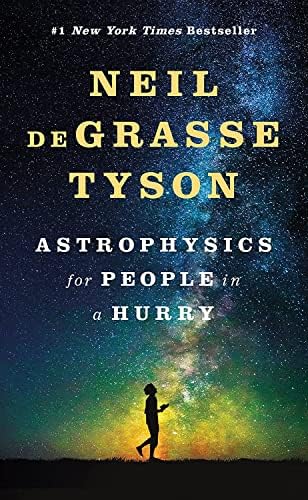
Astrophysics for People in a Hurry
| SELLER | SELLER SCORE | AMAZON FULFILLED | PRIME | FREE SHIPPING |
|---|---|---|---|---|
| Amazon.com | 9.68 | Yes | Yes | Yes |
Astrophysics for People in a Hurry delivers cosmic clarity where most science books offer only dense, impenetrable jargon. I found this W. W. Norton & Company release to be a refreshing departure from the heavy academic texts that usually make space exploration feel like a chore. It is specifically designed to be easy to read, making it an ideal companion for any dedicated bookworm looking to expand their horizons without a massive time commitment. The compact design is a standout feature for me, as it fits perfectly into a carry-on or a small bag for traveling. At just under ten dollars, it provides a high-level overview of the universe that feels both accessible and intellectually stimulating for a busy lifestyle.

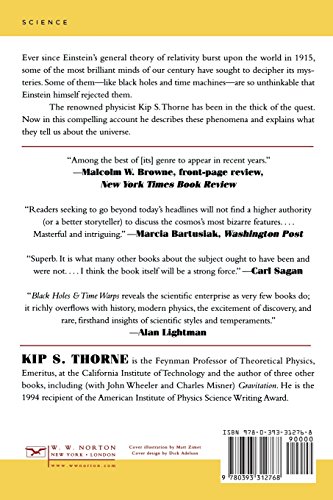
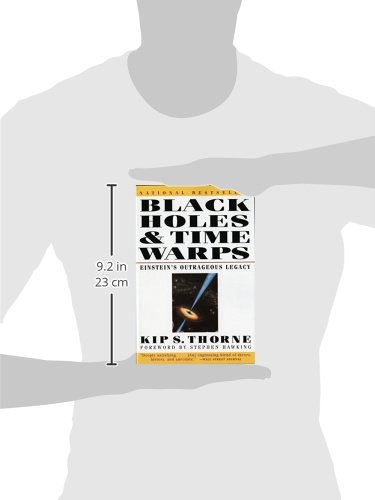
Black Holes and Time Warps: Einstein's Outrageous Legacy (Commonwealth Fund Book Program)
| SELLER | SELLER SCORE | AMAZON FULFILLED | PRIME | FREE SHIPPING |
|---|---|---|---|---|
| Amazon.com | 9.68 | Yes | Yes | Yes |
Most people assume that understanding the fundamental fabric of the universe requires a PhD in theoretical physics, but Kip S. Thorne proves otherwise. This W. W. Norton & Company paperback makes the mind-bending concepts of Einstein's legacy feel surprisingly accessible without stripping away the scientific wonder. Instead of getting lost in dense, impenetrable equations, you get a guided tour through the most outrageous implications of relativity. It is the kind of read that makes you stare at the night sky with a completely different perspective on how time and space actually function. Whether you are a science enthusiast or just someone curious about the mysteries of black holes, this book delivers a profound intellectual journey that remains remarkably readable.


A Universe from Nothing: Why There Is Something Rather than Nothing
| SELLER | SELLER SCORE | AMAZON FULFILLED | PRIME | FREE SHIPPING |
|---|---|---|---|---|
| Amazon.com | 9.68 | Yes | Yes | Yes |
How can the vast complexity of our cosmos emerge from a state of absolute nonexistence? This Atria Books release tackles one of the most profound philosophical and scientific mysteries of our time. It is the kind of heavy-hitting read that forces you to pause and rethink your entire understanding of reality. While this specific copy is a used book, it arrives in good condition, making it an accessible way to dive into deep metaphysical questions without a massive investment. If you are someone who enjoys late-night debates about the origins of existence, this text provides the intellectual framework you need to navigate the void.

Handbook of Space Astronomy and Astrophysics
| SELLER | SELLER SCORE | AMAZON FULFILLED | PRIME | FREE SHIPPING |
|---|---|---|---|---|
| Books & Crafts International | 6.43 | No | No | No |
Serious astrophysics students and researchers require this comprehensive handbook to navigate the complexities of the cosmos. Published by Cambridge University Press, this text serves as a vital reference for anyone diving deep into stellar evolution or galactic dynamics. While this specific copy is a used book, it remains in good condition, making it a much more accessible way to own a high-level academic resource without the prohibitive cost of a brand-new edition. It is currently in stock and ready for immediate study. If you are looking for a foundational pillar for your scientific library, this volume provides the rigorous detail necessary for advanced celestial study.

The first step in any space science purchase is determining whether you are seeking an observational tool, a theoretical resource, or a simulation medium. If your goal is visual astronomy, you must distinguish between 'looking' and 'studying.' Visual observers often prioritize high-contrast optics to see nebulae and star clusters, whereas astrophotographers require specialized tracking mounts and sensitive sensors that can compensate for the Earth's rotation. If you are approaching the field from a pedagogical standpoint, your focus should shift toward high-quality data sets and interactive software that can model gravitational mechanics or orbital trajectories. Understanding your primary intent—be it visual awe, data collection, or mathematical comprehension—is the foundation of your selection process.
For those entering the world of telescopes and optical instruments, the terminology can be overwhelming. Do not be misled by magnification alone. High magnification on a low-quality lens only results in a larger, blurrier image. Instead, focus on aperture. The aperture—the diameter of the primary lens or mirror—is the single most critical factor in astrophysics equipment because it dictates light-gathering capability. A larger aperture allows you to resolve faint, distant objects like galaxies that smaller instruments simply cannot detect. When evaluating telescopes, consider the mounting system as much as the optics. A heavy, high-quality tube is useless if the mount cannot provide the stability required to track a celestial object as it moves across the sky. For precision work, look for equatorial mounts that mimic the Earth's axis, allowing for smoother long-exposure tracking.
Modern astrophysics is increasingly digital. If you are investing in space science software, look for tools that utilize real-world telemetry and astronomical databases. For students and hobbyists, simulation software should offer a balance between intuitive interfaces and rigorous physical accuracy. A good simulation should allow you to manipulate variables such as mass, velocity, and distance to see real-time effects on orbital mechanics or stellar evolution. For those interested in deep-space imaging, software suites that offer advanced 'stacking' capabilities—combining multiple short exposures to reduce noise—are essential for achieving professional-grade results.
When purchasing scientific texts or reference manuals, the value lies in the currency of the data and the depth of the mathematical rigor. Astrophysics is a rapidly evolving field. Ensure that any textbook or reference guide incorporates recent findings from major space missions and recent advancements in particle physics. Look for publishers known for peer-reviewed accuracy rather than general interest science books. For physical equipment, consider the environmental constraints. Space science tools are often used in variable outdoor temperatures and humid conditions. Therefore, weather-resistant coatings on lenses and ruggedized housings for electronic components are not luxuries, but necessities for longevity.
To make the best choice, follow this hierarchy: First, identify your niche (visual, photographic, or theoretical). Second, prioritize aperture and stability over magnification for optical gear. Third, ensure software tools are grounded in actual astronomical data. Finally, always weigh the complexity of the tool against your current expertise to avoid the frustration of overly technical equipment that remains unused.
Quick answers about Astrophysics & Space Science before you buy.
Share of top-ranked products by brand, from our editorial analysis.
We've carried out a comprehensive analysis of 39,664 reviews on Astrophysics & Space Science, using our selection criteria to identify the best options in the categories. Our findings reveal that most customers typically select Astrophysics & Space Science priced around $36.36.
Our team of expert editors reviewed these high-quality items and handpicked the top 4 Astrophysics & Space Science for your consideration..
We are dedicated to assisting our users in finding the right science Products based on their needs, saving them considerable time when choosing which Astrophysics & Space Science to buy. We take pride in the number of satisfied users we've helped through our thorough and insightful reviews.
Compare the top 4 picks at a glance — select a column to sort.


