Capacity and Volume Management
The first decision is determining the necessary capacity. In drag racing, you might prioritize a smaller, lightweight cell to keep the car's center of gravity low and minimize weight. Conversely, for endurance racing, capacity is king. You need enough volume to minimize pit stops. However, do not confuse total volume with 'usable' volume. A high-quality fuel cell will feature an internal bladder or baffle system designed to ensure that even when the tank is at 10% capacity, the pickup remains submerged, preventing fuel starvation during hard acceleration or heavy braking.
Material Construction and Safety Standards
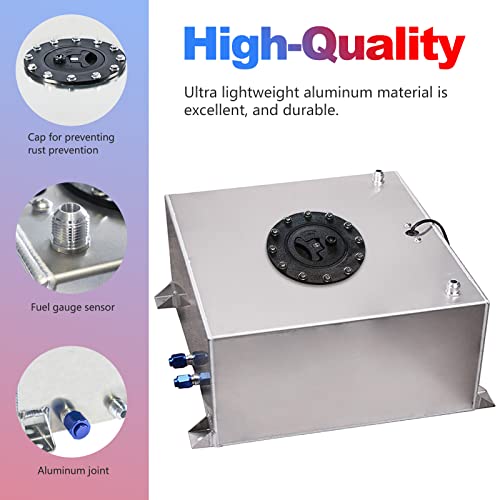
Performance fuel cells generally fall into two categories: rigid aluminum tanks and bladder-style cells. Aluminum tanks are excellent for structural rigidity and are easier to mount in custom chassis configurations, but they lack the impact-absorption qualities of a bladder. Bladder-style cells utilize a specialized, fuel-resistant rubber or polymer liner inside a protective shell. This design is the gold standard for safety in professional racing, as the bladder can deform slightly during an impact, reducing the risk of a catastrophic rupture. If your build is strictly for track use or competition, prioritize bladder-based systems that meet recognized motorsport safety certifications.
Internal Baffling and Pickup Configuration
A fuel cell is only as good as its ability to feed the engine. Look for cells that feature advanced internal baffling. Baffles act as walls that prevent fuel from rushing to one side of the tank during cornering. Without effective baffling, the fuel pump may suck in air, leading to engine hesitation or failure. Additionally, examine the pickup design. High-end cells often feature a 'swirl pot' or a dedicated pickup canister that keeps a small reservoir of fuel constantly surrounding the pump inlet, ensuring a steady stream regardless of the tank's orientation.
Plumbing and Port Integration
Consider how the cell will integrate with your existing fuel system. Most performance cells come with pre-drilled ports for fuel inlets, outlets, and vent lines. Check the size of these ports. If you are running a high-flow dual-pump setup, you will need larger diameter fittings to prevent flow restriction. Furthermore, ensure the cell includes a high-quality vent system. Proper venting is critical to prevent vacuum locks, which can starve the engine of fuel as the level drops.
Mounting and Chassis Integration
Finally, evaluate how the cell will be secured. A fuel cell that moves under load is a safety hazard. Look for cells that include dedicated mounting straps or integrated mounting tabs that allow for a rigid connection to the chassis. For custom builds, ensure the cell's footprint matches your available space, keeping in mind that you will also need room for fuel lines, electrical connections for the pump, and potentially a fuel level sensor for real-time monitoring.