Understanding the Impact of Parasitic Drag
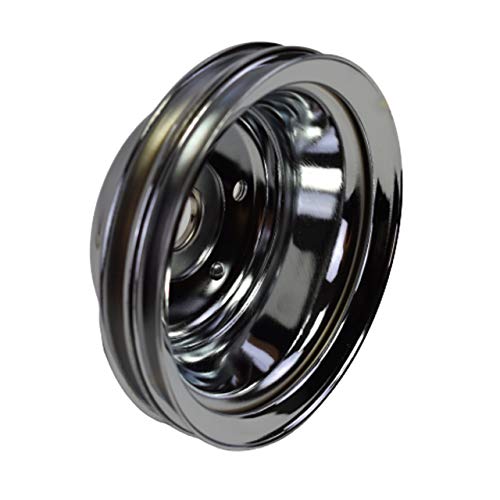
In a high-performance build, every horsepower counts. Standard factory pulleys are often heavy, cast components designed for durability and low cost rather than rotational efficiency. When selecting performance pulleys for a long block, your primary goal should be the reduction of parasitic drag. Lightweight, CNC-machined aluminum pulleys reduce the rotational inertia the engine must overcome to accelerate. This results in faster throttle response and a marginal but measurable increase in net horsepower at the wheels. When evaluating options, look for 'underdrive' or 'overdrive' configurations if you are trying to tune the RPM of your alternator or water pump to match your new power band.
Material Composition and Weight Distribution
The material of the pulley is a key decision factor. High-grade 6061-T6 aluminum is the industry standard for performance builds because it offers an exceptional strength-to-weight ratio. However, for extreme high-RPM applications, some builders look for pulleys with specific weight distributions to minimize harmonic vibrations. A pulley that is too light may lack the mass necessary to dampen certain engine frequencies, potentially leading to belt slap or increased vibration. Conversely, a pulley that is too heavy will act as a parasitic load. Seek out components that utilize precision machining to ensure perfect concentricity, which is vital for preventing belt misalignment and premature bearing failure.
Belt Routing and Tensioning Systems
A common issue when upgrading a long block is that the new geometry of the engine components might interfere with the original belt path. High-performance pulley kits often come as 'accessory drive systems' rather than individual pulleys. These kits frequently include adjustable tensioners or different diameters to ensure the serpentine belt remains seated under high torque loads. If you are building a forced induction engine, look for pulleys specifically designed to handle the increased belt tension required by larger supercharger or turbocharger pulleys. An adjustable tensioner is highly recommended to allow for fine-tuning the belt's grip, preventing slippage during high-boost scenarios.
Compatibility with Harmonic Balancers
One of the most critical technical aspects of selecting pulleys for a long block is ensuring compatibility with your harmonic balancer. The crankshaft snout is the foundation of your entire accessory drive. If you are installing an aftermarket crankshaft or a specialized harmonic balancer, you must ensure the pulley interface matches perfectly. A mismatch here can lead to catastrophic failure of the front main seal or the crankshaft itself. Always verify the bore diameter and the mounting style (such as keyway vs. tapered) before finalizing your purchase. For maximum reliability, consider a pulley/balancer combo that is engineered as a single unit to ensure harmonic dampening is optimized for your specific engine displacement and power goals.