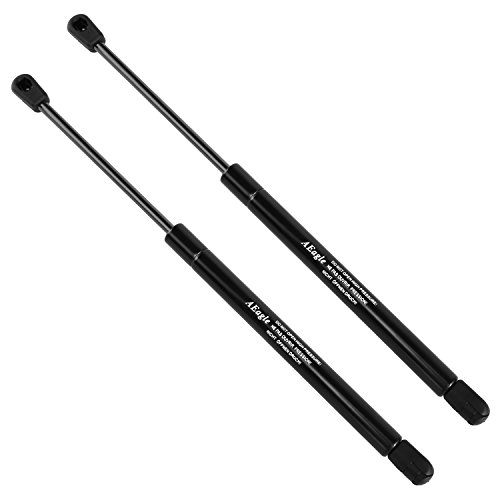
Understanding Pressure Ratings and Force Requirements
The most critical specification for any lift support is the Newton (N) rating, which measures the force the strut exerts. Every vehicle manufacturer specifies a precise force requirement based on the weight of the hatch, the length of the strut, and the geometry of the mounting points. If you select a support with too little force, the liftgate will fail to stay open, potentially crashing down on your cargo or passengers. Conversely, if the force is too high, you risk bending the mounting brackets or making it difficult for a person to close the hatch manually. When browsing replacements, always verify that the Newton rating matches or closely approximates your vehicle's original equipment manufacturer (OEM) specifications.
Rod Material and Corrosion Resistance
The piston rod is the part of the strut that is most exposed to the elements. Because lift supports are often located near the rear of the vehicle, they are frequently subjected to road salt, moisture, and debris. Look for supports featuring high-quality, chrome-plated or polished steel rods. A superior coating prevents pitting and oxidation, which are the primary causes of seal failure. If the rod becomes pitted, it will tear the internal rubber seals every time the strut extends, leading to a rapid loss of gas pressure. For vehicles operated in coastal or snowy climates, prioritizing heavy-duty corrosion-resistant coatings is a non-negotiable factor for longevity.
Seal Integrity and Internal Lubrication
A lift support is essentially a pressurized cylinder containing a specific volume of gas and hydraulic fluid. The quality of the internal seals determines how long the unit will maintain its pressure. Premium replacement supports utilize multi-lip seals designed to withstand extreme temperature fluctuations—from freezing winters to blistering summer heat. Furthermore, ensure the supports are pre-lubricated with high-grade synthetic grease. This ensures smooth, consistent movement without the 'jerking' sensation often found in inferior, budget-grade replacements. Smooth operation is vital to prevent unnecessary stress on the vehicle's hinges and latch mechanisms.
Mounting Hardware and Fitment Accuracy
The connection points—usually ball sockets or stud mounts—must be robust. Cheaply made supports often feature thin metal housings at the mounting ends that can crack under the tension of a heavy liftgate. When evaluating your options, check for reinforced end caps. Additionally, ensure the replacement includes all necessary mounting hardware, such as clips or ball studs. A perfect fit is not just about the dimensions of the strut, but about how securely the ends lock into the vehicle's existing brackets to prevent wobbling or premature detachment.
Recommendation Logic
When making your final decision, follow this hierarchy: First, prioritize exact force matching to ensure safety. Second, select a model with enhanced rod plating if you live in a harsh climate. Third, choose reinforced mounting ends to ensure the part survives the high-tension cycles of daily use. If you are replacing struts on a vehicle used for heavy utility or frequent cargo loading, lean toward the heavy-duty variants that offer slightly higher durability ratings to compensate for the increased frequency of operation.