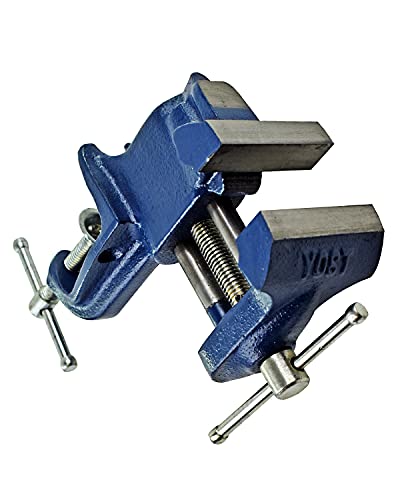
Understanding Jaw Type and Application
The first decision you must make is determining the primary material you will be working with. Vises are not one-size-fits-all. The jaw design is specialized for specific tasks. For general woodworking, you should prioritize wide, flat jaws that distribute pressure evenly to prevent marring softwoods. If your work involves heavy-duty metalworking, you will need hardened steel jaws designed to withstand high torque and aggressive clamping forces. Some specialized vises feature replaceable jaw inserts, which is a significant advantage if you frequently switch between delicate tasks—requiring soft copper or aluminum inserts—and heavy-duty grinding or cutting.
Clamping Force vs. Jaw Opening
One of the most common mistakes in purchasing a vise is focusing solely on the maximum jaw opening while ignoring the actual clamping force. A vise with a massive opening is useless if the screw mechanism cannot generate enough pressure to hold a workpiece steady under load. When evaluating specifications, look for the relationship between the screw diameter and the body mass. A thicker lead screw generally translates to smoother movement and higher clamping pressure. However, remember that a larger jaw opening often comes at the cost of a larger footprint on your workbench, so ensure your bench depth can accommodate the extra protrusion.
Material Composition and Build Quality
The durability of a vise is directly tied to how it is cast. For professional-grade use, look for heavy-duty cast iron or ductile iron construction. Cast iron provides excellent vibration dampening, which is essential when using power tools like grinders or drills in close proximity to the vise. Avoid lightweight, thin-walled alternatives if you plan on performing heavy percussion or high-torque applications, as these can crack or warp over time. A high-quality vise should feel substantially heavy for its size. Mass is your friend when it comes to absorbing the energy of a hammer strike or a heavy saw cut.
Base Mounting and Swivel Functionality
How the vise attaches to your bench is just as important as the jaws themselves. Fixed-base vises offer maximum rigidity and are ideal for heavy-duty metalworking where any movement is unacceptable. However, many users prefer a swivel-base vise, which allows you to rotate the workpiece to more ergonomic angles. If you choose a swivel model, ensure the locking mechanism is robust. A swivel base that 'slips' under pressure is a major safety hazard and a frustration during precision work. Look for a multi-position locking system that allows you to secure the vise at various angles without losing the integrity of the clamp.
Precision and Lead Screw Mechanics
For fine-tuning tasks, the smoothness of the screw mechanism is a key indicator of quality. A high-quality vise will have a precision-machined lead screw that moves with minimal effort and zero 'play' or wobbling. If there is significant lateral movement in the screw when it is fully closed, the vise will struggle to hold small, intricate parts securely. For those performing high-precision work, a vise with a fine-thread screw allows for much more granular control over the clamping pressure, preventing you from accidentally crushing delicate workpieces.