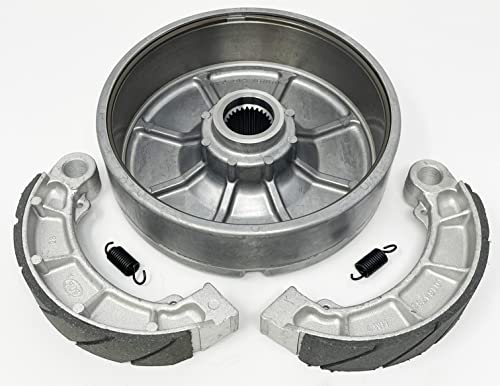
Understanding Friction Material Compounds
The most vital decision in selecting Armor Tech brakes is choosing the correct compound for your specific driving profile. Armor Tech typically offers a range of formulations that vary in their 'bite' and thermal ceiling. For street-oriented applications, you want a compound that offers high initial bite—meaning the car stops effectively the moment you touch the pedal—without requiring a massive warm-up period. However, if your goal is performance driving, you must look for compounds with high thermal stability. This prevents 'brake fade,' a dangerous phenomenon where the friction material loses its ability to grip the rotor due to excessive heat buildup. Always match the compound to your duty cycle: street pads for commuting, and high-temp performance pads for track use.
Thermal Management and Heat Dissipation
Braking is essentially the process of converting kinetic energy into thermal energy. The more aggressive your driving, the more heat you generate. When evaluating Armor Tech options, consider how the pad design facilitates heat dissipation. High-performance pads often feature specific chamfering or slotting patterns that help manage gas buildup between the pad and the rotor. This prevents the 'cushioning' effect that can lead to a spongy pedal feel. If you are upgrading to more aggressive pads, it is often wise to ensure your rotors are capable of handling the increased thermal stress, as the higher friction levels can accelerate rotor warping if the cooling system is inadequate.
Noise, Dust, and Longevity Trade-offs
In the world of performance braking, there is almost always a trade-off between performance and comfort. Armor Tech's more aggressive formulations are designed to provide superior stopping power, but this often comes at the cost of increased brake dust and potential audible squeal during low-speed maneuvers. If you are sensitive to brake dust on your wheels, you may need to opt for a more balanced compound, though you will sacrifice some of the extreme high-temperature performance. Conversely, if you prioritize longevity, look for pads with a higher density of metallic or ceramic binders, which tend to wear more slowly under moderate conditions but may feel less 'aggressive' during sudden stops.
Matching Pads to Rotor Surface
A common mistake is selecting high-performance Armor Tech pads while retaining old, glazed, or thin rotors. For the best results, the friction material should be paired with a rotor that has a clean, consistent surface area. If you are moving to a high-friction Armor Tech compound, ensure your rotors are not already heat-cycled to the point of structural fatigue. A matched system—where the pad's friction coefficient is supported by a rotor's thermal mass—is the only way to achieve the predictable, linear braking performance that this brand is known for.