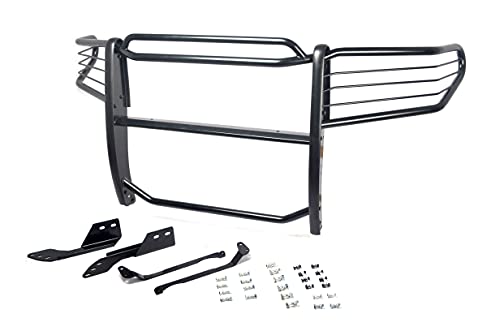
Material Composition and Structural Integrity
The most significant factor in a brush guard's performance is the quality of the steel used in its construction. When looking for premium protection, prioritize guards made from high-grade, heavy-wall tubing. Thinner, lighter metals may look intimidating on a showroom floor, but they are prone to bending or snapping under the pressure of a heavy branch or a minor collision. Look for seamless tubing, which eliminates weak points found in welded seams. Additionally, consider the finish. A high-quality powder coating is essential to prevent oxidation and rust, especially if you operate in coastal areas with salt air or in regions where road salt is used heavily in winter. A superior finish should be thick enough to resist chipping from flying gravel.
Design Architecture: Full Grille vs. Partial Guards
Deciding on the layout of the guard depends entirely on your specific driving environment. Full grille guards offer maximum coverage, wrapping around the headlights and extending toward the fenders. These are ideal for deep brush environments where side-impact strikes from thicket are common. However, they can sometimes obstruct airflow to the radiator if not designed with sufficient spacing. Partial guards, often referred to as bull bars, focus protection on the center of the bumper and the lower grille. These are excellent for urban environments or light off-roading where you want to enhance the truck's aesthetic and protect the core radiator without the bulk of a full-wrap system. Evaluate whether you need total perimeter protection or localized reinforcement.
Installation Method and Mounting Points
A brush guard is only as strong as its connection to the chassis. Avoid guards that rely solely on plastic trim or cosmetic mounting points. Premium accessories utilize direct-to-frame mounting systems. This ensures that the energy from an impact is transferred through the vehicle's structural frame rather than being absorbed by the bodywork, which would lead to crumpled fenders and damaged panels. Check if the guard requires drilling into your frame or if it utilizes existing factory mounting holes. A 'bolt-on' design that utilizes factory points is generally preferred for maintaining vehicle integrity, but for heavy-duty utility, a reinforced frame-mount is the gold standard for stability.
Impact on Vehicle Functionality
High-end brush guards are engineered to complement your truck's existing technology, not hinder it. One critical area to investigate is sensor compatibility. Modern trucks are equipped with sophisticated driver-assistance systems, including parking sensors and adaptive cruise control radar. A poorly designed guard can create blind spots for these sensors, triggering false warnings or disabling safety features. Look for guards that are specifically engineered to accommodate sensor cutouts or those that have been tested to ensure they do not interfere with the vehicle's electronic suite. Furthermore, ensure the guard design allows for adequate cooling. If the tubing is too dense, it can trap heat in the engine bay, leading to higher operating temperatures during low-speed, high-torque maneuvers.
Aesthetic Integration and Style
While utility is paramount, a brush guard significantly alters the silhouette of your truck. Premium accessories offer various finishes—such as matte black for a stealthy, tactical look, or polished stainless steel for a classic, high-end appearance. Consider how the guard complements the rest of your truck's trim. A heavy-duty, industrial guard might look out of place on a luxury trim level, whereas a streamlined, polished guard can enhance a high-end street truck. Choose a design that matches the intended 'personality' of your vehicle, whether that is a dedicated workhorse or an overland explorer.