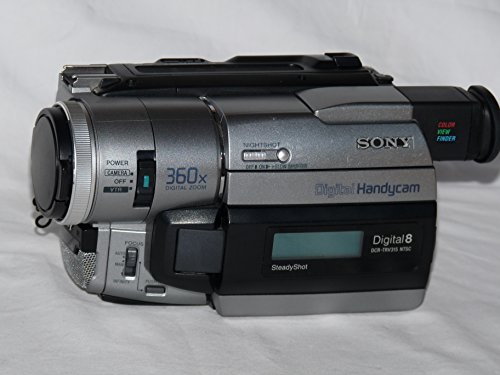
Understanding the Digital8 Advantage
The primary reason to choose a Digital8 camcorder over a standard Hi8 model is the ability to record digital streams directly onto the tape. This means that when you move your footage to a computer, you aren't just capturing a grainy analog signal. You are capturing a digital file that maintains much higher fidelity. When shopping, look for models that emphasize 'DV' (Digital Video) compatibility. This ensures that your transfer process via FireWire (IEEE 1394) will be seamless, preserving the original quality of your recordings without the generational loss common in analog-to-digital conversions.
Key Decision Factors: Lens and Sensor Quality
Not all Digital8 cameras are created equal. Since these devices are legacy hardware, you must pay close attention to the optical capabilities. Look for camcorders equipped with high-quality optical zoom rather than digital zoom, as digital zoom will significantly degrade your image quality. A lens with a wide aperture will also help in low-light situations, which was a common struggle for early digital tape formats. Furthermore, check the CCD sensor quality. While these won't match modern CMOS sensors in dynamic range, higher-end models from the era will offer better color reproduction and less noise in the shadows.
Storage and Connectivity: The FireWire Factor
If your goal is digitization, the connectivity of the camcorder is your most critical requirement. You must ensure the device has a dedicated DV output port. Without this, you will be forced to use an analog RCA or S-Video connection, which defeats the purpose of owning a Digital8 device. Additionally, consider the internal storage options. Some high-end models featured built-in hard drives or early memory card slots to supplement the tape. While the tape is your primary medium, having the ability to record short clips to a flash-based medium can be a lifesaver if you run out of tape mid-shoot.
Condition and Maintenance Considerations
Buying vintage electronics requires a discerning eye. Because these devices rely on moving mechanical parts—specifically the tape transport mechanism—they are prone to failure if left unused for years. When evaluating a unit, prioritize those that have been tested for 'tape eat' issues or mechanical jams. Check the battery compartment for any signs of corrosion from old alkaline leaks. Since original proprietary batteries are often dead by now, look for models that use more standardized battery shapes or have well-documented third-party replacement options available on the secondary market.
Recommendation Logic
If you are a collector or filmmaker, prioritize models with superior optics and manual focus controls to give you more creative agency. If you are a family historian, prioritize ease of use and robust connectivity, specifically looking for models that are known for stable FireWire transfers and user-friendly menu systems for quick playback.