Identify Your Primary Creative Objective
The first step in choosing a Fotodiox set is determining what visual problem you are trying to solve. Fotodiox categorizes much of its inventory by effect rather than just diameter. If you are a landscape photographer, your priority should be Neutral Density (ND) sets. These allow you to extend shutter speeds for silky water effects or motion blur in clouds without overexposing your sensor. Conversely, if you are a portrait or fine-art photographer, you should look toward diffusion or 'mist' sets. These kits are designed to soften skin textures and bloom highlights, creating a nostalgic, cinematic look that is difficult to replicate in post-processing.
Understanding Filter Material and Optical Quality
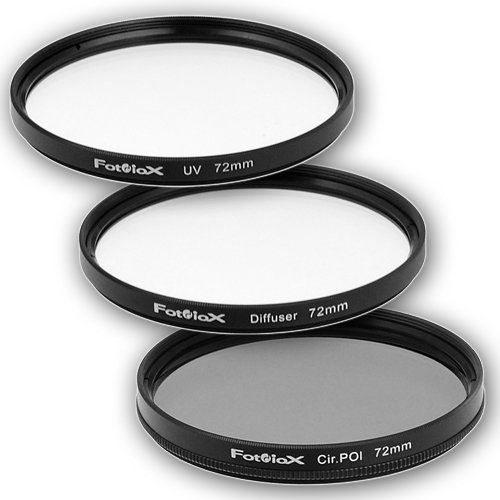
Not all filters in a set are created equal, and understanding the material composition is vital for image sharpness. Fotodiox often offers sets utilizing different substrates. High-quality glass filters are preferred for professional work because they offer superior clarity and are less prone to warping under heat. However, for experimental effects—such as prism sets or color-tinted creative filters—resin-based options are often more cost-effective and durable. When reviewing a set, consider whether the filters are multi-coated. Multi-coating is essential for preventing ghosting and flare, especially when you are shooting toward a light source or using a set designed to manipulate light paths.
The Critical Importance of Thread Diameter
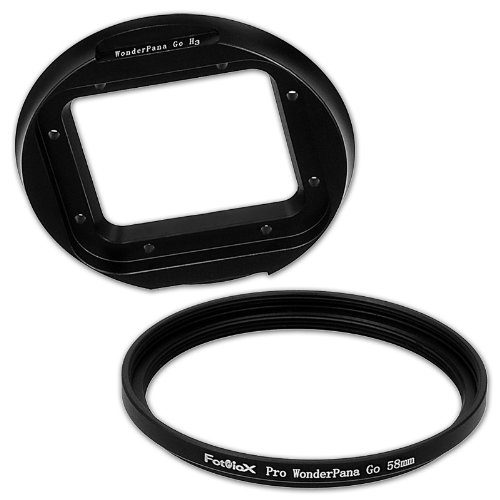
The most common mistake when purchasing a filter set is neglecting the thread size of your existing lenses. A set is only useful if it fits your glass. Before committing to a kit, check the front element of your lenses for the diameter symbol (represented by a circle with a slash and a number followed by an 'mm'). While you can use step-up rings to adapt smaller filters to larger lenses, this adds bulk to your setup and can lead to vignetting (darkening of the corners). For the best performance, aim for a set that matches your most frequently used lens or one that is large enough to be adapted upward to your widest aperture lens.
Evaluating Set Versatility and Value
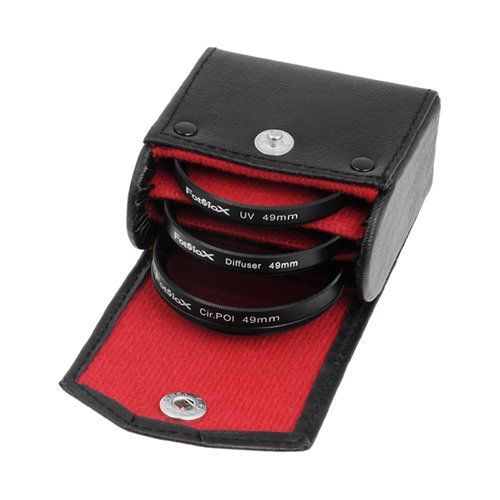
When comparing two different Fotodiox sets, look beyond the number of pieces in the box. A set with ten mediocre filters is often less valuable than a set with four high-quality, specialized filters. Look for a balanced variety: for example, a landscape set that includes both a graduated ND (to balance sky and ground) and a standard ND (for long exposures) provides much more utility than a set containing multiple variations of the same density. Additionally, check if the set includes a protective storage case. Since filter sets involve multiple pieces of delicate glass, portability and protection are key to long-term investment security.