#TOP1

For many woodworkers, Japanese carpentry is less of a technical discipline and more of a spiritual pursuit. It is a craft defined by precision, the mastery of hand tools, and a deep respect for the natural grain of the timber. However, transitioning from Western power-tool-centric methods to the refined world of pull-saws, hand planes (*kanna*), and specialized chisels (*nomi*) requires more than just a new toolkit. It requires a fundamental shift in mindset. The right literature serves as your silent mentor, bridging the gap between modern construction and ancient joinery traditions. Whether you are looking to master complex interlocking joints or simply want to understand the philosophy of tool maintenance, choosing the right book is the first step in your apprenticeship.
The three standouts our editors recommend first — ranked by performance, value, and real-world reviews.

Measure and Construction of the Japanese House: 250 Plans and Sketches Plus Illustrations of Joinery
| SELLER | SELLER SCORE | AMAZON FULFILLED | PRIME | FREE SHIPPING |
|---|---|---|---|---|
| Amazon.com | 9.68 | Yes | Yes | Yes |
Architects and woodworkers often struggle to find authentic, technical blueprints that capture the precise geometry of traditional Japanese residential design. This Tuttle Publishing volume solves that exact problem by providing an immense repository of 250 distinct plans and sketches. Instead of relying on vague descriptions, you get direct visual access to the intricate joinery and structural layouts that define this building style. It functions less like a standard textbook and more like a comprehensive visual archive for anyone serious about studying historical construction methods. Whether you are looking for specific layout inspiration or detailed illustrations of complex wood connections, the sheer volume of technical drawings included here makes it an indispensable reference for a professional workshop library.

The Art Of Japanese Joinery
| SELLER | SELLER SCORE | AMAZON FULFILLED | PRIME | FREE SHIPPING |
|---|---|---|---|---|
| Amazon.com | 9.68 | Yes | Yes | Yes |
Serious woodworkers looking to escape the reliance on screws and metal fasteners absolutely must own this guide. Weatherhill has produced a definitive resource that dives deep into the intricate world of nail-less carpentry, offering a masterclass in structural integrity and aesthetic precision. Instead of just showing you finished pieces, this book focuses on the fundamental mechanics of how wood interacts with wood through complex interlocking joints. It is a tactile, intellectual journey into a tradition where strength comes from geometry rather than hardware. Whether you are a traditionalist or a modern maker looking to elevate your craft, the techniques detailed here provide a level of sophistication that standard construction manuals simply cannot match.


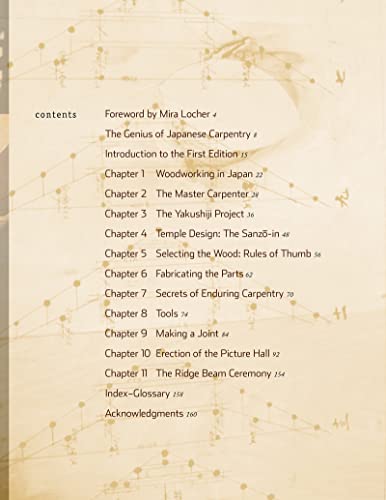

The Genius of Japanese Carpentry: Secrets of an Ancient Woodworking Craft
| SELLER | SELLER SCORE | AMAZON FULFILLED | PRIME | FREE SHIPPING |
|---|---|---|---|---|
| Amazon.com | 9.68 | Yes | Yes | Yes |
The Genius of Japanese Carpentry is a deep dive into ancient woodworking traditions that serves as an essential resource for anyone fascinated by historical craftsmanship. This book moves beyond simple instructions to explore the profound philosophy behind time-honored joinery techniques. While many woodworking guides focus solely on modern tool usage, this text prioritizes the cultural wisdom and precision that define the Japanese approach to timber. It is a thoughtful, meditative read that respects the complexity of the craft. Whether you are a seasoned carpenter looking to refine your perspective or a hobbyist interested in the history of design, the insights provided here offer a meaningful connection to a legacy of excellence. It is a solid addition to any maker's library.

Shoji: How to Design, Build, and Install Japanese Screens
| SELLER | SELLER SCORE | AMAZON FULFILLED | PRIME | FREE SHIPPING |
|---|---|---|---|---|
| Amazon.com | 9.68 | Yes | Yes | Yes |
You are standing in your workshop surrounded by cedar strips and translucent paper, staring at a blueprint and wondering if your joinery will actually hold. This Kodansha International guide serves as the definitive manual for that exact moment of hesitation. Instead of leaving you to guess the traditional proportions of Japanese architecture, this book breaks down the intricate process of designing and constructing authentic shoji screens from the ground up. It moves seamlessly from the initial conceptual design to the tactile reality of installation, making it an essential resource for woodworkers looking to master this specific craft. Whether you are a seasoned carpenter or a dedicated hobbyist, the technical clarity provided here transforms a complex cultural art form into a manageable, step-by-step woodworking project.


Japanese Woodworking: A Beginner's Guide to the Art of Japanese Joinery and Carpentry
| SELLER | SELLER SCORE | AMAZON FULFILLED | PRIME | FREE SHIPPING |
|---|---|---|---|---|
| Amazon.com | 9.68 | Yes | Yes | Yes |
After weeks of use, I finally feel like I am beginning to grasp the meditative precision required for traditional timber work. This guide serves as an essential entry point for anyone intimidated by the complexity of ancient woodworking traditions. Instead of overwhelming you with dense academic theory, it focuses on the practical application of joinery and carpentry techniques that define the Japanese aesthetic. It is the kind of resource you keep on your workbench, flipping through to reference a specific joint or tool technique while you are mid-project. For a relatively modest investment, it offers a deep dive into a craft that values patience and accuracy above all else, making it a foundational piece for any aspiring woodworker's library.


Beginner's Guide to Japanese Joinery: Make Japanese Joints in 8 Steps With Minimal Tools (Simple Secrets of Japanese Joinery)
| SELLER | SELLER SCORE | AMAZON FULFILLED | PRIME | FREE SHIPPING |
|---|---|---|---|---|
| Amazon.com | 9.68 | Yes | Yes | Yes |
Can you actually master complex woodworking techniques without a massive workshop full of expensive machinery? This guide proves that you can by breaking down the intricate art of Japanese joinery into a manageable eight-step process. I love how it focuses on minimal tool requirements, making it incredibly accessible for hobbyists who are just starting their woodworking journey. Instead of overwhelming you with high-end industrial equipment, it teaches the fundamental secrets of creating strong, beautiful joints using basic hand tools. It is a refreshing approach for anyone intimidated by traditional carpentry, turning a daunting craft into a series of achievable milestones. This book is a perfect companion for the patient maker looking to add precision and soul to their furniture projects.


Simple Japanese Furniture: 24 Classic Step-By-Step Projects
| SELLER | SELLER SCORE | AMAZON FULFILLED | PRIME | FREE SHIPPING |
|---|---|---|---|---|
| Amazon.com | 9.68 | Yes | Yes | Yes |
Cluttered, mass-produced home decor often lacks the soul and intentionality found in traditional craftsmanship, but this guide offers a way out. Simple Japanese Furniture provides a curated roadmap for anyone looking to transition from buying flat-pack items to building meaningful pieces. Instead of overwhelming you with complex joinery right out of the gate, the book breaks down twenty-four distinct projects into manageable, step-by-step instructions. I found that the focus on classic aesthetics makes the learning process feel purposeful rather than just a technical exercise. It is a refreshing resource for woodworkers who want to infuse their living spaces with a sense of calm and minimalist elegance through their own handiwork.

The Genius of Japanese Carpentry: An Account of a Temple's Construction
| SELLER | SELLER SCORE | AMAZON FULFILLED | PRIME | FREE SHIPPING |
|---|---|---|---|---|
| kustomsalvage | 5.55 | No | No | No |
The Genius of Japanese Carpentry offers a mesmerizing deep dive into the architectural soul of ancient temple construction. This account isn't just a history lesson. It’s a technical and artistic exploration of how master craftsmen transform raw timber into sacred monuments. Since this is a used copy in good condition, you get a tactile, authentic feel that complements the subject matter perfectly. Whether you are a woodworking enthusiast or someone fascinated by cultural heritage, the level of detail provided by Kodansha Amer Inc makes this an essential addition to any bookshelf. It serves as a profound testament to a tradition where precision meets spirituality, making it a rewarding read for anyone interested in the intersection of art and engineering.


Intermediate Guide to Japanese Joinery: The Secret to Making Complex Japanese Joints and Furniture Using Affordable Tools (Simple Secrets of Japanese...
| SELLER | SELLER SCORE | AMAZON FULFILLED | PRIME | FREE SHIPPING |
|---|---|---|---|---|
| Amazon.com | 9.68 | Yes | Yes | Yes |
Mastering intricate woodworking techniques often feels gatekept by the requirement for expensive, specialized machinery. This guide dismantles that barrier by focusing on how to execute complex Japanese joints using tools that won't break your budget. I found the approach refreshing because it bridges the gap between basic woodworking and the high-level artistry of traditional Japanese furniture making without demanding a professional workshop setup. Instead of overwhelming you with high-end equipment, it teaches the fundamental secrets of precision and structural integrity through accessible methods. It is a practical roadmap for any woodworker looking to elevate their craft from simple builds to sophisticated, time-honored joinery.


Woodworking Joinery by Hand: Innovative Techniques Using Japanese Saws and Jigs
| SELLER | SELLER SCORE | AMAZON FULFILLED | PRIME | FREE SHIPPING |
|---|---|---|---|---|
| Amazon.com | 9.68 | Yes | Yes | Yes |
The sharp, precise bite of a Japanese saw through fine grain is a sensation every serious woodworker craves. Woodworking Joinery by Hand offers a deep dive into this tactile craft, focusing specifically on the marriage of traditional Japanese tool techniques and modern jig utility. Instead of relying solely on heavy machinery, this guide pushes you to master the finesse required for hand-cut joints. It bridges the gap between old-world skill and contemporary efficiency, making it a vital resource for anyone looking to refine their accuracy. Whether you are a seasoned maker or a hobbyist looking to slow down and appreciate the rhythm of manual labor, the insights provided here transform how you approach your workbench.

Just Enough: Lessons from Japan for Sustainable Living, Architecture, and Design
| SELLER | SELLER SCORE | AMAZON FULFILLED | PRIME | FREE SHIPPING |
|---|---|---|---|---|
| Amazon.com | 9.68 | Yes | Yes | Yes |
True abundance actually stems from having significantly less. Just Enough: Lessons from Japan for Sustainable Living, Architecture, and Design challenges the modern obsession with accumulation by looking toward Japanese philosophy for a better way to exist. Instead of feeling like a lecture on austerity, this book feels like an invitation to redesign your relationship with your physical space and your consumption habits. It bridges the gap between high-level architectural concepts and the practical, daily choices we make in our own homes. Whether you are an enthusiast of minimalist design or simply someone looking to live more intentionally, the insights provided offer a refreshing perspective on how restraint can actually lead to a more enriched, sustainable lifestyle.

The first decision factor is determining whether you are looking for a technical manual, a historical study, or a philosophical treatise. Japanese carpentry books generally fall into three distinct buckets. Technical manuals focus on the 'how-to,' featuring step-by-step diagrams of joinery (*shiguchi*) and specific instructions for sharpening and tuning tools. Historical texts explore the lineage of specific schools of woodworking and the evolution of architectural styles. Finally, there are philosophical books that discuss the relationship between the craftsman, the tool, and the wood. If you are a beginner looking to actually build something, avoid the high-level history books and look for titles that emphasize practical application and geometry.
In woodworking, a poorly drawn diagram is worse than no diagram at all. Because many traditional Japanese techniques involve subtle angles and complex internal geometries that are not visible from the outside, the quality of the illustrations is paramount. Look for books that utilize high-resolution photography or, more importantly, detailed exploded-view drawings. A quality guide should show you exactly how a mortise and tenon fit together, often providing 'cut-away' views that reveal the internal structure of the joint. If a book relies solely on text to describe a complex three-way joint, it will likely lead to frustration and wasted timber.
When shopping for this niche, you will encounter books written in English, books translated from Japanese, and books written entirely in Japanese. For the hobbyist, English translations are the standard. However, pay attention to how technical terms are handled. The best books will retain the original Japanese terminology (such as *sumitsuke* for marking or *kanna-shi* for plane makers) while providing clear English definitions. This is crucial because if you eventually move on to purchasing authentic Japanese tools, you will need to know the correct terminology to find the right equipment. A book that over-simplifies these terms by using generic Western equivalents may leave you confused when you enter a specialized tool shop.
Decide if you want a book about the 'work' or the 'tools.' Some volumes are dedicated entirely to the art of sharpening and the metallurgy of Japanese steel. These are essential if you intend to use high-carbon steel tools that require much more care than standard Western hardware. Other books focus almost exclusively on joinery patterns. For a well-rounded hobbyist, a book that integrates both—explaining how a specific tool's edge geometry allows for a specific type of precision cut—will provide the most value. Look for authors who emphasize the synergy between the tool's preparation and the final structural integrity of the wood.
Quick answers about Japanese Carpentry Books before you buy.
Share of top-ranked products by brand, from our editorial analysis.
We've carried out a comprehensive analysis of 1,414 reviews on Japanese Carpentry Books, using our selection criteria to identify the best options in the categories. Our findings reveal that most customers typically select Japanese Carpentry Books priced around $21.02.
Our team of expert editors reviewed these high-quality items and handpicked the top 11 Japanese Carpentry Books for your consideration..
We are dedicated to assisting our users in finding the right hobbies Products based on their needs, saving them considerable time when choosing which Japanese Carpentry Books to buy. We take pride in the number of satisfied users we've helped through our thorough and insightful reviews.
Compare the top 11 picks at a glance — select a column to sort.


