#TOP1

Ceramics engineering is a highly specialized field that sits at the intersection of materials science, chemical engineering, and mechanical design. Unlike traditional pottery or decorative ceramics, engineering-grade ceramics are defined by their extreme hardness, thermal stability, and chemical inertness. Whether you are sourcing components for semiconductor manufacturing, aerospace propulsion, or biomedical implants, the selection process requires a deep understanding of microstructure and phase composition. Choosing the wrong material can lead to catastrophic structural failure under thermal shock or unexpected degradation in corrosive environments. This guide is designed to help engineers and procurement specialists navigate the technical nuances of high-performance ceramic materials.
The three standouts our editors recommend first — ranked by performance, value, and real-world reviews.


Engineers' Practical Databook: A Technical Reference Guide for Students and Professionals
| SELLER | SELLER SCORE | AMAZON FULFILLED | PRIME | FREE SHIPPING |
|---|---|---|---|---|
| Amazon.com | 9.68 | Yes | Yes | Yes |
Engineers' Practical Databook is an indispensable technical companion that distills complex data into a portable, high-utility format. Whether you are a student navigating rigorous coursework or a working professional in the field, having a reliable reference at your fingertips changes how you approach problem-solving. This guide functions as a mental shortcut, providing the essential formulas and constants required to move through calculations without constant digital searching. At its current price point, it offers significant value for anyone needing a physical anchor for technical information. It is the kind of resource that belongs in a toolkit or a backpack, serving as a bridge between theoretical classroom concepts and real-world application.


PLC Programming Using RSLogix 5000: Understanding Ladder Logic and the Studio 5000 Platform
| SELLER | SELLER SCORE | AMAZON FULFILLED | PRIME | FREE SHIPPING |
|---|---|---|---|---|
| Amazon.com | 9.68 | Yes | Yes | Yes |
PLC Programming Using RSLogix 5000 stands as a focused technical resource for anyone looking to master the Studio 5000 platform. Navigating industrial automation can feel overwhelming, but this guide simplifies the complexities of ladder logic into digestible concepts. I found that the text strikes a helpful balance between theoretical understanding and the practical application required in modern manufacturing environments. It doesn't waste your time with unnecessary fluff, focusing instead on the core logic structures you actually need to know. Whether you are a student or a technician looking to sharpen your skills, this book offers a clear roadmap through the specific software architecture used in professional automation settings. At its current price point, it serves as an accessible entry point for technical skill development.


Ultimate Guide: Ceramic & Stone Tiling, Third Edition, Updated and Expanded (Creative Homeowner) Step-by-Step Guide to Tile Installations, including G...
| SELLER | SELLER SCORE | AMAZON FULFILLED | PRIME | FREE SHIPPING |
|---|---|---|---|---|
| Amazon.com | 9.68 | Yes | Yes | Yes |
Design Originals has delivered an essential cornerstone for any DIY enthusiast's library with this updated third edition on ceramic and stone tiling. This isn't just a surface-level manual. It serves as a comprehensive roadmap for navigating the complexities of modern home renovations. Whether you are tackling a simple backsplash or a full-scale bathroom overhaul, the step-by-step guidance covers everything from standard porcelain to the delicate nuances of glass and mosaic work. I found the expanded content particularly valuable because it addresses the specific technical hurdles that often trip up beginners during installation. It effectively bridges the gap between professional techniques and home-based execution, making it a reliable companion for anyone looking to master the art of tile.
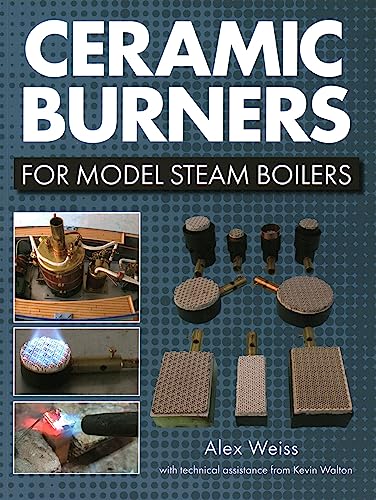
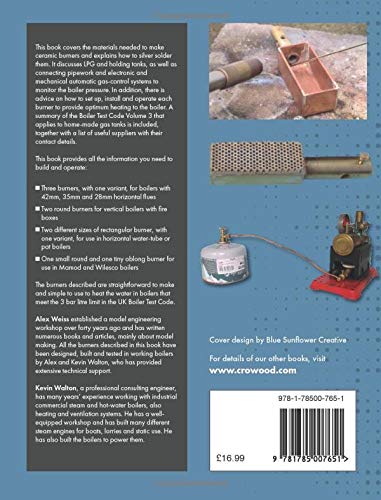
Ceramic Burners for Model Steam Boilers
| SELLER | SELLER SCORE | AMAZON FULFILLED | PRIME | FREE SHIPPING |
|---|---|---|---|---|
| Amazon.com | 9.68 | Yes | Yes | Yes |
Can a single technical manual truly transform your model steam boiler hobby from a series of frustrations into a masterclass of precision? Crowood Press has delivered a specialized resource that focuses specifically on ceramic burners, a niche but critical component for anyone serious about steam engine mechanics. At a price point, this book serves as a dedicated guide for enthusiasts looking to refine their setups. While it is a highly specific text, the depth of focus on these particular burners makes it an essential addition to a collector's library. It is the kind of deep-dive literature that fills a gap most general hobbyist books completely overlook, providing the technical nuance required for high-level modeling work.

Modern Ceramic Engineering: Properties, Processing, and Use in Design, Fourth Edition
| SELLER | SELLER SCORE | AMAZON FULFILLED | PRIME | FREE SHIPPING |
|---|---|---|---|---|
| Amazon.com | 9.68 | Yes | Yes | Yes |
Ceramics are often dismissed as simple, brittle materials, but this fourth edition of Modern Ceramic Engineering proves they are actually the backbone of high-tech structural design. Reading through this text, you realize that the leap from traditional pottery to advanced industrial applications requires a massive amount of technical precision. CRC Press has structured this edition to bridge the gap between raw material processing and practical design use, making it an essential deep dive for anyone serious about materials science. It isn't just a collection of facts. It is a roadmap for understanding how microscopic properties dictate macroscopic performance in modern engineering. Whether you are studying for exams or working in a lab, the depth provided here is indispensable for mastering the complexities of ceramic behavior.


Piezoelectric Ceramics: Principles and Applications
| SELLER | SELLER SCORE | AMAZON FULFILLED | PRIME | FREE SHIPPING |
|---|---|---|---|---|
| Amazon.com | 9.68 | Yes | Yes | Yes |
Piezoelectric Ceramics: Principles and Applications serves as an essential technical cornerstone for anyone diving into advanced material science. This volume from APC International, Ltd. bridges the gap between theoretical physics and practical engineering, making it a vital resource for researchers and students alike. While this specific copy is a used book, it remains in good condition, ensuring the complex diagrams and technical data are still perfectly legible for study. It offers a professional-grade deep dive into how these ceramics actually function in real-world scenarios. It is a sturdy, reliable reference that feels less like a textbook and more like a specialized manual for the modern laboratory.

Mechanical Behaviour of Engineering Materials: Metals, Ceramics, Polymers, and Composites
| SELLER | SELLER SCORE | AMAZON FULFILLED | PRIME | FREE SHIPPING |
|---|---|---|---|---|
| Amazon.com | 9.68 | Yes | Yes | Yes |
Understanding how different substances react under physical stress is the primary hurdle for any serious materials science student or engineer. This Springer publication serves as a vital bridge between theory and real-world application by dissecting the mechanical properties of metals, ceramics, polymers, and composites in one comprehensive volume. Since this specific copy is a used book in good condition, it offers a practical way to access high-level academic content without the heavy price tag usually associated with new technical texts. It is a foundational resource that simplifies complex structural behaviors, making it an essential addition to a professional or academic library for anyone needing to predict how materials will perform in demanding environments.


Modern Ceramic Engineering: Properties, Processing, and Use in Design, 3rd Edition (Materials Engineering)
| SELLER | SELLER SCORE | AMAZON FULFILLED | PRIME | FREE SHIPPING |
|---|---|---|---|---|
| Reuseaworld | 9.62 | No | No | No |
Most academic texts leave you scratching your head with abstract theory, but this third edition of Modern Ceramic Engineering bridges the gap between complex material science and practical application. It moves beyond mere textbook definitions to explore how ceramic properties actually dictate design choices in the real world. I found that the way it weaves together processing techniques with end-use engineering makes it feel less like a chore to read and more like a professional roadmap. Whether you are studying the fundamentals or looking to refine your manufacturing approach, this volume provides a sophisticated look at how ceramics function in modern industry. It is a dense, authoritative resource that treats the reader like a serious practitioner rather than just another student.

Principles of Ceramics Processing, 2nd Edition
| SELLER | SELLER SCORE | AMAZON FULFILLED | PRIME | FREE SHIPPING |
|---|---|---|---|---|
| California-Book-Finds | 5.37 | Yes | Yes | Yes |
Ceramics engineers and materials science researchers require this specific text to bridge the gap between theoretical physics and practical industrial application. The second edition of this Wiley publication serves as a foundational pillar for anyone serious about mastering the complexities of ceramic fabrication. While the price point reflects its status as a specialized academic resource, the depth of technical insight provided is indispensable for professional development in the field. Navigating the nuances of material behavior and processing techniques becomes significantly more intuitive when you have this level of comprehensive documentation on your desk. It is a heavy-duty investment for a serious library, but the clarity of the updated material makes it a vital asset for long-term technical mastery.

Gold content list in Ceramic CPU's processors chips
| SELLER | SELLER SCORE | AMAZON FULFILLED | PRIME | FREE SHIPPING |
|---|---|---|---|---|
| Amazon.com Services LLC | 0.00 | No | No | No |
After weeks of digging through scrap metal piles and old computer components, I finally realized that having a precise reference guide is the only way to stop guessing. This digital ebook serves as a specialized roadmap for anyone interested in the precious metal yields found within ceramic CPU chips. Instead of wasting time on low-yield hardware, you can use this data to target the specific processors that actually hold significant gold content. It provides the technical clarity needed to streamline your recovery efforts. It is a straightforward, downloadable resource that turns a chaotic scavenging process into a much more calculated and efficient operation.
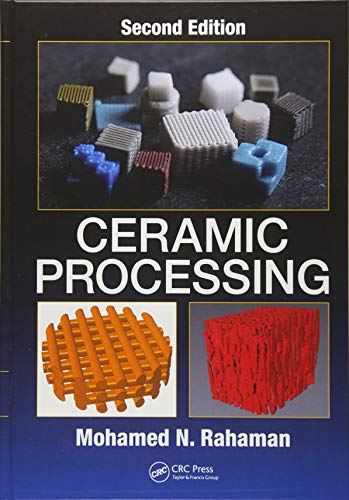

Ceramic Processing
| SELLER | SELLER SCORE | AMAZON FULFILLED | PRIME | FREE SHIPPING |
|---|---|---|---|---|
| Amazon.com | 9.68 | Yes | Yes | Yes |
A materials scientist sits hunched over a laboratory workbench, struggling to troubleshoot why a specific sintering process is causing structural micro-cracks in a new batch of components. This is exactly the kind of high-stakes technical hurdle where CRC Press’s Ceramic Processing becomes an indispensable resource. Rather than scouring fragmented research papers, you can turn to this comprehensive volume to find deep, authoritative insights into the fundamental mechanics of ceramic fabrication. It serves as a heavy-duty reference for engineers and researchers who need to move beyond trial and error and toward precise, repeatable manufacturing workflows. While the specialized nature of the content means it isn't for casual reading, its depth makes it a cornerstone for any serious technical library focused on advanced material science.


Ceramic Engineering
| SELLER | SELLER SCORE | AMAZON FULFILLED | PRIME | FREE SHIPPING |
|---|---|---|---|---|
| Amazon.com | 9.68 | Yes | Yes | Yes |
The sheer weight of this volume signals its status as a serious technical resource for anyone diving into material science. Ceramic Engineering stands as a heavy-duty academic cornerstone, though its current status as a temporarily out-of-stock item suggests a high level of demand among specialists and students alike. It is clearly positioned as a long-term investment for a professional library rather than a casual read. While you might have to wait for the next shipment to arrive, the ability to secure your copy now ensures you won't miss out once the next batch is processed. It is a specialized tool that demands a dedicated space on your bookshelf.

The first decision factor in ceramics engineering is the chemical composition of the material. The properties of the final product are dictated by the raw powders used during the sintering process. For high-strength applications, Alumina (Aluminum Oxide) is the industry standard due to its excellent balance of hardness and cost-effectiveness. However, if your application requires superior fracture toughness, Zirconia (Zirconium Dioxide) is often the preferred choice because of its transformation toughening capabilities. For extreme temperature environments where thermal conductivity is critical, Silicon Carbide or Silicon Nitride may be necessary. You must match the chemical profile of the ceramic to the specific stressors of your operating environment to ensure longevity.
One of the primary reasons engineers turn to ceramics is their ability to withstand heat that would melt most metals. However, heat resistance is not a monolithic metric. You must distinguish between thermal stability (the ability to maintain properties at high temperatures) and thermal shock resistance (the ability to withstand rapid temperature fluctuations without cracking). Materials with high thermal conductivity and low coefficients of thermal expansion, such as certain grades of Silicon Nitride, excel in rapid cycling environments. If your component will be subjected to localized heating or rapid cooling, prioritize materials with low expansion rates to prevent internal stresses from inducing micro-cracks.
In ceramics engineering, there is often a trade-off between hardness and fracture toughness. While most engineering ceramics are incredibly hard—making them ideal for wear-resistant components like seals, bearings, and nozzles—they are also inherently brittle. When selecting a component, evaluate the expected load profile. If the part will face high impact or mechanical vibration, a material with higher fracture toughness is required to prevent brittle failure. Conversely, if the primary goal is resisting abrasion or surface deformation, prioritize Mohs hardness and compressive strength. Always request data regarding the Weibull modulus, which provides a statistical measure of the material's reliability and consistency in strength.
Because ceramics are processed through sintering, they undergo significant shrinkage during manufacturing. This makes achieving tight tolerances a challenge. When sourcing precision components, evaluate the manufacturer's ability to provide post-sintering machining or diamond grinding. For applications in vacuum systems or fluid dynamics, surface roughness (Ra value) is critical. A high-quality ceramic component should have a predictable surface finish that minimizes friction and prevents particle shedding, which is vital in cleanroom and semiconductor environments.
Finally, consider the chemical environment. Engineering ceramics are prized for their resistance to acids, bases, and oxidation. However, certain ceramics can react with specific molten metals or highly alkaline solutions. Ensure that the material's chemical stability is verified for your specific medium. For biomedical applications, biocompatibility is the paramount factor, requiring specialized high-purity ceramics that do not elicit an immune response. Always verify the purity levels of the ceramic, as even trace impurities can significantly alter the dielectric constant or the chemical resistance of the material.
Quick answers about Ceramics Engineering before you buy.
Share of top-ranked products by brand, from our editorial analysis.
We've carried out a comprehensive analysis of 1,263 reviews on Ceramics Engineering, using our selection criteria to identify the best options in the categories. Our findings reveal that most customers typically select Ceramics Engineering priced around $74.81.
Our team of expert editors reviewed these high-quality items and handpicked the top 12 Ceramics Engineering for your consideration..
We are dedicated to assisting our users in finding the right asins Products based on their needs, saving them considerable time when choosing which Ceramics Engineering to buy. We take pride in the number of satisfied users we've helped through our thorough and insightful reviews.
Compare the top 12 picks at a glance — select a column to sort.


