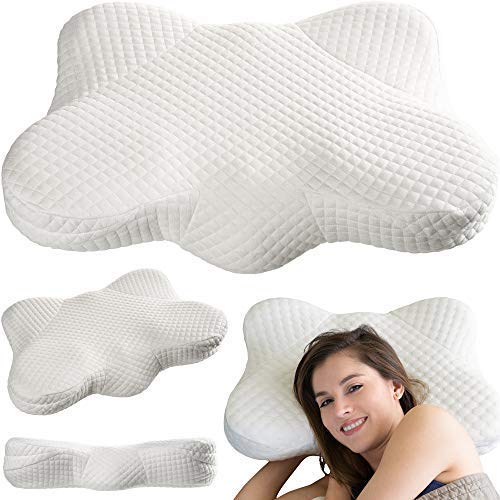


Cradle Me Contour Memory Foam Pillow Orthopedic Sleeping Pillows, Ergonomic Cervical Pillow For Neck Pain - For Side Sleepers, Back And Stomach Sleepers, Washable Pillowcase
CRADLE ME
PN0035
2.56 Pounds
- ERGONOMIC - Proven contour design perfectly supports and aligns your head, neck, shoulder and back. You will fall asleep faster and deeper. Take comfort to a whole new level whether you are back sleeper, stomach sleeper or side sleeper. Wake up feeling euphoric!
- LUXURY SLEEPING PILLOW - Therapeutic relief for all sleepers and neck pain, you will wake up feeling fully recharged and ready to take the day. Made from premium memory foam. Our premium fabric to keep you cool and comfortable throughout the night.
- SLEEP SAFE 🌱 - Be careful! Poor-quality pillows are both a health hazard & an have dangerous additives! Most generic memory foam pillows are NOT manufactured to USA standards & are NOT safety certified. Our safe and ODORLESS memory foam is nontoxic & hypoallergenic. rest easy knowing our memory foam pillow won't trigger allergies in sensitive individuals.
- MADE IN THE USA 🇺🇸 - Tired of buying poor-quality “throwaway” products from overseas sellers who don’t care about their customers? Lofty Sleep is American company. We employ Americans & we pay American taxes, just like you.
- 111 NIGHT SLEEP EASY GUARANTEE 💤 - Everyone says “top quality!” but only Lofty backs it up with a 111 night guarantee. Love your new memory foam pillow, or let us know. We'll always make it right with a prompt product replacement or refund. Sleep through the night and wake up refreshed!
| SELLER | SELLER SCORE | AMAZON FULFILLED | PRIME | FREE SHIPPING |
|---|---|---|---|---|
| Rush hour couple | 0.00 | Yes | Yes | Yes |