Determine Your Power Source: Manual vs. Electric
The first and most critical decision is deciding how you want to drive the blades. Manual choppers—often featuring a pull-cord mechanism or a hand-crank—are excellent for small tasks like mincing garlic, herbs, or a single shallot. They are portable, require no outlet, and are generally much easier to clean. However, they lack the torque required for harder vegetables like carrots or large batches of nuts.
Electric choppers, on the other hand, offer much higher velocity and consistent results. These are ideal if you frequently prepare large quantities of food or need to process dense ingredients. While they require a power source and take up more counter space, the sheer efficiency they provide for meal prepping cannot be matched by manual alternatives.
Blade Geometry and Material
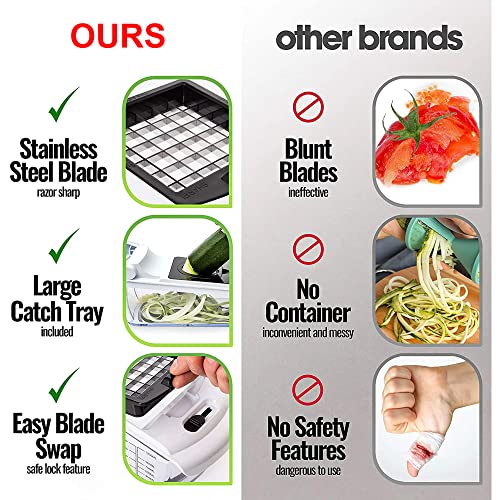
The efficacy of any chopper is dictated by its blades. Look for stainless steel construction. It is resistant to corrosion and holds a sharp edge longer than carbon steel in high-moisture environments. When inspecting a product, pay attention to the blade shape. S-shaped blades are common in mini-choppers and are designed to catch food as it falls, creating a vortex that ensures even chopping. For larger electric units, look for heavy-duty, thick-gauge blades that won't bend when encountering frozen ingredients or hard root vegetables. A dull blade doesn't just take longer. It bruises the cellular structure of your vegetables, leading to a watery, unappealing texture.
Capacity and Bowl Volume
A common mistake is buying a chopper that is too large for your daily needs or too small for your family size. If you primarily cook for one or two people, a compact mini-chopper with a small bowl is perfect for quick garnishes. However, if you are a meal-prepper who chops entire heads of cabbage or large onions at once, you need a high-capacity bowl. A bowl that is too small will force you to work in multiple batches, which defeats the purpose of having a chopper in the first place. Conversely, a massive bowl used for tiny amounts of garlic can lead to uneven chopping because the ingredients simply spin around the edges without hitting the blades.
Ease of Maintenance and Cleaning
A kitchen tool you hate cleaning is a tool you won't use. Prioritize models that feature detachable components. Ideally, the bowl, lid, and blades should all be dishwasher-safe. For manual pull-cord models, check if the mechanism can be disassembled. Food particles often get trapped in the string housing, which can lead to mold if not properly addressed. For electric models, ensure the motor base is easy to wipe down and that the lid design doesn't have deep crevices where vegetable juices can pool.
Noise Levels and Stability
If you are opting for an electric model, consider the noise profile. Some high-speed choppers can be quite jarring in a quiet kitchen. Additionally, look for models with non-slip rubber feet. A chopper that