#TOP1
In the realm of scientific research, the bridge between theoretical modeling and empirical data is the hardware control system. Whether you are managing high-speed data acquisition for particle physics, regulating precise thermal environments in material science, or automating complex fluidic movements in life sciences, the control system is the brain of your experimental setup. Unlike consumer-grade automation, scientific hardware control requires extreme temporal precision, high signal integrity, and the ability to interface with heterogeneous sensor arrays. Selecting the wrong architecture can lead to jitter, data loss, or, in worst-case scenarios, the catastrophic failure of expensive experimental apparatus.
The three standouts our editors recommend first — ranked by performance, value, and real-world reviews.


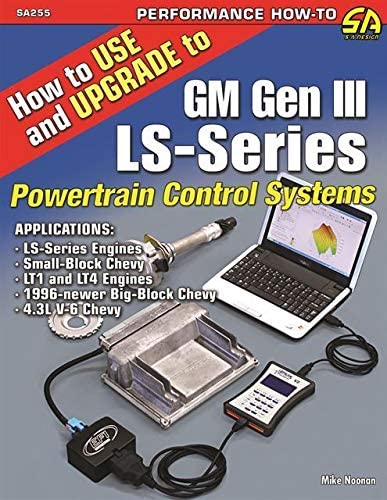


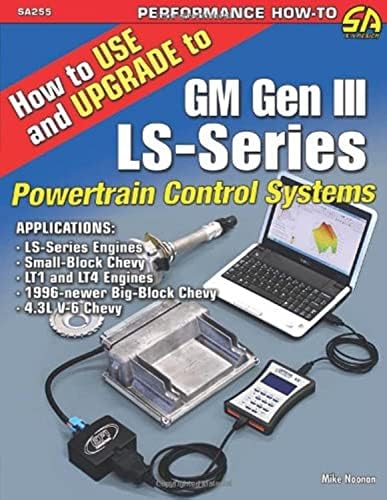
How to Use and Upgrade to GM Gen III LS-Series Powertrain Control Systems
| SELLER | SELLER SCORE | AMAZON FULFILLED | PRIME | FREE SHIPPING |
|---|---|---|---|---|
| Amazon.com | 9.68 | Yes | Yes | Yes |
The smell of grease and the hum of a tuning workstation are the natural environments for a book like this. Cartech has delivered a focused manual that cuts through the noise for anyone looking to master the complexities of GM Gen III LS-Series powertrain control systems. Instead of wading through vague forum posts, you get a structured approach to both utilizing and upgrading your existing setups. It serves as a vital roadmap for enthusiasts who want to bridge the gap between basic installation and advanced system optimization. For the price of thirty-four dollars and ninety-five cents, it acts as a technical companion that makes high-level engine management feel significantly more approachable for the DIY tuner.
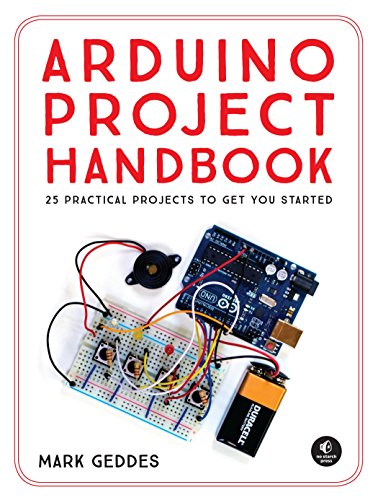
Arduino Project Handbook: 25 Practical Projects to Get You Started
| SELLER | SELLER SCORE | AMAZON FULFILLED | PRIME | FREE SHIPPING |
|---|---|---|---|---|
| book4buck | 8.40 | No | No | No |
The Arduino Project Handbook: 25 Practical Projects to Get You Started is a hands-on roadmap for anyone looking to move past basic blinking lights and into real-world application. Instead of getting bogged down in dry, theoretical lectures, this guide from No Starch Press dives straight into twenty-five distinct builds that actually do something useful. It acts as a bridge between having a pile of components and actually understanding how to integrate them into a cohesive system. At a price point, it serves as an incredibly accessible entry point for hobbyists who want to build confidence through trial and error. Whether you are a student or a tinkerer, the structured approach helps turn intimidating code into manageable, rewarding milestones.


Hacking Exposed Industrial Control Systems: ICS and SCADA Security Secrets & Solutions
| SELLER | SELLER SCORE | AMAZON FULFILLED | PRIME | FREE SHIPPING |
|---|---|---|---|---|
| Amazon.com | 9.68 | Yes | Yes | Yes |
The dense, technical weight of this manual signals immediately that you aren't holding a casual read, but a serious tactical guide for critical infrastructure defense. Hacking Exposed Industrial Control Systems dives deep into the high-stakes world of SCADA and ICS security, stripping away the abstractions to reveal how these vital networks actually function and where they fail. It feels less like a textbook and more like a field manual for engineers and security professionals tasked with protecting the backbone of modern industry. You will find yourself navigating the complex intersection of physical machinery and digital protocols, learning the specific vulnerabilities that could compromise entire power grids or manufacturing plants. It is a necessary, sobering deep dive for anyone serious about securing the systems that keep the world running.

Control Systems for Complete Idiots (Electrical Engineering for Complete Idiots)
| SELLER | SELLER SCORE | AMAZON FULFILLED | PRIME | FREE SHIPPING |
|---|---|---|---|---|
| Amazon.com Services LLC | 0.00 | No | No | No |
Control Systems for Complete Idiots is a budget-friendly digital guide that strips away the intimidating jargon typically found in electrical engineering textbooks. At just five dollars, this ebook serves as an accessible entry point for anyone struggling to wrap their head around complex control theory. Instead of getting bogged down in dense academic prose, the material aims to simplify difficult concepts for the absolute beginner. It is an incredibly low-risk investment for students or hobbyists who need a conceptual baseline before diving into more rigorous mathematical modeling. While it lacks the exhaustive depth of a formal university curriculum, its primary value lies in its straightforward approach to making electrical engineering feel manageable rather than overwhelming.

Real World Instrumentation with Python: Automated Data Acquisition and Control Systems
| SELLER | SELLER SCORE | AMAZON FULFILLED | PRIME | FREE SHIPPING |
|---|---|---|---|---|
| Amazon.com | 9.68 | Yes | Yes | Yes |
You are staring at a complex array of sensors and a mountain of unorganized data, wondering how to bridge the gap between hardware and code. This O'Reilly Media guide serves as the definitive bridge for engineers needing to master automated data acquisition and control systems through Python. It moves past theoretical syntax to tackle the gritty reality of real-world instrumentation. The book arrives in mint condition, and for those on a tight project deadline, the same-day dispatch for orders placed before noon is a lifesaver. It is a robust resource that arrives with guaranteed secure packaging, ensuring your technical library stays pristine. Whether you are automating a lab or building an industrial control loop, this text provides the practical roadmap required to turn raw signals into actionable intelligence.

Inside Solid State Drives (SSDs) (Springer Series in Advanced Microelectronics, 37)
| SELLER | SELLER SCORE | AMAZON FULFILLED | PRIME | FREE SHIPPING |
|---|---|---|---|---|
| Amazon.com | 9.68 | Yes | Yes | Yes |
Inside Solid State Drives stands as a definitive technical cornerstone for engineers and hardware architects diving deep into flash storage architecture. This Springer publication moves past surface-level explanations to dissect the complex microelectronics that drive modern data storage. While the price point reflects its specialized academic nature, the depth of information provided makes it an essential asset for professional development in the semiconductor field. It isn't a casual read for hobbyists, but rather a rigorous deep dive into the physics and logic of SSD design. If you are looking to master the intricacies of advanced microelectronics, this text offers the granular detail required to truly understand how these drives function at a fundamental level.

Exploring Computer Hardware - 2022 Edition: The Illustrated Guide to Understanding Computer Hardware, Components, Peripherals & Networks (Exploring Te...
| SELLER | SELLER SCORE | AMAZON FULFILLED | PRIME | FREE SHIPPING |
|---|---|---|---|---|
| Amazon.com | 9.68 | Yes | Yes | Yes |
Crisp, detailed illustrations jump off the page the moment you crack this guide open. Exploring Computer Hardware - 2022 Edition serves as a visual roadmap for anyone feeling lost in a sea of silicon and circuitry. Instead of drowning you in dense, academic jargon, this book breaks down everything from core internal components to complex networking setups through a clear, illustrated lens. It feels less like a dry textbook and more like a friendly walkthrough of a high-tech workshop. Whether you are trying to identify a specific peripheral or finally understanding how a network functions, the visual approach makes the abstract concepts of computing feel tangible and much less intimidating for beginners.

Computers as Components: Principles of Embedded Computing System Design (The Morgan Kaufmann Series in Computer Architecture and Design)
| SELLER | SELLER SCORE | AMAZON FULFILLED | PRIME | FREE SHIPPING |
|---|---|---|---|---|
| Amazon.com | 9.68 | Yes | Yes | Yes |
Embedded systems engineers require a rigorous theoretical foundation to move beyond simple hobbyist tinkering and into professional-grade architecture. Computers as Components delivers exactly that depth, positioning itself as an essential pillar for anyone serious about the Morgan Kaufmann series in computer architecture. This text avoids the superficiality found in many introductory guides, focusing instead on the core principles of embedded computing system design. While the subject matter is undeniably dense, the structured approach to design principles makes it a reliable desk reference for long-term study. It is a serious investment for a professional library, providing the technical scaffolding necessary to understand how hardware and software interface within complex, constrained environments.

Embedded System Design with ARM Cortex-M Microcontrollers: Applications with C, C++ and MicroPython
| SELLER | SELLER SCORE | AMAZON FULFILLED | PRIME | FREE SHIPPING |
|---|---|---|---|---|
| Amazon.com | 9.68 | Yes | Yes | Yes |
After weeks of use, this technical guide has become an essential desk companion for anyone navigating the complexities of embedded architecture. MOXIC delivers a comprehensive deep dive into the ARM Cortex-M ecosystem, bridging the gap between hardware theory and practical implementation. What makes this particular resource stand out is its multi-language approach, offering guidance across C, C++, and MicroPython. This flexibility is vital for modern engineers who need to pivot between low-level optimization and rapid prototyping. Whether you are refining memory management or exploring high-level scripting on microcontrollers, the content remains focused and highly applicable to real-world design challenges. It is a substantial investment for your technical library that pays dividends in skill development.

The first decision in selecting a control system is choosing the underlying processing architecture. For applications requiring nanosecond-level synchronization—such as laser pulse timing or high-frequency signal processing—Field Programmable Gate Arrays (FPGAs) are the gold standard. They allow for true parallel processing and deterministic latency. If your research involves slower, process-oriented movements like temperature ramping or motorized stage positioning, a high-performance microcontroller or a dedicated Real-Time Operating System (RTOS) may be more cost-effective and easier to program. Programmable Logic Controllers (PLCs) are best suited for industrial-scale laboratory automation where ruggedness and standardized electrical interfaces are prioritized over extreme speed.
A control system is only as good as its ability to perceive the environment. When evaluating hardware, look closely at the bit-depth of the Analog-to-Digital Converters (ADCs). For sensitive scientific measurements, 16-bit or 24-bit resolution is often necessary to capture subtle fluctuations in voltage or pressure. Furthermore, consider the sampling rate. You must ensure the sampling frequency is at least twice the highest frequency of interest (the Nyquist rate), though in practice, much higher oversampling is preferred to minimize aliasing. Evaluate the input channels to ensure the system can handle the density of your sensor array without requiring excessive multiplexing, which can introduce noise and latency.
Scientific hardware rarely exists in a vacuum. Your control system must communicate seamlessly with existing instruments. Look for a diverse array of supported protocols: digital interfaces like SPI, I2C, and CAN bus are standard, while high-speed data transfer may require PCIe or Ethernet-based architectures. If your laboratory relies on specialized instrumentation, ensure the control system supports standard protocols like GPIB or USB-TMC. Crucially, evaluate the software ecosystem. A hardware system that lacks robust driver support, comprehensive APIs, or integration with data analysis environments like Python, LabVIEW, or MATLAB will significantly increase your technical debt and slow down your research iterations.
In precision science, electrical noise is the enemy of accuracy. High-quality control systems feature sophisticated isolation techniques, such as galvanic isolation, to prevent ground loops from corrupting sensitive measurements. Check for shielded inputs and high-quality voltage references within the hardware. If your experiments involve high-power actuators (like heavy-duty motors) alongside sensitive sensors, ensure the control system has separate power planes or dedicated filtering to prevent electromagnetic interference (EMI) from bleeding into your data streams.
Research is an evolving process. A system that is perfect for today's experiment may be obsolete by your next grant cycle. Prioritize modular architectures that allow you to add more input/output (I/O) modules, increase memory, or upgrade processing units without replacing the entire chassis. A scalable system allows you to start with a lean, cost-effective setup and expand as your experimental complexity grows, providing a much higher long-term return on investment.
Quick answers about Computer Hardware Control Systems before you buy.
Share of top-ranked products by brand, from our editorial analysis.
We've carried out a comprehensive analysis of 728 reviews on Computer Hardware Control Systems, using our selection criteria to identify the best options in the categories. Our findings reveal that most customers typically select Computer Hardware Control Systems priced around $53.62.
Our team of expert editors reviewed these high-quality items and handpicked the top 9 Computer Hardware Control Systems for your consideration..
We are dedicated to assisting our users in finding the right science Products based on their needs, saving them considerable time when choosing which Computer Hardware Control Systems to buy. We take pride in the number of satisfied users we've helped through our thorough and insightful reviews.
Compare the top 9 picks at a glance — select a column to sort.