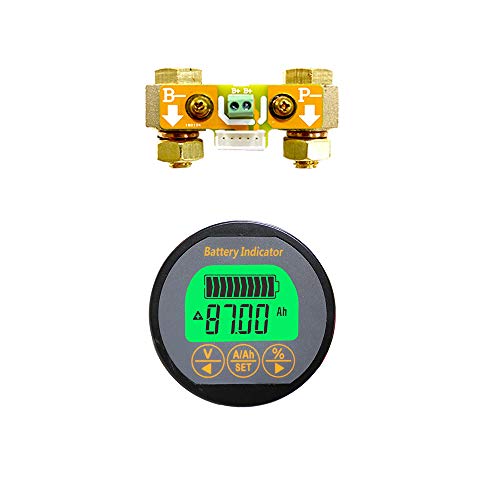
The first major decision in selecting a current tester is determining how you intend to interface with the circuit. Contact-based testers require you to break the circuit or place probes directly in line with the current path. These are generally the most accurate because they measure the actual flow through the conductor, but they require you to physically manipulate the hardware. On the other hand, non-contact testers (often utilizing Hall Effect sensors) allow you to measure current by sensing the magnetic field generated by the flow. These are ideal for high-voltage environments or scenarios where you cannot disrupt the circuit, though they may sacrifice a small degree of precision compared to direct contact methods.
Accuracy and Resolution Requirements
Not all current measurements are created equal. If you are working with high-power automotive systems or industrial motors, you need a device capable of handling high amperage without overheating or blowing a fuse. However, if you are a hobbyist working with microcontrollers or delicate IoT sensors, high amperage capacity is useless if the device cannot detect milliampere (mA) or microampere (µA) fluctuations. Look for a tester with a high degree of resolution—this refers to the smallest increment of current the device can reliably detect. A high-quality tester should provide a stable reading that doesn't fluctuate wildly due to minor electrical noise.
Range and Load Capacity
A common mistake is purchasing a tester that is too narrow in its operational range. A versatile tester should offer multiple ranges, allowing you to switch between high-current testing and low-current precision work. Pay close attention to the 'maximum continuous current' rating. This is the amount of electricity the device can handle indefinitely. If you are testing a device that draws significant power, you must ensure your tester's rating exceeds the expected load to prevent thermal damage to the instrument itself. Additionally, consider the 'peak current' rating, which tells you how much momentary surge the device can withstand during startup sequences.
Safety Features and Build Quality
Since current testers are used in live environments, safety is paramount. Look for testers that feature built-in overcurrent protection and high-quality insulation on the leads. The probes should be robust and made of materials that resist corrosion and wear. In professional settings, an auto-ranging feature is highly beneficial, as it automatically adjusts the scale to match the detected current, reducing the risk of human error. Finally, consider the display. An illuminated LCD or a high-contrast digital readout is essential when working in cramped, dark, or poorly lit electronic enclosures.
Recommendation Logic
When making your final selection, match the tool to your primary application. For industrial maintenance, prioritize durability, high-amperage capacity, and non-contact sensing. For electronics prototyping and repair, prioritize high resolution (milliamp sensitivity) and contact-based precision. If you need a 'jack-of-all-trades' tool, look for a mid-range digital tester with auto-ranging capabilities and a wide spectrum of measurement scales.