#TOP1

In the modern enterprise, data is no longer just a byproduct of business operations. It is the primary engine of competitive advantage. However, as organizations transition from traditional transactional workloads to massive, high-velocity data streams, standard relational databases often hit a performance ceiling. Big data database solutions are engineered specifically to handle the 'three Vs': Volume, Velocity, and Variety. Selecting the right architecture is not merely a technical decision but a strategic business move that dictates your ability to perform real-time analytics, train machine learning models, and scale your infrastructure without astronomical costs.
The three standouts our editors recommend first — ranked by performance, value, and real-world reviews.


Designing Data-Intensive Applications: The Big Ideas Behind Reliable, Scalable, and Maintainable Systems
| SELLER | SELLER SCORE | AMAZON FULFILLED | PRIME | FREE SHIPPING |
|---|---|---|---|---|
| AGIOS MIXAEL | 5.20 | Yes | Yes | Yes |
Modern software architecture often collapses under the weight of massive datasets and unpredictable traffic, leaving engineers scrambling to fix broken systems. Designing Data-Intensive Applications solves this chaos by providing a foundational framework for building reliable and scalable infrastructure. Instead of just teaching you how to use a specific database, this O'Reilly Media guide dives deep into the core principles that govern how data moves, stays consistent, and survives hardware failures. It is the kind of deep-dive resource you keep on your desk for years rather than reading once and tossing aside. Whether you are trying to understand distributed systems or just want to write more maintainable code, this book bridges the gap between theoretical computer science and practical, real-world engineering challenges.


Ace the Data Science Interview: 201 Real Interview Questions Asked By FAANG, Tech Startups, & Wall Street
| SELLER | SELLER SCORE | AMAZON FULFILLED | PRIME | FREE SHIPPING |
|---|---|---|---|---|
| Amazon.com | 9.68 | Yes | Yes | Yes |
Most candidates prepare for data science roles by memorizing algorithms, yet they often fail because they cannot navigate the specific logic used by elite firms. Ace the Data Science Interview changes that dynamic by shifting the focus from theory to the actual tactical execution required in high-stakes environments. This collection of 201 questions provides a direct window into the interview styles used by FAANG companies, Wall Street giants, and agile tech startups. Instead of guessing what might come up, you are essentially looking at a blueprint of the industry's most challenging technical hurdles. It is less of a textbook and more of a strategic playbook designed to bridge the gap between academic knowledge and professional interview performance.
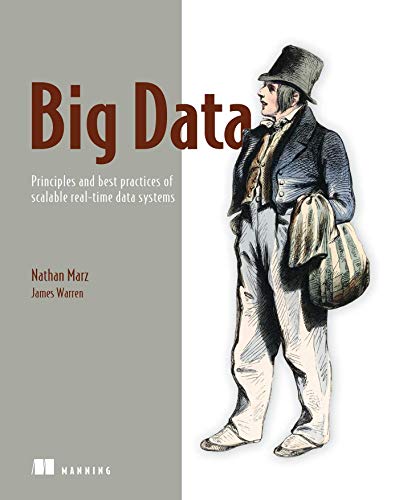


Big Data: Principles and best practices of scalable realtime data systems
| SELLER | SELLER SCORE | AMAZON FULFILLED | PRIME | FREE SHIPPING |
|---|---|---|---|---|
| Jwhaddle | 5.79 | Yes | Yes | Yes |
You are staring at a crashing real-time dashboard while your data ingestion pipeline bottlenecks under a sudden surge of user activity. This is the exact chaos that Manning Publications aims to help you prevent with their deep dive into scalable systems. Instead of just teaching you how to use specific tools, this book focuses on the fundamental architecture required to handle massive datasets without breaking a sweat. It bridges the gap between theoretical distributed computing and the practical, messy reality of managing live data streams. Whether you are designing a new streaming architecture or trying to optimize an existing one, the principles laid out here provide a much-needed roadmap for navigating the complexities of modern data engineering.
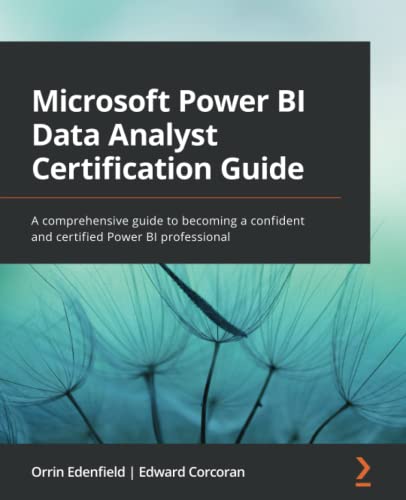
Microsoft Power BI Data Analyst Certification Guide: A comprehensive guide to becoming a confident and certified Power BI professional
| SELLER | SELLER SCORE | AMAZON FULFILLED | PRIME | FREE SHIPPING |
|---|---|---|---|---|
| Amazon.com | 9.68 | Yes | Yes | Yes |
The daunting complexity of data modeling vanishes the moment you crack open this comprehensive roadmap to professional certification. Navigating the intricacies of Power BI can feel like wandering through a labyrinth of raw datasets, but this guide serves as a reliable compass for aspiring analysts. It moves beyond mere theory to build the actual confidence required to pass rigorous exams and handle real-world business intelligence tasks. Instead of hunting through fragmented online tutorials, you get a structured path designed to turn a novice into a certified professional. It is a solid investment for anyone serious about pivoting into a data-driven career and mastering the Microsoft ecosystem.


Mastering Access 365: An Easy Guide to Building Efficient Databases for Managing Your Data
| SELLER | SELLER SCORE | AMAZON FULFILLED | PRIME | FREE SHIPPING |
|---|---|---|---|---|
| Amazon.com | 9.68 | Yes | Yes | Yes |
Is your data currently scattered across a dozen messy spreadsheets that refuse to talk to one another? Mastering Access 365 offers a direct lifeline for anyone feeling overwhelmed by the complexities of relational databases. Instead of wading through dense technical manuals that feel like reading a dictionary, this guide approaches database construction with an emphasis on efficiency and practical application. It focuses on turning raw information into organized, manageable systems that actually work for your specific workflow. Whether you are a small business owner or a data enthusiast, the text simplifies the daunting task of building custom databases from the ground up. It is a straightforward companion for anyone ready to stop fighting their data and start mastering it.

Mathematics of Big Data: Spreadsheets, Databases, Matrices, and Graphs (MIT Lincoln Laboratory Series)
| SELLER | SELLER SCORE | AMAZON FULFILLED | PRIME | FREE SHIPPING |
|---|---|---|---|---|
| Amazon.com | 9.68 | Yes | Yes | Yes |
Data scientists who feel they are merely plugging numbers into black-box algorithms need this text to truly master the underlying mechanics of their craft. Mathematics of Big Data bridges the gap between abstract theory and practical application by focusing on the essential pillars of spreadsheets, databases, matrices, and graphs. Published as part of the prestigious MIT Lincoln Laboratory Series, this book offers a rigorous foundation that moves beyond surface-level coding. Instead of just teaching you how to run a script, it forces you to understand the structural logic required to manipulate massive datasets effectively. It is an essential deep dive for anyone looking to transition from a casual user to a mathematically grounded professional in the field of data science.

Big Data Analytics with Spark: A Practitioner's Guide to Using Spark for Large Scale Data Analysis
| SELLER | SELLER SCORE | AMAZON FULFILLED | PRIME | FREE SHIPPING |
|---|---|---|---|---|
| allnewbooks | 9.66 | No | No | No |
Big Data Analytics with Spark is a definitive roadmap for anyone looking to master large-scale data processing. Instead of getting bogged down in purely theoretical mathematics, this Apress guide focuses on the practical application of Spark within real-world workflows. It serves as a vital companion for data engineers who need to move beyond basic tutorials and into the nuances of actual implementation. While the subject matter is inherently complex, the practitioner-focused approach ensures you are learning how to actually handle massive datasets rather than just reading about them. It is a solid investment for your technical library, especially if you are looking to bridge the gap between understanding a concept and executing it in a production environment.


SAS Certified Specialist Prep Guide: Base Programming Using SAS 9.4
| SELLER | SELLER SCORE | AMAZON FULFILLED | PRIME | FREE SHIPPING |
|---|---|---|---|---|
| Amazon.com | 9.68 | Yes | Yes | Yes |
Most people assume that passing a high-level certification requires a mountain of disparate study materials, but the SAS Institute Prep Guide proves that a single, focused resource is often more effective. This guide targets the SAS 9.4 Base Programming exam with surgical precision, cutting through the noise to focus on exactly what you need to know. Instead of wading through endless documentation, you get a streamlined roadmap designed specifically for the specialist certification. It feels less like a textbook and more like a strategic playbook for your career. While the price point reflects its specialized nature, the depth of coverage makes it an essential cornerstone for anyone serious about mastering data manipulation and programming within the SAS environment.

End-to-End Data Science with SAS®: A Hands-On Programming Guide
| SELLER | SELLER SCORE | AMAZON FULFILLED | PRIME | FREE SHIPPING |
|---|---|---|---|---|
| Amazon.com | 9.68 | Yes | Yes | Yes |
Most aspiring analysts settle for fragmented tutorials that only scratch the surface of statistical modeling, but this guide from SAS Institute offers a complete, cohesive roadmap for the entire data lifecycle. Instead of jumping between disconnected coding snippets, you get a structured, hands-on approach to mastering the SAS environment from start to finish. It functions less like a dry reference manual and more like a practical mentor, guiding you through the complexities of real-world programming workflows. Whether you are trying to refine your predictive modeling skills or simply want to understand how professional data scientists structure their projects, this book provides the technical depth necessary to move beyond basic syntax and into genuine analytical proficiency.

The first step in your selection process is identifying the structure of your data. If your business relies on highly structured, consistent data where ACID (Atomicity, Consistency, Isolation, Durability) compliance is non-negotiable—such as financial transactions—you will likely lean toward distributed SQL engines. However, if you are dealing with unstructured or semi-structured data like social media feeds, sensor logs, or clickstream data, a NoSQL approach is superior. NoSQL databases offer the schema flexibility required to ingest diverse data types without the rigid overhead of predefined tables.
Big data environments demand elasticity. You must decide between vertical scaling (adding more power to an existing machine) and horizontal scaling (adding more machines to a cluster). For true big data applications, horizontal scalability—often referred to as 'scaling out'—is the gold standard. Look for distributed architectures that allow you to add nodes seamlessly to a cluster. This ensures that as your data grows from terabytes to petabytes, your latency remains low and your throughput remains high. Pay close attention to how the system handles 'sharding' or partitioning, as this determines how efficiently the workload is distributed across your hardware.
Not all big data use cases are created equal. Are you performing batch processing for weekly reports, or are you running real-time fraud detection that requires millisecond response times? For high-velocity streaming data, look for databases that support low-latency ingestion and real-time querying. If your primary goal is deep historical analysis, you may prioritize high throughput and massive storage capacity over immediate response times. Understanding the trade-off between 'freshness' of data and the speed of retrieval is critical to avoiding a system that is either too slow for operations or too expensive for simple reporting.
A database does not exist in a vacuum. It must play well with your existing data pipeline. Evaluate how easily the database integrates with your preferred orchestration tools, data ingestion frameworks, and visualization platforms. A database that lacks robust APIs or connectors for popular machine learning libraries will create significant engineering friction. Furthermore, consider the 'operational complexity'—does the system require a dedicated team of database administrators to manage clusters, or does it offer a managed service model that automates patching, backups, and scaling?
When evaluating big data solutions, the sticker price of the software is often the smallest part of the equation. You must account for the cost of storage, compute, and the human capital required to maintain the system. Distributed systems can become incredibly expensive if they are not optimized for data lifecycle management. Look for features like 'tiered storage,' which allows you to move older, less frequently accessed data to cheaper storage layers while keeping hot data in high-performance memory or SSDs.
Quick answers about Databases Big Data before you buy.
Share of top-ranked products by brand, from our editorial analysis.
We've carried out a comprehensive analysis of 5,110 reviews on Databases Big Data, using our selection criteria to identify the best options in the computers & technology. Our findings reveal that most customers typically select Databases Big Data priced around $49.49, with top brands including apress, o'reilly media and manning publications and the mit press.
Our team of expert editors reviewed these high-quality items and handpicked the top 9 Databases Big Data for your consideration. We've also done extensive research on numerous sellers, identifying the best ones in the computers & technology category — including amazon.com, allnewbooks and agios mixael and jwhaddle.
We are dedicated to assisting our users in finding the right business Products based on their needs, saving them considerable time when choosing which Databases Big Data to buy. We take pride in the number of satisfied users we've helped through our thorough and insightful reviews.
Compare the top 9 picks at a glance — select a column to sort.


