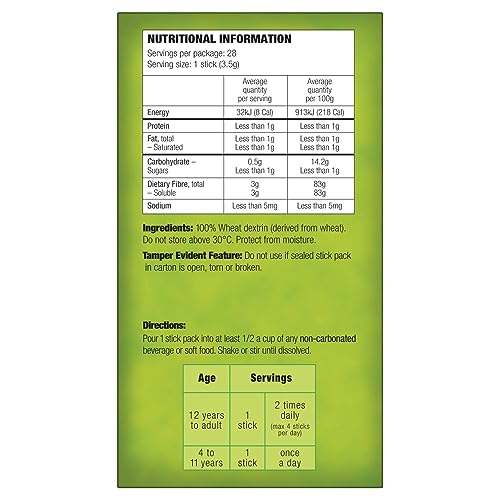
Identify Your Fiber Type: Soluble vs. Insoluble
Not all fiber is created equal, and the 'best' stick pack depends entirely on your physiological goals. Most high-quality stick packs focus on soluble fiber, which dissolves in water to form a gel-like substance in the gut. This type is excellent for slowing digestion, promoting a feeling of fullness (satiety), and helping to regulate blood sugar levels. Common soluble sources include acacia fiber, pectin, and partially hydrolyzed guar gum (PHGG).
Conversely, insoluble fiber does not dissolve and acts more like a broom, adding bulk to stool and helping food pass more quickly through the digestive tract. While some products offer a blend, many stick packs prioritize soluble fiber because it is generally gentler on the stomach. If you have a sensitive digestive system, look for highly fermentable fibers that are processed slowly to avoid the sudden gas and cramping often associated with cheaper, mass-produced psyllium husk blends.
Evaluate Solubility and Mixability
The primary advantage of a stick pack is portability, but a supplement is useless if it turns into a thick, unpalatable sludge in your water bottle. When reviewing products, pay close attention to the 'mixability' factor. Premium stick packs utilize finely milled fibers that integrate smoothly into cold water, tea, or even smoothies without leaving gritty residue at the bottom of the glass. If a product requires vigorous shaking or hot water to dissolve, it may become inconvenient for on-the-go use. Look for descriptions that highlight 'instantized' or 'micronized' particles for the smoothest experience.
Check for Prebiotics and Gut-Supportive Additives
Modern nutritional science has moved beyond simple fiber supplementation toward 'functional' gut health. The most effective stick packs don't just provide bulk. They act as prebiotics—the fuel that feeds your beneficial gut bacteria. Look for formulations that combine fiber with ingredients like inulin, chicory root, or fructooligosaccharides (FOS). Some advanced formulas even include probiotics or digestive enzymes to assist in the breakdown of nutrients, turning a simple fiber supplement into a comprehensive digestive wellness tool.
Mind the Sweeteners and Additives
Because fiber can sometimes have a neutral or slightly earthy taste, many manufacturers add flavorings. This is a critical decision point. Avoid stick packs that rely heavily on artificial sweeteners like aspartame or sucralose, which can disrupt the gut microbiome—the very thing you are trying to support. Instead, opt for products sweetened with natural alternatives like stevia, monk fruit, or even small amounts of organic cane sugar. Additionally, check the ingredient list for unnecessary fillers or artificial dyes. A clean label is a hallmark of a high-quality nutritional supplement.
Dosage and Daily Integration
Finally, consider the serving size relative to your daily needs. Some stick packs offer a concentrated dose of 5-10 grams of fiber, while others are more supplemental. Ensure that the serving size fits your lifestyle—if you find yourself needing to consume four stick packs a day to reach your goal, the cost and convenience factor will diminish. A well-designed product should provide a significant nutritional boost in a single, easy-to-consume serving.