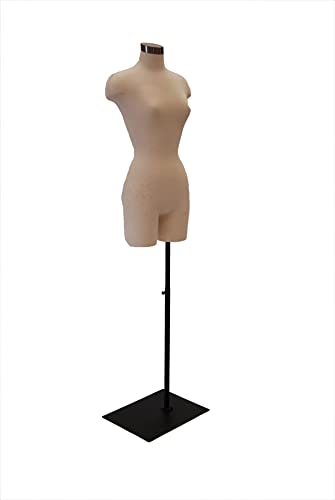
Anatomical Accuracy and Sizing Consistency
The most critical factor when selecting a dress form is how closely it mirrors human proportions. A dress form that is too narrow in the bust or too wide in the hips will lead to incorrect pattern adjustments, resulting in garments that do not fit real bodies. When evaluating Roxydisplay™ options, look for forms that offer standardized measurements. If you primarily sew for a specific size range, prioritize a form that matches those dimensions precisely. For those who work with diverse clientele, consider whether the form offers a realistic torso length, as a mismatch in the waist-to-shoulder ratio can ruin the drape of a bodice.
Surface Material and Pinning Capability
A dress form is only as useful as its ability to hold a pin. Many decorative mannequins use hard plastic or smooth fiberglass surfaces that make pinning impossible. For serious garment construction, you must select a form with a high-density foam core covered in a durable, pinnable fabric like linen or heavy cotton. This fabric must be tight enough to provide a firm surface for structural shaping, yet soft enough to allow pins to penetrate without bending. Check the density of the padding. A form that is too soft will collapse under the pressure of heavy fabric or multiple pins, while one that is too hard will make it difficult to create subtle contours.
Stability and Base Construction
There is nothing more frustrating than a dress form that wobbles or tips over while you are draping heavy wool or working on a complex sleeve. The base of the mannequin is just as important as the torso. Look for heavy-duty metal tripod bases or weighted circular stands. A sturdy base ensures that the center of gravity remains low, allowing you to work around the form without constant readjustment. If you plan to use your dress form for long hours of draping, a stable metal stand is non-negotiable to prevent accidental falls that could damage both the form and your work.
Adjustability and Versatility
Depending on your level of expertise, you may want a static form or an adjustable one. Static forms are often more accurate for specific sizes and provide a more consistent surface for pattern making. However, adjustable dress forms allow you to expand or contract the bust, waist, and hip measurements to accommodate different body types. If your goal is to master the art of draping for various silhouettes, an adjustable model offers greater long-term value. Additionally, consider whether the form includes features like removable neck caps or specialized shoulder pads, which can assist in achieving a more realistic garment fit.
Intended Use: Display vs. Construction
Finally, clarify your primary goal. If you are looking to showcase finished pieces in a boutique setting, aesthetic appeal and elegant finishes are paramount. However, if the form is an extension of your sewing machine, prioritize utility. A construction-focused form might be less 'pretty' than a retail mannequin, but its ability to hold pins, withstand heavy handling, and provide a true-to-life silhouette makes it the superior tool for any designer.