#TOP1

In the field of advanced pharmacology, the efficacy of a therapeutic agent is often dictated less by its intrinsic potency and more by its delivery mechanism. Selecting the right drug delivery system (DDS) requires a sophisticated understanding of how chemical structures interact with biological barriers. Whether you are sourcing specialized polymers for controlled release, lipid-based nanocarriers, or sophisticated hydrogel matrices, the choice of chemistry directly impacts bioavailability, metabolic stability, and the overall pharmacokinetic profile of the drug candidate. This guide is designed to help researchers and procurement specialists navigate the complex chemical landscape of drug delivery technologies.
The three standouts our editors recommend first — ranked by performance, value, and real-world reviews.

Ansel's Pharmaceutical Dosage Forms and Drug Delivery Systems
| SELLER | SELLER SCORE | AMAZON FULFILLED | PRIME | FREE SHIPPING |
|---|---|---|---|---|
| Amazon.com | 9.68 | Yes | Yes | Yes |
Most people assume pharmaceutical science is just about mixing chemicals, but the real magic lies in how those chemicals actually reach their target in the body. Ansel's Pharmaceutical Dosage Forms and Drug Delivery Systems dives deep into that exact mechanism, moving far beyond simple formulas to explore the complex engineering of modern medicine. It is a foundational text that bridges the gap between theoretical chemistry and practical application. While the subject matter is undeniably dense, the depth of coverage makes it an indispensable resource for anyone serious about pharmacy or drug development. At its current price point, it serves as a heavy-duty technical cornerstone for a professional or academic library rather than a casual read.

Drug Delivery: Fundamentals and Applications, Second Edition
| SELLER | SELLER SCORE | AMAZON FULFILLED | PRIME | FREE SHIPPING |
|---|---|---|---|---|
| Amazon.com Services LLC | 0.00 | No | No | No |
The sheer depth of technical insight found in this second edition makes it an indispensable resource for anyone serious about pharmaceutical science. Instead of wading through outdated theories, you get a streamlined, modern look at how substances actually move through biological systems. Since this is a digital ebook, you can jump straight into the complex chapters on delivery mechanisms without waiting for a heavy textbook to arrive in the mail. It feels like having a high-level seminar available at your fingertips the moment you need to reference a specific application. It serves as a serious professional tool that prioritizes immediate accessibility and updated scientific fundamentals.

Oral Drug Delivery System: Oral Thin Film/Strip
| SELLER | SELLER SCORE | AMAZON FULFILLED | PRIME | FREE SHIPPING |
|---|---|---|---|---|
| Amazon.com | 9.68 | Yes | Yes | Yes |
Most pharmaceutical researchers spend years wrestling with traditional pill bioavailability, but this specialized text from LAP Lambert Academic Publishing offers a much more sophisticated look at the future of administration. Instead of focusing on standard capsules, this volume dives deep into the mechanics of oral thin film and strip technology. It serves as a concentrated resource for anyone looking to understand how these rapid-dissolve systems actually function within the oral cavity. While it is a highly specific academic work, the depth of information provided makes it a vital reference for professionals navigating the complexities of modern drug delivery methods. It is a focused, technical deep dive that moves past the basics of medication to explore high-tech delivery alternatives.
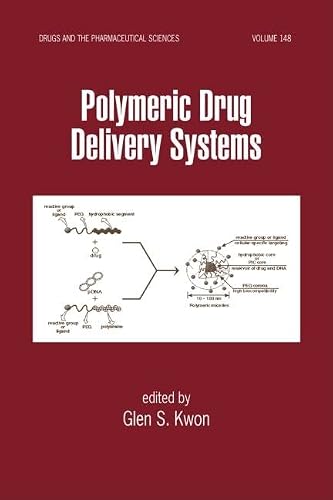
Polymeric Drug Delivery Systems (Drugs and the Pharmaceutical Sciences)
| SELLER | SELLER SCORE | AMAZON FULFILLED | PRIME | FREE SHIPPING |
|---|---|---|---|---|
| Amazon.com | 9.68 | Yes | Yes | Yes |
A researcher hunched over a laboratory bench struggling to stabilize a volatile compound will find this text an indispensable companion. Polymeric Drug Delivery Systems from CRC Press dives deep into the intersection of polymer science and pharmaceutical application, making it a cornerstone for anyone working in advanced drug formulation. While it is currently seeing high demand and is temporarily out of stock, the specialized nature of this volume suggests it is a vital resource for academic and industrial professionals alike. It bridges the gap between theoretical polymer chemistry and practical pharmaceutical sciences, providing the technical depth required to navigate modern delivery challenges. If you are serious about mastering controlled release mechanisms, this is the authoritative guide you need on your shelf.

Novel Drug Delivery Systems for Phytoconstituents
| SELLER | SELLER SCORE | AMAZON FULFILLED | PRIME | FREE SHIPPING |
|---|---|---|---|---|
| Basi6 International | 9.59 | No | No | No |
Most researchers assume that the biggest hurdle in herbal medicine is the potency of the plants themselves, but this CRC Press volume argues that the real battle is actually delivery. It is one thing to isolate a powerful phytoconstituent, but it is an entirely different challenge to ensure that compound survives digestion and reaches its biological target effectively. This text dives deep into the sophisticated engineering required to bridge that gap. While the price point is certainly an investment, the depth of technical insight provided makes it a vital cornerstone for anyone working at the intersection of pharmacology and natural product chemistry. It moves past the basic science to focus on the high-tech mechanisms that make modern botanical therapeutics actually viable in a clinical setting.


Bioadhesive Drug Delivery Systems: Fundamentals, Novel Approaches, and Development (DRUGS AND THE PHARMACEUTICAL SCIENCES: A SERIES OF TEXTBOOKS AND M...
| SELLER | SELLER SCORE | AMAZON FULFILLED | PRIME | FREE SHIPPING |
|---|---|---|---|---|
| Amazon Global Store UK | 0.00 | No | No | No |
Bioadhesive Drug Delivery Systems: Fundamentals, Novel Approaches, and Development serves as an essential deep dive into the complex mechanics of pharmaceutical adhesion. This CRC Press monograph isn't just a surface-level overview. It is a comprehensive technical resource designed for serious researchers and pharmaceutical scientists. While the price point reflects its specialized academic nature, the depth of information regarding novel approaches and developmental frameworks makes it a cornerstone for anyone working in advanced drug delivery. You should keep in mind that this is a specialized professional text rather than a casual read. Because of its niche focus and high technical demand, expect a lead time of roughly four to six weeks for shipping to arrive at your door.

Zoo Animal and Wildlife Immobilization and Anesthesia
| SELLER | SELLER SCORE | AMAZON FULFILLED | PRIME | FREE SHIPPING |
|---|---|---|---|---|
| Amazon.com | 9.68 | Yes | Yes | Yes |
Veterinary specialists working with exotic species cannot afford to rely on guesswork when managing high-stakes medical procedures. This Wiley-Interscience text serves as a vital technical cornerstone for anyone tasked with the complex pharmacology and physical management of diverse wildlife. Because anesthesia for non-domesticated animals carries such extreme risks, having a dedicated, authoritative resource on immobilization is a necessity rather than a luxury. The depth of knowledge provided here is essential for maintaining safety in zoo environments where every dosage and restraint technique matters immensely. It is a serious investment for a serious professional, providing the clinical rigor required to handle unpredictable biological variables during sedation.

The backbone of most controlled-release systems is the polymer matrix. When selecting chemical components, you must prioritize the degradation mechanism: bulk erosion versus surface erosion. For applications requiring a constant, zero-order release rate, surface-eroding polymers are superior as they maintain a predictable release profile as the material thins. Conversely, bulk-eroding polymers may lead to a sudden 'burst release' if the internal structure collapses prematurely. Consider the molecular weight distribution and polydispersity index (PDI) of the polymers, as these factors dictate the predictability of the drug release curve and the mechanical integrity of the delivery vehicle.
For targeted delivery, particularly in gene therapy or intracellular protein delivery, lipid-based systems such as liposomes or lipid nanoparticles (LNPs) are industry standards. The decision logic here should focus on the molar ratio of helper lipids, cholesterol, and ionizable lipids. Ionizable lipids are critical for endosomal escape. They remain neutral at physiological pH (reducing toxicity) but become positively charged in the acidic environment of the endosome, facilitating the release of the cargo into the cytoplasm. Ensure that the lipid purity levels are high to prevent unintended immunogenic responses during in vivo studies.
A common pitfall in selecting drug delivery chemistry is overlooking the long-term biological impact of the carrier itself. Beyond basic biocompatibility, you must evaluate the 'stealth' capabilities of the system. For instance, PEGylation (the attachment of polyethylene glycol chains) is a standard method to avoid recognition by the mononuclear phagocyte system (MPS). However, be aware of the growing prevalence of anti-PEG antibodies in certain populations. When choosing a carrier, seek out chemistries that demonstrate minimal proinflammatory cytokine induction and predictable clearance pathways to prevent bioaccumulation in the liver or spleen.
Modern pharmacology is moving toward 'smart' systems that respond to specific physiological triggers. If your research requires localized delivery, look for chemistries that are sensitive to pH shifts (common in tumor microenvironments), redox gradients (glutathione levels), or enzymatic activity. These responsive materials allow for precise spatial and temporal control, minimizing systemic side effects. When evaluating these products, verify the sensitivity threshold of the chemical trigger to ensure it aligns with the specific biological environment of your target pathology.
Finally, the compatibility between the drug cargo and the delivery vehicle is paramount. A delivery system is only as good as its loading efficiency. For hydrophobic drugs, lipophilic reservoirs or micellar structures are necessary. For hydrophilic payloads, hydrogels or aqueous-core liposomes are preferred. Analyze the partition coefficient (LogP) of your active pharmaceutical ingredient (API) to determine which chemical delivery system will provide the highest stability and prevent premature leakage during circulation.
Quick answers about Drug Delivery Systems Pharmacology before you buy.
Share of top-ranked products by brand, from our editorial analysis.
We've carried out a comprehensive analysis of 12 reviews on Drug Delivery Systems Pharmacology, using our selection criteria to identify the best options in the categories. Our findings reveal that most customers typically select Drug Delivery Systems Pharmacology priced around $129.71, with top brands including wiley-interscience and crc press and lap lambert academic publishing.
Our team of expert editors reviewed these high-quality items and handpicked the top 7 Drug Delivery Systems Pharmacology for your consideration. We've also done extensive research on numerous sellers, identifying the best ones in the categories category — including amazon.com, basi6 international and amazon global store uk and amazon.com services llc.
We are dedicated to assisting our users in finding the right chemistry Products based on their needs, saving them considerable time when choosing which Drug Delivery Systems Pharmacology to buy. We take pride in the number of satisfied users we've helped through our thorough and insightful reviews.
Compare the top 7 picks at a glance — select a column to sort.


