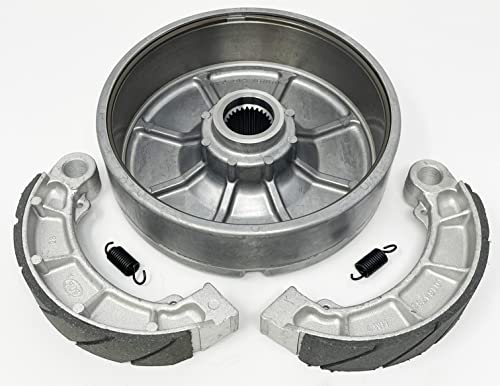
Understanding Friction Material Composition
The single most important factor when selecting drum brakes is the composition of the lining material. Drum brakes operate on the principle of expansion. As the shoes press against the inner surface of the drum, the friction material must be able to grip without excessive sliding or 'glazing.' Look for linings that are formulated to handle high thermal loads. High-quality armor tech options often utilize semi-metallic or advanced organic compounds that offer a balance between quiet operation and aggressive bite. If you frequently haul heavy loads or live in a mountainous region, prioritize materials that resist brake fade—the loss of stopping power caused by excessive heat buildup during repetitive braking.
Thermal Management and Heat Dissipation
Drum brakes are inherently more prone to heat buildup than disc brakes because they are enclosed systems. Once heat is trapped inside the drum, it can lead to uneven expansion and reduced effectiveness. When evaluating your options, consider the structural integrity of the brake shoes and the quality of the hardware. A well-engineered brake set will feature components designed to distribute heat more evenly across the surface area. This prevents 'hot spots' which can cause the drum to warp or the lining to deteriorate prematurely. Selecting a kit that includes high-quality spring and adjuster hardware is also vital, as these components ensure the shoes return to their original position quickly, allowing for better cooling between braking events.
Compatibility and Fitment Precision
Drum brakes are highly sensitive to fitment. Even a fraction of a millimeter of difference in shoe thickness or spring tension can lead to dragging, noise, or uneven wear. When shopping, do not simply look for a generic match. Ensure the components are engineered specifically for your vehicle's braking system architecture. This includes the diameter of the drum, the width of the shoes, and the specific configuration of the self-adjuster mechanism. A precision-fit brake set will ensure that the contact patch between the shoe and the drum is maximized, providing the most consistent pedal feel and stopping distance.
Noise, Vibration, and Harshness (NVH)
One of the primary complaints regarding drum brakes is the potential for squealing or grinding. This is often a result of poor material quality or improper installation. To minimize NVH, look for brake sets that include anti-squeal shims or specialized coatings on the backing plates. These features help dampen the vibrations that occur when the friction material meets the drum. A high-quality selection will provide a smooth, progressive engagement rather than an abrupt, jarring stop, which significantly improves the driving experience and reduces wear on other suspension components.
Decision Logic: How to Choose
To make the final decision, categorize your driving needs. For standard daily driving, prioritize a balance of quiet operation and cost-effectiveness. If your vehicle is used for towing or heavy-duty utility work, shift your focus toward heavy-duty friction linings and enhanced heat resistance. Always opt for complete kits that include all necessary hardware, as replacing old, fatigued springs with new, high-tension ones is essential for maintaining the correct clearance and preventing brake drag.