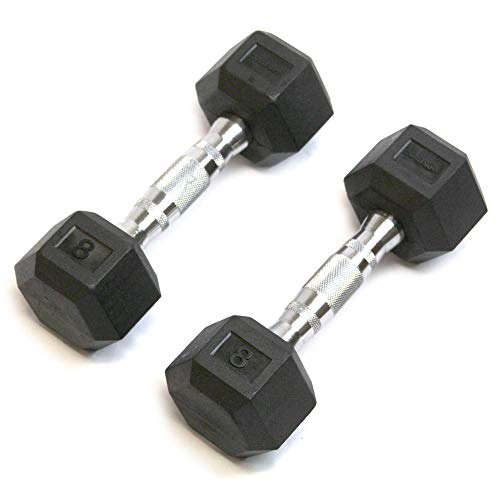
Understanding Dumbbell Materials and Construction
The material of your dumbbells is the first major decision you will face, as it dictates the durability, noise level, and floor protection. Generally, you will encounter three main types: iron, rubber-coated, and neoprene.
Cast Iron: These are the traditional choice for serious lifters. They are incredibly durable and often more affordable per pound. However, they can be noisy when set down and can easily chip the flooring if you do not use a mat. They are best suited for those who prioritize longevity and a classic gym feel.
Rubber-Coated: These are the gold standard for home gyms. The rubber encasement protects your floors from impact and significantly muffles the sound of clanking weights. They are also more resistant to rust, making them a great choice if your workout space is in a garage or basement where humidity might be an issue.
Neoprene: Often found in lighter weights, neoprene-coated dumbbells are aesthetically pleasing and provide a soft, comfortable grip. They are excellent for high-repetition aerobic work, Pilates, or physical therapy, but they are rarely suitable for heavy strength training as they lack the density required for high-weight increments.
Grip Ergonomics and Handle Design
Your grip is the primary interface between you and the weight. If the handle is uncomfortable, your form will suffer, and you may experience calluses or hand fatigue prematurely. Look for handles with knurling—a textured, cross-hatched pattern etched into the metal. Knurling provides the friction necessary to prevent the weight from slipping out of your hands when your palms get sweaty.
Pay attention to the diameter of the handle as well. A handle that is too thick can be difficult to wrap your fingers around during heavy lifts, while one that is too thin can cause discomfort during extended sets. Most high-quality dumbbells feature a chrome-plated steel handle, which offers a balance of durability and a smooth, professional feel.
Fixed vs. Adjustable Weight Systems
One of the most critical decision factors is how you plan to progress in your fitness journey. This brings us to the choice between fixed dumbbells and adjustable sets.
Fixed Dumbbells: These are single-weight units. They are incredibly sturdy and easy to grab mid-set, but they take up significant storage space. If you want to increase your strength, you will eventually need to buy an entirely new pair of heavier dumbbells. These are best for those with a dedicated gym space and a specific, unchanging lifting program.
Adjustable Dumbbells: These systems allow you to change the weight using a dial, pin, or plate-loading mechanism. They are the ultimate space-savers for apartment dwellers or those with minimal equipment. While they often have a higher upfront cost, they replace an entire rack of weights. When choosing an adjustable set, consider the 'increment' size. You want a system that allows for small, incremental jumps in weight to ensure steady progressive overload.
Weight Selection Logic
To avoid buying weights that are too light to challenge you or too heavy to use safely, consider your current strength baseline. For most beginners, a versatile range includes a lighter pair for overhead presses and lateral raises, and a heavier pair for goblet squats and rows. If you are investing in a single set, aim for a weight that allows you to perform 10 to 12 repetitions with good form while feeling challenged by the final two reps. If you are buying adjustable sets, ensure the maximum weight capacity is high enough to accommodate your long-term strength goals.