#TOP1

Selecting a banking partner is one of the most consequential financial decisions a person or business can make. Unlike consumer electronics or household goods, a banking relationship is a long-term commitment that dictates your liquidity, your ability to leverage credit, and the security of your life savings. Whether you are looking for a personal checking account, a high-yield savings vehicle, or complex commercial treasury management, the 'best' bank is not defined by a flashy mobile app, but by the alignment of their fee structures, interest rate offerings, and institutional stability with your specific cash-flow requirements.
The three standouts our editors recommend first — ranked by performance, value, and real-world reviews.


Tipped: The life changing guide to financial freedom for waitresses, bartenders, strippers, and all other service industry professionals
| SELLER | SELLER SCORE | AMAZON FULFILLED | PRIME | FREE SHIPPING |
|---|---|---|---|---|
| Amazon.com | 9.68 | Yes | Yes | Yes |
Tipped is a specialized roadmap designed specifically for the unique, fluctuating income cycles of the service industry. Most financial advice assumes a steady bi-weekly paycheck, but this guide understands the reality of living on tips, whether you are working behind a bar, serving tables, or performing in clubs. It tackles the specific hurdles faced by hospitality workers, offering a way to turn inconsistent earnings into long-term stability. At a price point, it acts as a practical toolkit for anyone tired of the paycheck-to-paycheck grind. It is a refreshing, niche approach to wealth building that actually speaks the language of the people it aims to help.
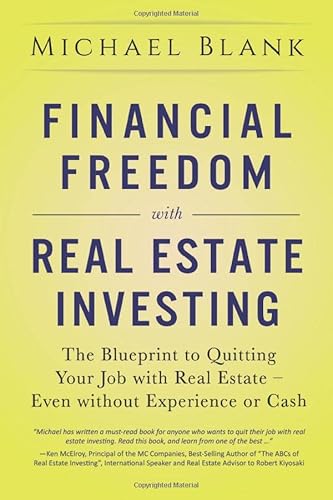

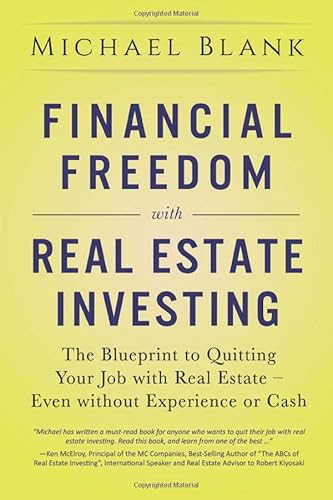
Financial Freedom with Real Estate Investing: The Blueprint To Quitting Your Job With Real Estate - Even Without Experience Or Cash
| SELLER | SELLER SCORE | AMAZON FULFILLED | PRIME | FREE SHIPPING |
|---|---|---|---|---|
| Amazon.com | 9.68 | Yes | Yes | Yes |
Financial Freedom with Real Estate Investing serves as a practical roadmap for anyone looking to transition from a traditional career to property ownership. This book tackles the intimidating barriers of entry that usually keep beginners at bay, specifically addressing how to navigate the market without a massive pile of upfront cash or years of industry experience. It reads like a strategic blueprint designed to demystify the complexities of real estate acquisition and wealth building. Instead of focusing on abstract economic theories, the text prioritizes actionable steps that allow you to build a foundation for quitting your day job. It is a solid resource for those who need a structured approach to turning real estate into a primary source of income.

Operational Risk Management: Best Practices in the Financial Services Industry (The Wiley Finance Series)
| SELLER | SELLER SCORE | AMAZON FULFILLED | PRIME | FREE SHIPPING |
|---|---|---|---|---|
| Amazon.com | 9.68 | Yes | Yes | Yes |
True expertise in financial risk mitigation requires deep, structural understanding rather than just skimming through surface-level regulatory checklists. This Wiley Finance Series installment provides the heavy-duty framework necessary for navigating the complexities of modern banking and investment landscapes. Instead of relying on outdated methodologies, you get a professional deep dive into the actual best practices used by industry leaders to manage operational vulnerabilities. It functions as a rigorous roadmap for anyone serious about protecting institutional stability in an increasingly volatile market. While the subject matter is dense, the clarity of the guidance makes it an indispensable asset for professionals who need to move beyond theoretical knowledge and into practical, high-stakes execution.
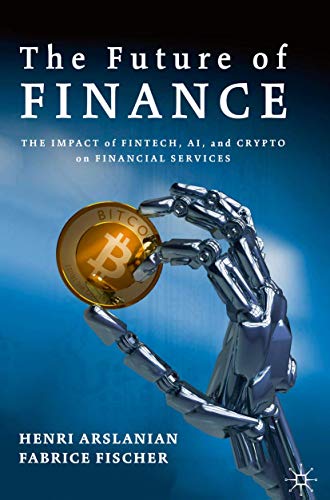
The Future of Finance: The Impact of FinTech, AI, and Crypto on Financial Services
| SELLER | SELLER SCORE | AMAZON FULFILLED | PRIME | FREE SHIPPING |
|---|---|---|---|---|
| Amazon.com | 9.68 | Yes | Yes | Yes |
This Springer publication stands as a definitive roadmap for professionals navigating the rapidly shifting digital economy. It dives deep into the convergence of artificial intelligence and decentralized finance, offering a sophisticated look at how these technologies are rewriting the rules of traditional banking. Rather than just skimming the surface of market trends, the text provides a serious analytical framework for understanding how crypto and automated systems are reshaping global services. It is an essential addition to any researcher's library or a strategist's desk, providing the necessary context to predict where the industry is heading next. While it requires a focused mind to digest the complex subject matter, the depth of insight makes it a worthwhile investment for anyone serious about the future of money.

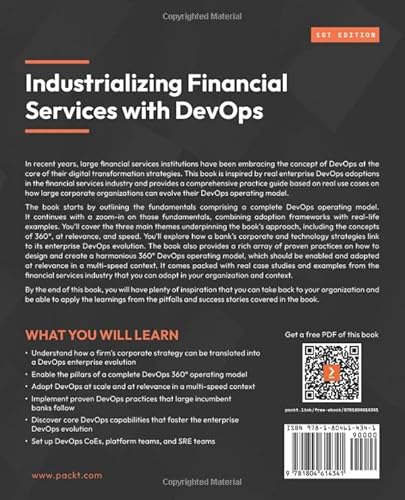
Industrializing Financial Services with DevOps: Proven 360° DevOps operating model practices for enabling a multi-speed bank
| SELLER | SELLER SCORE | AMAZON FULFILLED | PRIME | FREE SHIPPING |
|---|---|---|---|---|
| Amazon.com | 9.68 | Yes | Yes | Yes |
This book serves as a definitive blueprint for fintech leaders and banking executives navigating the complexities of modern digital transformation. Instead of offering vague theoretical concepts, the text dives deep into the practicalities of a 360° DevOps operating model designed specifically for the high-stakes financial sector. It addresses the critical challenge of building a multi-speed bank, allowing traditional institutions to maintain stability while simultaneously accelerating innovation through agile methodologies. The prose is direct and professional, making it an essential resource for anyone tasked with industrializing software delivery within a highly regulated environment. It effectively bridges the gap between high-level strategy and the technical realities of large-scale deployment.

Data Quality Engineering in Financial Services: Applying Manufacturing Techniques to Data
| SELLER | SELLER SCORE | AMAZON FULFILLED | PRIME | FREE SHIPPING |
|---|---|---|---|---|
| Amazon.com | 9.68 | Yes | Yes | Yes |
Data quality in banking isn't just a software problem. It is actually a manufacturing problem in disguise. This book makes the bold leap of applying rigorous industrial production techniques to the often chaotic world of financial data streams. Instead of treating data as an abstract concept, the text approaches it as a tangible product that requires assembly-line precision and strict quality control protocols. If you are working in fintech or high-stakes financial environments, the shift in perspective from traditional IT troubleshooting to systematic engineering is eye-opening. It moves the conversation away from reactive fixes and toward a proactive, structural methodology that treats data integrity with the same gravity as a physical supply chain.


Conduct and Pay in the Financial Services Industry: The regulation of individuals (Lloyd's Commercial Law Library)
| SELLER | SELLER SCORE | AMAZON FULFILLED | PRIME | FREE SHIPPING |
|---|---|---|---|---|
| Amazon.com | 9.68 | Yes | Yes | Yes |
Conduct and Pay in the Financial Services Industry is an indispensable legal authority for anyone navigating the complex web of individual regulation. Published by Informa Law from Routledge as part of the prestigious Lloyd's Commercial Law Library, this text serves as a definitive guide for professionals who need to master compliance and conduct standards. While the price point reflects its specialized nature, the depth of insight provided is essential for staying ahead of shifting regulatory landscapes. It isn't just a textbook. It is a professional necessity for those operating within the high-stakes environment of financial services. If you are looking for a comprehensive deep dive into how individuals are regulated, this volume delivers the precision required for legal and financial excellence.
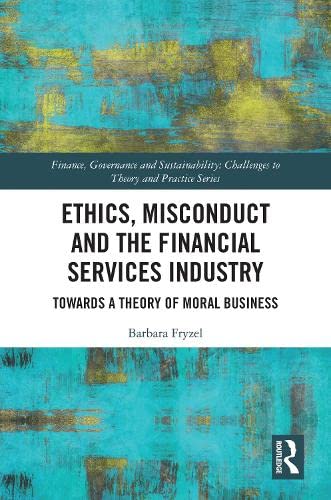
Ethics, Misconduct and the Financial Services Industry: Towards a Theory of Moral Business (Finance, Governance and Sustainability)
| SELLER | SELLER SCORE | AMAZON FULFILLED | PRIME | FREE SHIPPING |
|---|---|---|---|---|
| Amazon.com | 9.68 | Yes | Yes | Yes |
Academic researchers and compliance officers require this text to bridge the gap between theoretical ethics and the messy reality of modern finance. This book moves beyond simple rule-following to propose a robust theory of moral business, specifically targeting the systemic issues found within governance and sustainability frameworks. While many texts focus solely on legal compliance, this work dives deep into the psychological and structural drivers of misconduct. It is a dense, intellectually demanding read, but it is essential for anyone attempting to understand how financial institutions can actually integrate morality into their core operations rather than just treating it as a checkbox exercise. If you are looking to understand the intersection of finance and ethics, this is your foundational roadmap.

Fintech and the Future of Finance: Market and Policy Implications
| SELLER | SELLER SCORE | AMAZON FULFILLED | PRIME | FREE SHIPPING |
|---|---|---|---|---|
| Amazon.com | 9.68 | Yes | Yes | Yes |
The heavy, authoritative weight of this text immediately signals that you are holding a serious academic resource rather than a casual business read. Fintech and the Future of Finance: Market and Policy Implications dives deep into the complex intersection of rapid technological advancement and the regulatory frameworks that attempt to keep pace. It moves beyond surface-level trends to explore the actual structural shifts occurring within global markets. If you are trying to wrap your head around how digital disruption is reshaping policy, this volume provides the necessary depth. It is a dense, intellectual deep dive that feels essential for anyone working at the nexus of financial technology and government oversight.

Digitalization of Financial Services in the Age of Cloud: Considerations for Your Organization's Cloud Strategy
| SELLER | SELLER SCORE | AMAZON FULFILLED | PRIME | FREE SHIPPING |
|---|---|---|---|---|
| Amazon.com | 9.68 | Yes | Yes | Yes |
Financial executives and IT strategists cannot afford to ignore the shifting landscape described in this essential guide. Digitalization is no longer a luxury for banking institutions. It is a survival requirement, and this book provides the necessary roadmap for navigating that transition. It dives deep into the complexities of integrating cloud technology within highly regulated financial frameworks, offering high-level strategic considerations that go beyond simple technical implementation. Instead of focusing on basic IT tutorials, it addresses the structural and organizational shifts required to thrive in a cloud-centric era. Whether you are managing a legacy institution or a fintech startup, the insights here help bridge the gap between traditional fiscal management and modern digital agility.

The first decision factor is determining whether a traditional brick-and-mortar institution or a digital-first neobank suits your lifestyle. Traditional banks offer the advantage of physical branches and face-to-face relationship management, which is vital for complex tasks like notarizing documents, securing large cashier's checks, or discussing mortgage nuances. Conversely, digital banks often pass the savings from their lack of physical overhead directly to you in the form of higher Annual Percentage Yields (APY) on savings and lower monthly maintenance fees. If you frequently handle physical cash or require in-person advisory services, stick to a national or regional player with a robust branch network.
A bank's profitability often relies on 'friction fees'—small charges that accumulate over time. When comparing options, look beyond the advertised interest rate and scrutinize the fine print regarding:
In the modern financial landscape, your bank is essentially a software provider. A seamless mobile interface is no longer a luxury. It is a necessity for real-time fraud monitoring, mobile check deposits, and instant peer-to-peer transfers. However, high-tech convenience must be balanced with rigorous security protocols. Look for institutions that offer multi-factor authentication (MFA), biometric login capabilities, and, most importantly, comprehensive FDIC or NCUA insurance coverage. Never deposit funds into an institution that does not provide clear documentation regarding federal deposit insurance.
Your banking needs today may not be your needs in five years. A smart buyer looks for a bank that offers a full spectrum of financial products. If you start with a simple checking account, will that same institution provide a competitive mortgage rate when you buy a home? Will they offer specialized lines of credit or business loans as your enterprise grows? Selecting a bank with deep product integration allows you to consolidate your financial life, often leading to 'relationship pricing' discounts on loans and interest rate bumps on deposits.
Quick answers about Financial Services Industry before you buy.
Share of top-ranked products by brand, from our editorial analysis.
We've carried out a comprehensive analysis of 1,808 reviews on Financial Services Industry, using our selection criteria to identify the best options in the categories. Our findings reveal that most customers typically select Financial Services Industry priced around $58.42, with top brands including wiley, informa law from routledge and springer and createspace independent publishing platform.
Our team of expert editors reviewed these high-quality items and handpicked the top 10 Financial Services Industry for your consideration. We've also done extensive research on numerous sellers, identifying the best ones in the categories category — including and amazon.com.
We are dedicated to assisting our users in finding the right banking Products based on their needs, saving them considerable time when choosing which Financial Services Industry to buy. We take pride in the number of satisfied users we've helped through our thorough and insightful reviews.
Compare the top 10 picks at a glance — select a column to sort.