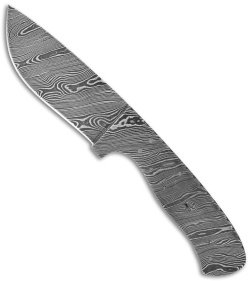
Understanding Blade Steel and Edge Retention
The soul of any hunting knife lies in its steel. When browsing fixed blades, you will encounter various grades of stainless and high-carbon alloys. For hunting specifically, you want a balance between hardness and toughness. A blade that is too hard may hold a razor edge for a long time but could chip if you strike a bone or a hard knot in wood. Conversely, a softer steel will be incredibly tough and easy to sharpen in the field, but it will require frequent honing. Look for steels that offer high corrosion resistance if you plan on hunting in damp, coastal, or snowy environments, as moisture is the enemy of a clean cut.
Blade Geometry and Profile
The shape of the blade dictates its primary function. If your main goal is field dressing and skinning, look for a drop-point or clip-point profile with a thinner primary grind. These shapes allow for precise, controlled slicing and reduce the risk of puncturing internal organs during processing. If you intend to use your knife for more general camp duties—such as splitting kindling or heavy-duty carving—a thicker spine and a more robust belly will provide the necessary leverage. A full tang construction, where the steel of the blade extends all the way through the handle, is non-negotiable for a serious hunting knife to ensure the tool doesn't snap under lateral pressure.
Handle Ergonomics and Grip Security
A knife is only as good as your ability to control it, especially when your hands are cold, wet, or covered in organic matter. Fixed blade hunting knives often utilize materials like textured polymers, G10, or treated hardwoods. For serious field use, synthetic materials like G10 are often superior because they provide consistent grip regardless of temperature and are virtually impervious to rot or moisture. Pay close attention to the finger guard or choil. A well-designed guard prevents your hand from sliding forward onto the sharp edge during heavy tasks, which is a vital safety feature during high-stress field situations.
Weight Distribution and Carry Options
The weight of a fixed blade affects how it feels in the hand and how much fatigue it causes during long treks. A heavy, oversized knife is great for heavy chopping but can be cumbersome for delicate skinning tasks. Consider the balance point: a knife that is too blade-heavy may feel unwieldy, while one that is too handle-heavy might feel unbalanced during fine work. Additionally, consider how you will carry the tool. A high-quality sheath made of Kydex or heavy-duty nylon that allows for secure belt or modular attachment is essential for keeping your knife accessible and protected.
Decision Logic: Matching the Knife to the Mission
To make the final decision, categorize your primary use case. If you are a dedicated hunter focusing on meat processing, prioritize a slim, sharp drop-point with an ergonomic, non-slip synthetic handle. If you are an all-around survivalist, prioritize a thicker, full-tang blade with a versatile profile that can handle both woodcraft and utility tasks. By matching the steel's properties and the blade's geometry to your specific environment, you ensure that your knife remains a reliable companion rather than a liability.