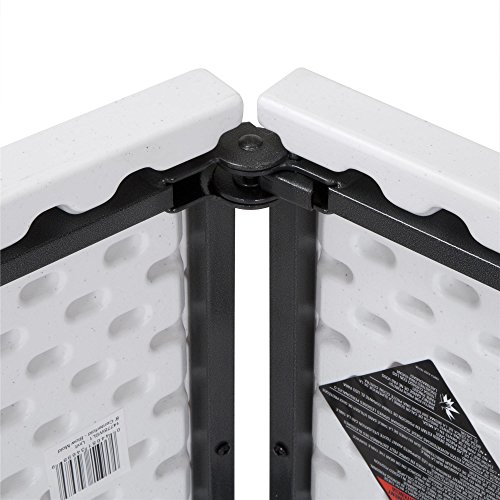
1. Assessing Frame Construction and Stability
The longevity of a folding table is determined almost entirely by its skeletal structure. When evaluating options, look closely at the leg mechanism. Steel frames are the industry standard for a reason. They offer the rigidity necessary to prevent the 'wobble' often associated with cheaper portable furniture. Pay attention to the locking mechanism on the legs. High-quality tables feature reinforced joints and secure latches that prevent the legs from collapsing unexpectedly under load. If you plan to use the table for heavy-duty tasks, such as supporting a printer or heavy toolsets, prioritize a heavy-gauge steel frame over lightweight aluminum, which is better suited for lightweight catering or picnic use.
2. Tabletop Material and Surface Utility
The surface of the table dictates its primary application. High-density polyethylene (HDPE) is the most common material found in premium folding tables. It is impact-resistant, moisture-proof, and incredibly easy to sanitize, making it ideal for both indoor dining and outdoor events. If you require a surface that is aesthetically pleasing for a formal event, look for finishes that mimic wood grain, though these may require more careful maintenance. For heavy-duty workshop environments, a thicker tabletop prevents bowing when weight is distributed unevenly across the center of the table.
3. Portability vs. Surface Area
A common mistake is choosing a table that is too large to transport or too small to be useful. You must weigh the dimensions against your storage constraints. Consider the 'folded thickness'—how much space will this take up in a closet or vehicle trunk? Some models feature integrated carry handles molded directly into the tabletop, which significantly enhances portability. If you frequently move the table between locations, prioritize a model that folds completely flat and features a lightweight design without sacrificing the structural integrity of the legs.
4. Weight Capacity and Load Distribution
Before purchasing, always verify the rated weight capacity. There is a significant difference between a table designed to hold a laptop and one designed to hold a buffet of heavy ceramic platters. Be aware that weight capacity is often rated for 'evenly distributed loads.' If you intend to place a single heavy object in the center, choose a table with a reinforced center support beam to prevent the tabletop from sagging over time. For professional or commercial use, always aim for a table that exceeds your maximum expected load by at least 25% to ensure a safety margin.