Frame Construction and Wind Resistance
The most critical component of any folding umbrella is the internal skeleton. Because folding models are designed to be compact, their ribs are often thinner and more prone to bending than full-sized walking umbrellas. When evaluating a model, look specifically at the material of the ribs and the central shaft. Aluminum is lightweight and excellent for reducing the bulk in your backpack, but it can bend easily under high wind pressure. For those living in gusty urban environments, seek out models that utilize fiberglass ribs. Fiberglass offers a 'memory' effect. It can flex significantly under wind loads and snap back into shape rather than snapping off entirely. A steel shaft provides more rigidity but adds significant weight, so balance is key.
Canopy Fabric and Water Repellency
The canopy is your primary shield, and the quality of the textile determines how quickly you can dry off after a downpour. Look for high-density polyester or pongee fabrics. Pongee is often preferred in higher-end generic models because it is smoother, more durable, and possesses superior water-shedding properties. A key feature to look for is a Teflon or similar hydrophobic coating. This ensures that water beads up and rolls off the surface immediately rather than soaking into the fibers. If the fabric absorbs water, the umbrella will become heavy, slow to dry, and prone to mildew if left folded in a bag.
Mechanism and Portability
Folding umbrellas generally fall into two categories: manual and automatic. Manual umbrellas are simpler, often more durable because they have fewer moving parts, and typically lighter. Automatic umbrellas feature a button that triggers both the opening and closing of the canopy. While highly convenient—allowing you to deploy your shield with one hand while holding a bag or phone—automatic mechanisms introduce more points of potential mechanical failure. If you opt for an automatic model, ensure the deployment feels smooth rather than jarring, as a violent opening can stress the ribs over time.
Size vs. Compactness Trade-offs
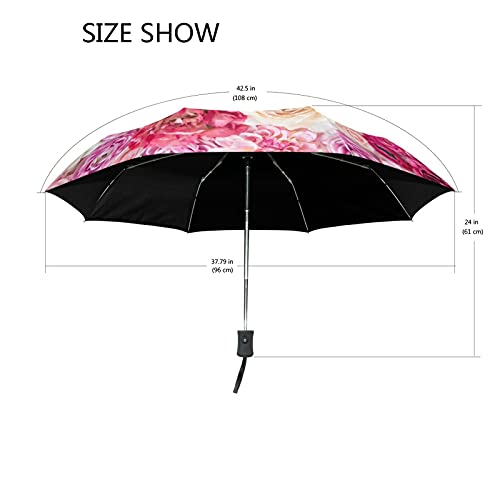
There is an inherent tension between how small an umbrella folds and how much coverage it provides. A 'micro' umbrella might fit in a pocket but will likely leave your shoulders and backpack exposed to the rain. A 'compact' umbrella usually offers a canopy diameter of 38 to 42 inches, which is the sweet spot for most commuters. Before purchasing, check the 'closed length' to ensure it fits your specific storage needs, but do not sacrifice the 'open diameter' too drastically, or you will find yourself constantly fighting the elements.
Handle Ergonomics and Grip
Finally, consider how the umbrella will feel in your hand during a storm. A smooth plastic handle might look sleek, but it can become incredibly slippery when wet. Look for handles with a rubberized coating or an ergonomic shape that allows for a secure grip. A wrist strap is also a highly recommended addition, providing a safety measure against accidental drops in crowded transit areas or high winds.