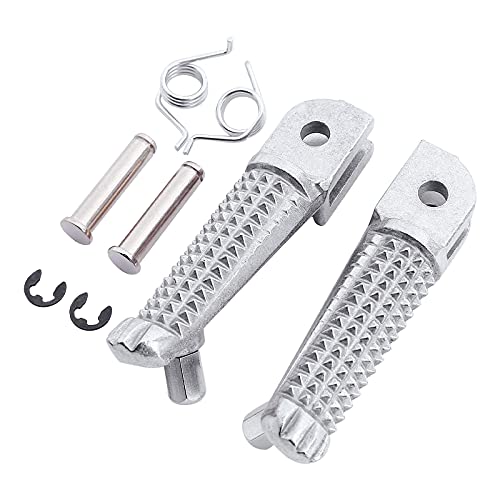
Material Composition and Weight Reduction
When transitioning from standard OEM rubber-coated pegs to racing-spec hardware, material choice is the first critical decision. Most high-end pegs are CNC-machined from 7075-T6 aluminum or similar aerospace-grade alloys. This provides a high strength-to-weight ratio, reducing unsprung mass which can subtly improve handling agility. While lightweight aluminum is the standard, some extreme racing setups utilize titanium for even greater weight savings, though this comes at a significant price premium. When evaluating options, look for structural integrity over pure lightness. A peg that snaps under heavy braking or during a mid-corner weight shift is a catastrophic failure.
Grip Patterns and Surface Texture
The primary function of a racing peg is to ensure your foot remains locked in place, even when the bike is at maximum lean and your boots are covered in grit or moisture. There are two main styles: machined serrations and replaceable pins. Machined serrations involve grooves cut directly into the aluminum body. These are durable and low-maintenance but can be harder on your boot soles over time. The gold standard for MotoGP-inspired setups is the replaceable stainless steel pin system. These pegs feature small, sharp studs that can be swapped out when they wear down. This ensures that you always have a 'bite' into your boot, providing the tactile feedback necessary to sense when the bike is moving beneath you.
Adjustability and Ergonomic Range
A hallmark of professional racing setups is the ability to customize the rider's ergonomics. Unlike stock pegs, which are often fixed in a position optimized for comfort and commuting, racing pegs frequently offer adjustability in terms of height and fore/aft position. This allows you to move the pegs upward to increase lean angle clearance or adjust them to better suit your specific leg length and riding style. If you tend to ride with a more aggressive, tucked-in posture, being able to shift the peg position can prevent cramping and allow for more precise control of the rear brake and gear shifter.
Lean Angle Clearance and Durability
One of the most common reasons for upgrading is to prevent 'scraping.' Standard pegs are often positioned low on the frame, which can limit how far you can lean the bike before the metal contacts the asphalt. High-performance pegs are typically designed with a more compact, upward-swept profile to maximize ground clearance. Furthermore, consider the 'sacrificial' nature of these parts. In a racing environment, pegs are expected to take the brunt of a low-side slide. Look for designs that are robust enough to maintain their mounting integrity even if the outer edges take a hit, ensuring you can continue your session without a mechanical failure.
Summary of Recommendation Logic
To choose the right set, first define your usage. For pure track days, prioritize replaceable stainless steel pins and maximum adjustability. If you are looking for a 'street-track' hybrid, a high-quality CNC-machined aluminum peg with aggressive serrations offers a better balance of durability and grip without destroying your riding boots. Always prioritize brands that offer verified strength testing and known compatibility with your specific bike's mounting points to ensure a seamless installation.