#TOP1
Navigating the complex landscape of fossil fuel economics requires moving beyond simple supply-and-demand metrics. Whether you are an institutional investor analyzing energy commodities, a policy researcher modeling transition risks, or a logistics professional managing fuel hedging, understanding the underlying drivers of the hydrocarbon market is essential. This guide provides a framework for evaluating the economic viability, volatility, and long-term stability of different fossil fuel sectors, helping you distinguish between short-term speculative plays and long-term structural trends.
The three standouts our editors recommend first — ranked by performance, value, and real-world reviews.


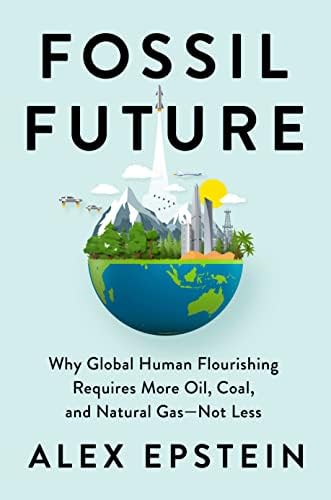
Fossil Future: Why Global Human Flourishing Requires More Oil, Coal, and Natural Gas--Not Less
| SELLER | SELLER SCORE | AMAZON FULFILLED | PRIME | FREE SHIPPING |
|---|---|---|---|---|
| Amazon.com | 9.68 | Yes | Yes | Yes |
Fossil Future challenges the modern energy consensus by arguing that global human flourishing depends on fossil fuels rather than their elimination. This book tackles the controversial intersection of economic development and energy consumption with a perspective that feels both urgent and provocative. Instead of following the standard narrative found in most environmental literature, it dives deep into why oil, coal, and natural gas remain indispensable for lifting populations out of poverty. It is a dense, thought-provoking read that forces you to reconsider the practical realities of the global energy transition. If you want a text that disrupts the typical climate conversation and offers a starkly different economic outlook, this is a necessary addition to your bookshelf.


The Deep Hot Biosphere: The Myth Of Fossil Fuels
| SELLER | SELLER SCORE | AMAZON FULFILLED | PRIME | FREE SHIPPING |
|---|---|---|---|---|
| Amazon.com | 9.68 | Yes | Yes | Yes |
Environmental skeptics and geology enthusiasts alike need to get their hands on The Deep Hot Biosphere to truly challenge their understanding of planetary energy. This Copernicus publication dives straight into the controversial heart of the fossil fuel debate, dismantling long-held myths about how these resources actually form. Reading it feels like uncovering a hidden layer of scientific discourse that most mainstream texts gloss over. It is a dense, thought-provoking piece of work that forces you to reconsider the biological processes occurring deep beneath the Earth's crust. If you are tired of surface-level explanations regarding Earth's energy cycles, this book provides the intellectual friction you have been searching for.


Fossil Fuels Improve the Planet
| SELLER | SELLER SCORE | AMAZON FULFILLED | PRIME | FREE SHIPPING |
|---|---|---|---|---|
| Amazon.com | 9.68 | Yes | Yes | Yes |
Most modern environmental discourse treats energy density as a liability, but this publication flips that entire narrative on its head. Fossil Fuels Improve the Planet offers a provocative look at how traditional energy sources have actually acted as catalysts for human flourishing and global development. Published by the Center for Industrial Progress, the text challenges the prevailing consensus by arguing that our reliance on these resources is a cornerstone of modern civilization rather than its downfall. It is an incredibly accessible entry point for anyone looking to engage with heterodox economic and environmental theories. It isn't just a collection of arguments. It is a fundamental re-examination of the industrial foundation that supports our daily lives.

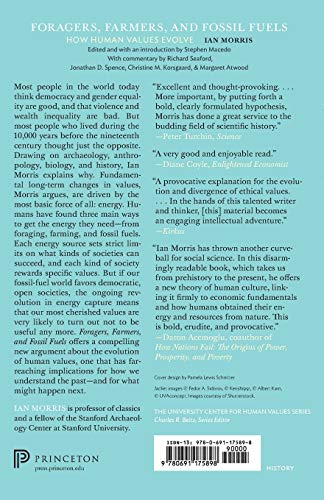
Foragers, Farmers, and Fossil Fuels: How Human Values Evolve (The University Center for Human Values Series, 41)
| SELLER | SELLER SCORE | AMAZON FULFILLED | PRIME | FREE SHIPPING |
|---|---|---|---|---|
| Amazon.com | 9.68 | Yes | Yes | Yes |
Foragers, Farmers, and Fossil Fuels offers a sweeping intellectual journey through the evolution of human values. This Princeton University Press release is a heavy hitter for anyone obsessed with how our societal priorities have shifted from ancestral survival to the complexities of the industrial age. Instead of a dry academic lecture, the text weaves a narrative that connects our biological past to our modern energy-dependent reality. It is the kind of deep dive that makes you rethink the very foundations of how we live and what we hold dear. If you want to understand the deep-seated drivers behind human progress and the ethical dilemmas posed by our reliance on fossil fuels, this volume belongs on your permanent bookshelf.


Burning Up: A Global History of Fossil Fuel Consumption
| SELLER | SELLER SCORE | AMAZON FULFILLED | PRIME | FREE SHIPPING |
|---|---|---|---|---|
| Amazon.com | 9.68 | Yes | Yes | Yes |
You are sitting in a crowded coffee shop, scrolling through headlines about the climate crisis, and suddenly realize you lack the historical context to truly understand how we got here. Burning Up by Pluto Press fills that specific void by tracing the massive, systemic shift in how humanity has powered its progress. This isn't just another dry textbook. It is an essential deep dive into the global patterns of energy usage that have shaped our modern world. Reading this feels like finally connecting the dots between industrial history and our current environmental reality. It provides the necessary backbone for anyone trying to grasp the sheer scale of fossil fuel dependency across different eras and continents.

The primary economic factor in any fossil fuel analysis is liquidity. Different fuel types trade on different scales of immediacy. Crude oil, for instance, is highly liquid with a vast array of futures contracts, making it an excellent vehicle for hedging but a volatile environment for unmanaged exposure. Conversely, coal and natural gas markets often exhibit different liquidity profiles depending on the regionality of the supply. When evaluating these assets, look at the 'spread'—the difference between spot prices and futures contracts. A wide spread often indicates market uncertainty or upcoming supply disruptions, which can significantly impact the cost of procurement or the potential for arbitrage.
Fossil fuel economics are inseparable from geopolitics. Unlike many other commodity classes, the geographic concentration of reserves creates inherent 'risk premiums.' When assessing the economic value of a specific fuel source, you must weigh the extraction cost against the geopolitical stability of the producing region. For example, natural gas economics are heavily influenced by pipeline infrastructure and transit country stability, whereas oil economics are more sensitive to maritime chokepoints and naval security. A robust economic model must account for these 'non-market' variables that can cause sudden price spikes regardless of fundamental demand.
The most critical modern variable in fossil fuel economics is the 'transition risk.' As global economies move toward decarbonization, the economic viability of carbon-intensive fuels is being reshaped by regulatory frameworks. When analyzing these markets, you must look at the projected cost of carbon credits and the potential for 'stranded assets'—reserves that may become too expensive to extract due to environmental taxation or declining demand. A smart economic approach involves calculating the 'break-even' price for new extraction projects in the context of rising carbon taxes. If a coal plant or an oil field requires a high sustained price to remain profitable, it is more vulnerable to shifts in climate policy than low-cost, high-margin producers.
From a pure utility standpoint, the economic value of a fossil fuel is often tied to its energy density relative to its cost. Natural gas offers high efficiency for electricity generation, but its volatility can make long-term budgeting difficult. Coal offers stability and lower cost in many regions, but faces increasing regulatory headwinds. When making economic decisions, evaluate the 'Levelized Cost of Energy' (LCOE). This metric allows you to compare the lifetime costs of different fuel types, including extraction, transportation, and combustion, providing a clearer picture of which fuel source offers the best value in a specific industrial or utility context.
Quick answers about Fossil Fuels before you buy.
Share of top-ranked products by brand, from our editorial analysis.
We've carried out a comprehensive analysis of 1,799 reviews on Fossil Fuels, using our selection criteria to identify the best options in the categories. Our findings reveal that most customers typically select Fossil Fuels priced around $19.91, with top brands including center for industrial progress, pluto press and copernicus and princeton university press.
Our team of expert editors reviewed these high-quality items and handpicked the top 5 Fossil Fuels for your consideration. We've also done extensive research on numerous sellers, identifying the best ones in the categories category — including and amazon.com.
We are dedicated to assisting our users in finding the right economics Products based on their needs, saving them considerable time when choosing which Fossil Fuels to buy. We take pride in the number of satisfied users we've helped through our thorough and insightful reviews.
Compare the top 5 picks at a glance — select a column to sort.


