Material Composition and Thermal Retention
The most critical decision in selecting a Cambridge Plumbing tub is the material. Most premium freestanding models fall into three categories: acrylic, stone resin, or cast iron. Acrylic is the most popular choice for its lightweight nature and excellent heat retention. It is easy to clean and more forgiving during the installation process, making it ideal for renovations where floor reinforcement might be a concern. However, if you are seeking a high-end, tactile experience, stone resin is the gold standard. Stone resin provides a heavy, solid feel and a matte or polished finish that mimics natural stone, offering superior thermal mass that keeps water warm for significantly longer periods. While heavier and requiring more robust flooring, the luxury quotient of resin is unmatched.
Ergonomics and Soaking Depth
A bathtub is only as good as the comfort it provides during a long soak. When evaluating models, do not just look at the exterior dimensions. Look at the interior geometry. A deep soaking tub is often preferred for relaxation, but you must ensure the backrest angle is ergonomically sound. Some tubs feature a high-back design that supports the neck and shoulders, while others are more symmetrical, suited for lounging in different directions. Pay close attention to the 'soaking depth'—the distance from the floor of the tub to the overflow drain. A tub that looks deep on the outside may have a sloped interior that prevents you from actually submerging your shoulders, defeating the purpose of a luxury soak.
Spatial Planning and Clearance
Freestanding tubs require 'breathing room' to achieve their intended aesthetic impact. A common mistake is selecting a tub that is too large for the room, making the bathroom feel cramped rather than spa-like. You should aim for at least 4 to 6 inches of clearance between the tub and any walls or vanity units. This space is not just for visual aesthetics. It is essential for cleaning. If a tub is tucked too tightly into a corner, dust and moisture will accumulate in those hard-to-reach gaps, potentially leading to mildew issues. Measure your floor space carefully, accounting for the footprint of the tub plus the necessary walking paths around it.
Plumbing Integration and Faucet Styles
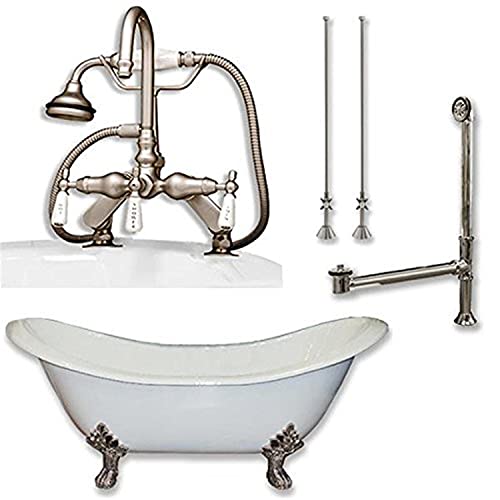
The beauty of a freestanding tub can be easily undermined by poorly planned plumbing. Because there are no walls to hide pipes, you must decide between a floor-mounted filler or a wall-mounted faucet. Floor-mounted tub fillers are the classic choice for Cambridge Plumbing models, as they complement the sculptural silhouette of the tub. When choosing a filler, ensure the flow rate is sufficient to fill the volume of the tub in a reasonable timeframe. Furthermore, consider the placement of the drain. Some models feature integrated overflows, while others require specific plumbing configurations to maintain their sleek, minimalist appearance.
Maintenance and Longevity
Finally, consider the long-term upkeep. Highly polished surfaces look stunning on day one but may show water spots or mineral buildup more easily. If you live in an area with hard water, a matte stone resin finish might be more forgiving than a high-gloss acrylic. Always opt for non-abrasive cleaning methods to preserve the integrity of the finish. By weighing these factors—material, ergonomics, space, and plumbing—you can select a bathtub that serves as a timeless cornerstone of your home's design.