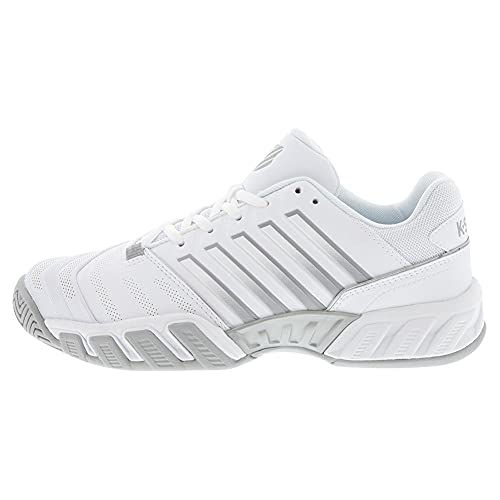
Prioritize Lateral Stability and Outsole Construction
The defining characteristic of tennis is lateral movement. Unlike running, which is primarily linear, tennis involves constant side-to-side shuffling and explosive changes in direction. When evaluating shoes, look for a reinforced lateral sidewall—often called an outsole wrap or a stabilizer bar. This feature prevents the foot from sliding off the footbed during hard cuts. Furthermore, the outsole should be made of a durable, non-marking rubber designed specifically for the court type. If your daughter primarily plays on hard courts, seek out high-abrasion rubber patterns that can withstand the friction of concrete. If she frequently transitions to clay, look for a more multidirectional, herringbone-style tread pattern that provides grip without catching too aggressively.
Cushioning vs. Court Feel
One of the most critical decision factors is the balance between impact protection and 'court feel.' Younger players often have less developed arch support and cushioning in their natural gait, making impact protection vital. Look for midsoles that incorporate specialized foam technologies designed to absorb shock during heavy landings. However, excessive cushioning can sometimes make a player feel 'disconnected' from the ground, which can slow down reaction times. For competitive juniors, a medium-density midsole provides the best of both worlds: enough shock absorption to protect the joints during long matches, but enough responsiveness to allow for quick footwork and agility.
Upper Material and Breathability
Tennis matches can be intense and physically demanding, leading to significant heat buildup inside the shoe. A breathable upper is non-negotiable to prevent moisture buildup, which is a primary cause of blisters. Look for engineered mesh or synthetic overlays that provide structure without sacrificing airflow. While all-leather shoes offer incredible durability, they can be heavy and hot. Modern synthetic materials are often a better choice for girls, as they offer a lightweight feel and better moisture management while still providing the necessary lockdown to keep the foot secure during high-intensity play.
The Importance of Fit and Toe Box Width
Because children's feet grow rapidly, the fit of a tennis shoe is more sensitive than almost any other athletic gear. A tennis shoe must be snug enough to prevent the foot from sliding inside the shoe (which causes blisters), but it must have enough room in the toe box to allow for natural toe splay. If a shoe is too narrow, it can lead to bruised toenails during sudden stops. We recommend testing shoes in the afternoon, as feet tend to swell slightly during physical activity. Always ensure there is about a thumb's width of space between the longest toe and the front of the shoe to accommodate the intense braking motions inherent in the sport.
Durability and Value Logic
When making your final selection, consider the frequency of play. For a beginner playing once a week, a lightweight, more affordable shoe with moderate durability is sufficient. However, for a competitive player practicing several times a week, investing in a 'performance' tier shoe with reinforced toe caps and high-density outsoles is a smarter long-term investment. A shoe that lasts a full season of heavy play is far more cost-effective than a budget option that loses its structural integrity after a month of hard court friction.