Understand Your Hair Texture and Density
The most critical factor in your decision is the current state of your hair. If you have thick, curly, or highly textured hair, you need a brush that can penetrate the density without snagging. Look for wide-tooth designs or brushes with long, flexible bristles that can work through knots with minimal tension. Conversely, if you have fine or thinning hair, heavy-duty brushes can cause unnecessary scalp irritation and breakage. For fine hair, opt for softer bristle configurations that distribute natural oils from the scalp to the ends, providing a natural sheen without pulling on the delicate hair shaft.
Bristle Composition: Boar vs. Nylon vs. Mixed
The material of the bristles dictates the primary function of the brush. Natural boar bristles are the gold standard for smoothing and shine. They are uniquely capable of picking up sebum and spreading it evenly across the hair, which reduces the need for heavy styling products. However, they are not ideal for detangling wet hair. Nylon bristles, often found in paddle brushes, are much more resilient and are better suited for tension and smoothing during a blow-dry. For a versatile daily driver, many users find success with mixed-bristle brushes, which combine the detangling power of nylon with the smoothing benefits of boar hair. When shopping, consider whether you need a 'detangler' (typically nylon/plastic) or a 'finisher' (typically boar).
Shape and Functionality
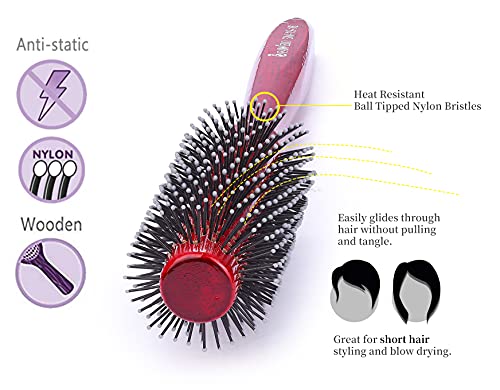
The physical silhouette of the brush determines how much control you have during styling. Paddle Brushes: These are best for smoothing large sections of hair and are excellent for a sleek, straight look. Round Brushes: Essential for volume and bounce, these are used primarily during blow-drying to lift the roots and curl the ends. Vent Brushes: These feature gaps between the bristles, allowing airflow from a hairdryer to reach the hair more quickly, significantly reducing drying time. Detangling Brushes: Usually featuring flexible, spaced-out teeth, these are designed to glide through knots, especially when hair is damp.
Ergonomics and Durability
Since hair styling often involves repetitive motions, the ergonomics of the handle cannot be overlooked. A brush with a contoured, non-slip grip will prevent hand fatigue during long styling sessions. Furthermore, pay attention to the construction of the base (the cushion). A high-quality cushion should provide a 'give' that allows the bristles to flex against the scalp, rather than being rigid, which can lead to discomfort. A durable brush should feature a sturdy core that won't warp under the heat of a blow-dryer.
Recommendation Logic
To make your final choice, follow this logic: If your goal is a smooth, frizz-free finish on dry hair, prioritize Boar Bristle. If you are struggling with knots in the shower, prioritize Flexible Nylon. If you want to achieve volume during a blowout, prioritize Ceramic or Round designs. By matching the bristle stiffness and brush shape to your specific hair goal, you turn a simple grooming tool into a professional-grade styling asset.