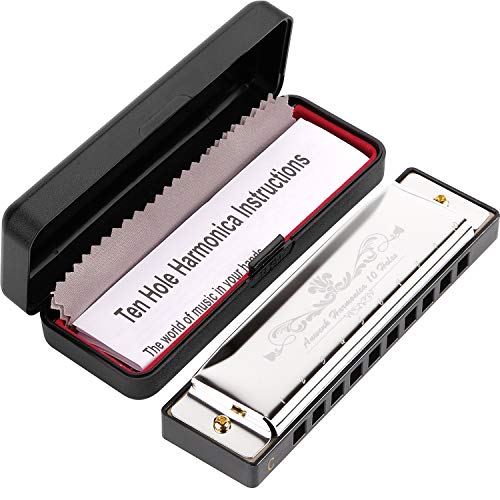
Understanding the Diatonic Foundation
To play the blues, you are almost certainly looking for a diatonic harmonica. Unlike chromatic harmonicas, which use a slide to access all notes, diatonic models are built around a specific key and are the industry standard for blues, folk, and rock. When evaluating an anwenk blues model, your primary focus should be on the layout of the holes. A high-quality blues harmonica must allow for seamless 'bending'—the technique used to pull notes down in pitch to create that signature wailing sound. If the reeds are too stiff or the air response is sluggish, you will struggle to achieve the microtonal nuances that define the genre.
Key Decision Factor: Reed Response and Material
The heart of any harmonica is its reeds. In the context of blues playing, you want reeds that are responsive to light breath pressure but can also handle the heavy, rhythmic 'chugging' common in blues shuffle patterns. Look for instruments that emphasize high-quality brass or stainless steel reeds. The responsiveness of these reeds determines how quickly the instrument 'speaks' when you blow or draw. A well-made anwenk instrument should offer a consistent reaction across all holes, ensuring that your bends are predictable and your trills are clean.
Cover Plate Design and Air-Tightness
One of the most overlooked aspects of buying a harmonica is the airtightness of the comb and cover plate assembly. If air escapes through the sides of the instrument rather than passing over the reeds, you will find yourself exhausted after only a few minutes of playing. For blues players, look for models with precision-engineered cover plates that sit flush against the comb. A tight seal means you can play with less effort, allowing for greater dynamic range—from a whisper-quiet blues ballad to a loud, aggressive solo. Additionally, consider the material of the comb. While traditional wooden combs offer a warm tone, many modern blues players prefer composite or plastic combs because they are more resistant to moisture from heavy breathing, which prevents the instrument from 'clogging' during long sets.
Ergonomics and Mouthfeel
Since you will be holding the instrument in your mouth for extended periods, the ergonomics are vital. The shape of the cover plates and the edges of the comb should be smooth and rounded. Sharp edges can cause discomfort or even injury during intense playing sessions. A comfortable 'mouthfeel' allows you to focus entirely on your phrasing and breath control rather than adjusting the instrument to avoid irritation. When selecting your blues harmonica, imagine the physical demands of a performance. You want an instrument that feels like an extension of your breath, not a piece of hardware you are fighting against.
Recommendation Logic: How to Choose
When deciding which specific model to invest in, follow this logic: If you are a beginner, prioritize airtightness and ease of bending over complex tonal nuances. You need an instrument that won't frustrate you while you learn the basics. If you are an experienced player, look for specialized reed tuning and premium materials that offer a unique 'voice' or timbre. For blues enthusiasts, the goal is to find a balance between durability (to withstand heavy playing) and sensitivity (to allow for expressive bending). Always choose a key that allows you to explore the fundamental blues scales, with C or G being the most common starting points.