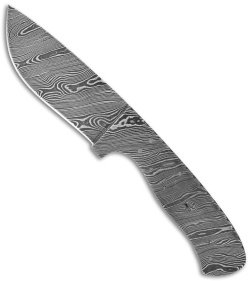
Understanding Blade Steel and Edge Retention
The most critical component of any hunting knife is the steel. In the context of field dressing and heavy-duty tasks, you are looking for a balance between hardness and toughness. Harder steel holds a razor-sharp edge for longer, which is vital when you are processing large game and don't want to stop every ten minutes to sharpen. However, steel that is too hard can become brittle, potentially chipping if you accidentally strike a bone or a hard knot in wood. Look for high-carbon stainless steels that offer the best of both worlds: corrosion resistance to handle blood and moisture, and enough structural integrity to withstand lateral pressure. If you plan on doing heavy camp chores, prioritize toughness. If you are focused on precision skinning, prioritize edge retention.
Blade Geometry and Profile Selection
Not all hunting knives are shaped for the same task. A common mistake is buying a general-purpose knife for a specialized job. For skinning and field dressing, look for a blade with a slender profile and a fine tip. A drop-point or clip-point geometry is often preferred because it provides a controlled point for delicate work while maintaining enough belly (the curved part of the blade) to make slicing through hide effortless. Conversely, if you intend to use your knife for bushcraft or light wood processing alongside hunting, a thicker spine and a more robust tanto or cleaver-style tip might be more appropriate. Consider the 'belly' of the knife. A deeper curve allows for smoother slicing motions, whereas a straighter edge is better for detailed carving.
Handle Ergonomics and Material Durability
A knife is only as good as your ability to control it. When hunting, your hands are often wet, cold, or covered in organic matter. This makes handle ergonomics and grip texture non-negotiable. Avoid handles that feel slippery when damp. Materials like textured rubberized synthetics, treated wood, or high-density polymers are excellent choices because they provide a secure purchase even in adverse conditions. Furthermore, consider the 'full tang' construction, where the steel of the blade extends all the way through the handle. This provides superior strength and balance, ensuring the knife doesn't snap at the bolster during heavy use. A well-balanced knife will feel like an extension of your hand rather than a heavy weight pulling at your wrist.
Sheath Functionality and Carry Options
The best knife in the world is useless if you cannot carry it safely and access it quickly. A quality hunting knife should come with a sheath designed for the specific environment you inhabit. For hikers and backpackers, a slim, lightweight nylon sheath that clips to a belt or pack is ideal. For those engaged in more rugged, tactical-style hunting, a heavy-duty leather or Kydex sheath offers better protection for the blade and more durability against abrasion. Ensure the sheath provides enough retention so the knife doesn't fall out during a climb, but allows for a smooth draw when you need it most.