Material Composition and Durability
When evaluating hunting targets, the primary differentiator is the material used for the silhouette face. Many high-end options utilize specialized heavy-duty polymers or reinforced rubber composites. These materials are engineered to absorb the kinetic energy of a projectile without shattering or splintering, which is critical for both safety and longevity. If you are using high-caliber rifles, look for targets with a high density that prevents 'pass-through' damage from degrading the target's shape too quickly. Conversely, for rimfire or small-bore practice, a slightly softer material might offer better impact absorption. Consider the environmental factor as well. A quality target should be UV-resistant to prevent the material from becoming brittle after prolonged exposure to direct sunlight in an outdoor range setting.
Reactive vs. Static Profiles
A key decision factor in the Triumph Systems ecosystem is whether you require reactive movement or static precision. Reactive targets are designed to move, tilt, or fall when struck, providing instant gratification and confirmation of a successful hit. This is invaluable for training situational awareness and rapid follow-up shots. Static targets, on the other hand, are often preferred for long-range precision training where the goal is to hit a specific anatomical zone—such as the vitals of a buck or the center mass of a hog—without the target moving away from the line of sight. Determine if your training goal is 'speed and reaction' or 'extreme precision and grouping.'
Portability and Setup Requirements
Hunting targets are rarely used in a controlled indoor environment. They are almost always deployed in the field or at outdoor ranges. Therefore, the mounting hardware and weight of the accessory are vital. Look for systems that utilize lightweight but sturdy tripod stands or heavy-duty ground stakes. Some systems are designed to be 'set and forget,' meaning they have a low center of gravity to resist wind interference. If you plan on moving between different hunting locations, prioritize accessories that feature collapsible frames or modular components that can be easily packed into a gear bag without adding excessive bulk.
Target Realism and Scale
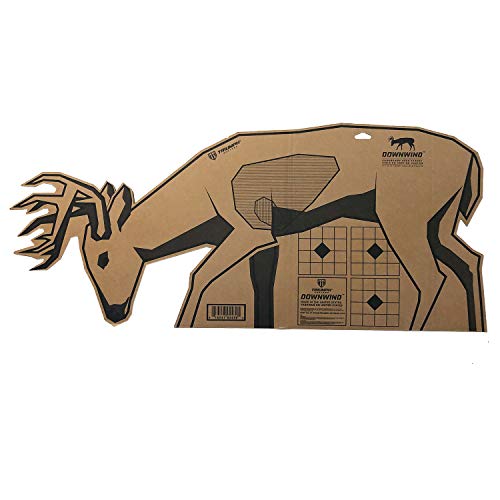
To get the most out of your practice, the scale of the target must match the intended quarry. A target designed for varmint hunting will have a much smaller profile than one designed for big game. When browsing, pay close attention to the dimensions of the silhouette. Effective training requires a target that forces you to account for distance and angle. High-quality hunting accessories will feature anatomically correct shapes rather than generic circles or squares, ensuring that your muscle memory is being trained for the actual biological profiles you will face during a hunt.
Maintenance and Replacement Cycles
No hunting target is indestructible, but smart purchasing involves looking at the replacement cost of the 'face' versus the 'frame.' The most cost-effective systems allow you to replace the impact surface (the silhouette) while retaining the heavy-duty stand or mounting mechanism. This modularity ensures that you aren't throwing away a perfectly good metal stand just because the polymer face has finally reached the end of its service life. Always check if the target series offers interchangeable faces so you can switch from deer practice to turkey practice without buying an entirely new kit.