#TOP1

Imaging systems engineering represents the critical intersection of optical physics, electronic sensor technology, and high-speed computational processing. Whether you are designing a satellite-based remote sensing platform, an automated industrial inspection line, or a medical diagnostic tool, the engineering requirements go far beyond simply picking a camera. You are building an integrated ecosystem where light collection, signal conversion, and data throughput must work in perfect synchronicity. Selecting the right components requires a deep understanding of how environmental variables interact with hardware limitations to produce actionable intelligence.
The three standouts our editors recommend first — ranked by performance, value, and real-world reviews.



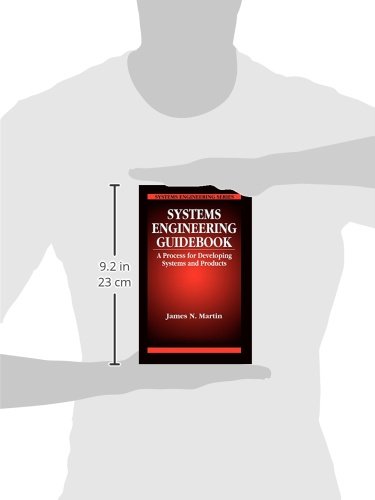
Systems Engineering Guidebook
| SELLER | SELLER SCORE | AMAZON FULFILLED | PRIME | FREE SHIPPING |
|---|---|---|---|---|
| Wutupb"s | 5.49 | No | No | No |
Systems engineering professionals require a rigorous, structured framework to manage complexity, and this CRC Press guidebook delivers exactly that. This isn't a casual read for hobbyists. It is a dedicated technical resource designed to anchor your understanding of complex lifecycle processes. While this specific copy is a used book, it arrives in good condition, making it a smart, cost-effective way to acquire high-level engineering knowledge without paying full retail for a new edition. It serves as a reliable desk reference for anyone looking to bridge the gap between theoretical concepts and practical, large-scale system implementation. If you are serious about mastering the discipline, having this text in your professional library is a fundamental step.

| SELLER | SELLER SCORE | AMAZON FULFILLED | PRIME | FREE SHIPPING |
|---|---|---|---|---|
| Amazon.com | 9.68 | Yes | Yes | Yes |

| SELLER | SELLER SCORE | AMAZON FULFILLED | PRIME | FREE SHIPPING |
|---|---|---|---|---|
| Amazon.com | 9.68 | Yes | Yes | Yes |

| SELLER | SELLER SCORE | AMAZON FULFILLED | PRIME | FREE SHIPPING |
|---|---|---|---|---|
| Amazon.com | 9.68 | Yes | Yes | Yes |

| SELLER | SELLER SCORE | AMAZON FULFILLED | PRIME | FREE SHIPPING |
|---|---|---|---|---|
| Amazon.com | 9.68 | Yes | Yes | Yes |

| SELLER | SELLER SCORE | AMAZON FULFILLED | PRIME | FREE SHIPPING |
|---|---|---|---|---|
| Amazon.com Services LLC | 0.00 | No | No | No |

Advances in Smart Communication and Imaging Systems: Select Proceedings of MedCom 2020 (Lecture Notes in Electrical Engineering, 721)
| SELLER | SELLER SCORE | AMAZON FULFILLED | PRIME | FREE SHIPPING |
|---|---|---|---|---|
| Amazon.com | 9.68 | Yes | Yes | Yes |
Can the rapid evolution of signal processing and imaging technology keep pace with our increasing need for smarter connectivity? This Springer volume, part of the Lecture Notes in Electrical Engineering series, serves as a critical academic repository for the latest breakthroughs discussed at the MedCom 2020 conference. It acts as a deep dive into the complex intersection of communication systems and advanced imaging techniques, making it an essential reference for researchers and engineers. While the price point reflects its specialized nature, the depth of technical insight provided in these proceedings offers a level of granular detail that general textbooks simply cannot match. It is a heavy-hitting resource for anyone needing to stay at the cutting edge of electrical engineering.


| SELLER | SELLER SCORE | AMAZON FULFILLED | PRIME | FREE SHIPPING |
|---|---|---|---|---|
| Amazon.com | 9.68 | Yes | Yes | Yes |

Holography Marketplace (6th ed)
| SELLER | SELLER SCORE | AMAZON FULFILLED | PRIME | FREE SHIPPING |
|---|---|---|---|---|
| PRIME-BOOKS | 9.68 | No | No | No |
Holography Marketplace (6th ed) serves as a vital, specialized resource for anyone navigating the intricate world of holographic science and application. Finding a well-preserved copy of this specific edition can be a challenge, but this version arrives in good condition, making it a reliable addition to a professional or academic library. It functions less like a casual read and more like a foundational reference tool that stays relevant through its updated content. It offers a practical way to access niche expertise without the massive overhead of brand-new academic texts. Whether you are a researcher or a dedicated hobbyist, having this sixth edition on hand provides the technical depth necessary to master complex optical concepts.

The foundation of any imaging system is the light it can capture. Your first decision factor must be the spectral range required for your specific application. Are you working in the visible spectrum, or does your engineering requirement demand Near-Infrared (NIR), Short-Wave Infrared (SWIR), or even Terahertz imaging? Choosing the wrong lens coating or sensor material can result in significant signal loss or chromatic aberration that renders your data useless. When evaluating optical assemblies, prioritize glass quality and coating durability, especially if the system will operate in harsh environments where thermal expansion or moisture could shift the focal plane.
Once the light is captured, the sensor's architecture dictates the quality of the digital representation. In imaging systems engineering, you must balance pixel pitch against resolution. Smaller pixels allow for higher spatial resolution but often suffer from a lower signal-to-noise ratio (SNR) because each pixel captures fewer photons. For high-speed applications, look for global shutter sensors rather than rolling shutters to prevent motion distortion. Furthermore, consider the dynamic range. In environments with high contrast—such as outdoor surveillance or medical imaging—a sensor with high bit-depth and low read noise is essential to prevent clipping in the highlights or losing detail in the shadows.
An imaging system is only as good as its ability to move data from the sensor to the processor. In real-time engineering applications, such as autonomous vehicle navigation or high-speed semiconductor inspection, latency is the primary enemy. Evaluate the interface protocols available—such as CoaXPress, Camera Link, or high-speed Ethernet—to ensure the bandwidth can handle the raw data rates generated by your sensor. You must calculate the total data pipeline: from the sensor's frame rate to the bus speed of your host computer. A mismatch here creates a bottleneck that can lead to dropped frames and systemic failure during critical operations.
Finally, consider the physical and electrical integration of the system. Imaging engineering often involves deploying hardware in non-laboratory settings. This means evaluating IP (Ingress Protection) ratings for dust and water resistance, as well as thermal management solutions. High-performance sensors generate significant heat. Without an engineered heat sink or active cooling, thermal noise will degrade image quality over time. Additionally, ensure that the electronic interfaces are shielded against electromagnetic interference (EMI), which is particularly vital in industrial environments with heavy machinery or aerospace applications where signal integrity is non-negotiable.
Quick answers about Imaging Systems Engineering before you buy.
Share of top-ranked products by brand, from our editorial analysis.
We've carried out a comprehensive analysis of 11 reviews on Imaging Systems Engineering, using our selection criteria to identify the best options in the categories. Our findings reveal that most customers typically select Imaging Systems Engineering priced around $50.87, with top brands including springer, spie press, de gruyter, crc press, createspace independent publishing platform and wiley and artech house publishers.
Our team of expert editors reviewed these high-quality items and handpicked the top 9 Imaging Systems Engineering for your consideration. We've also done extensive research on numerous sellers, identifying the best ones in the categories category — including amazon.com and amazon.com services llc and wutupb"s.
We are dedicated to assisting our users in finding the right engineering Products based on their needs, saving them considerable time when choosing which Imaging Systems Engineering to buy. We take pride in the number of satisfied users we've helped through our thorough and insightful reviews.
Compare the top 9 picks at a glance — select a column to sort.


