#TOP1

Studying international treaties is not merely an exercise in reading legal documents. It is an exploration of the tectonic shifts in human civilization. Whether you are a law student, a geopolitical analyst, or a history enthusiast, selecting the right volume on treaties requires a nuanced understanding of how historical agreements shape modern sovereignty, human rights, and global commerce. A treaty is a living artifact of diplomacy, and the quality of your historical resource depends heavily on how much context surrounds the raw text.
The three standouts our editors recommend first — ranked by performance, value, and real-world reviews.


American Indian Treaties: The History of a Political Anomaly
| SELLER | SELLER SCORE | AMAZON FULFILLED | PRIME | FREE SHIPPING |
|---|---|---|---|---|
| Amazon.com | 9.68 | Yes | Yes | Yes |
Legal frameworks are often viewed as static rules, but this volume reveals that American Indian treaties function more like a living, breathing political anomaly. University of California Press has delivered a deep dive into how these historical agreements shaped a unique legal landscape that defies standard political logic. Rather than a dry recitation of dates, the text explores the complexities of sovereignty and the enduring impact of these foundational documents. It is the kind of heavy-hitting academic work that makes you rethink everything you thought you understood about domestic law and tribal relations. If you are looking to grasp the intricate friction between nation-states and indigenous sovereignty, this is an essential addition to your library.

The Versailles Treaty and its Legacy: The Failure of the Wilsonian Vision
| SELLER | SELLER SCORE | AMAZON FULFILLED | PRIME | FREE SHIPPING |
|---|---|---|---|---|
| Amazon.com | 9.68 | Yes | Yes | Yes |
Most history enthusiasts settle for surface-level summaries of the Great War, but this volume from Cambridge University Press dives into the messy, consequential reality of post-war diplomacy. Rather than offering a simple timeline, the text dissects the profound gap between Woodrow Wilson's idealistic vision and the harsh geopolitical outcomes that followed. It is an essential read for anyone who wants to understand how the specific failures of the Versailles Treaty fundamentally reshaped the twentieth century. The writing avoids being dry by focusing on the human and political stakes involved in these monumental decisions. If you are looking for a scholarly yet accessible deep dive into the roots of modern conflict, this book provides the nuance that standard textbooks often miss.

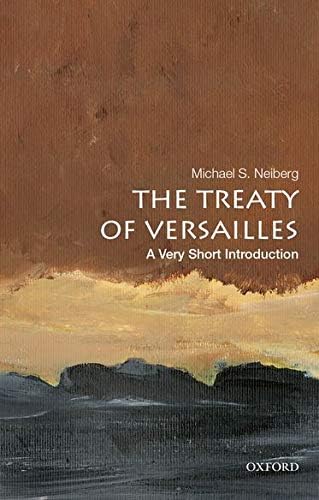
The Treaty of Versailles: A Very Short Introduction (Very Short Introductions)
| SELLER | SELLER SCORE | AMAZON FULFILLED | PRIME | FREE SHIPPING |
|---|---|---|---|---|
| Amazon.com | 9.68 | Yes | Yes | Yes |
History buffs and students facing a deadline need this concise guide to navigate the complex geopolitical fallout of the Great War. Oxford University Press has mastered the art of the distilled narrative here, packing immense historical weight into a pocket-sized format that doesn't sacrifice nuance for brevity. Instead of wading through a thousand-page tome, you get a sharp, academic perspective on how the treaty reshaped the global landscape. It is the perfect companion for anyone who wants to understand the roots of modern conflict without getting lost in unnecessary fluff. At just under twelve dollars, it serves as an incredibly efficient entry point into one of the most consequential diplomatic events in human history.
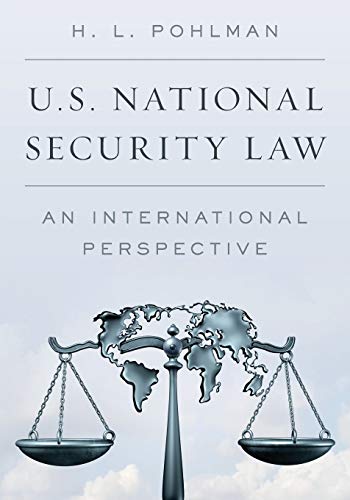
U.S. National Security Law: An International Perspective
| SELLER | SELLER SCORE | AMAZON FULFILLED | PRIME | FREE SHIPPING |
|---|---|---|---|---|
| Amazon.com | 9.68 | Yes | Yes | Yes |
Dense legal theory meets global geopolitical reality in this comprehensive volume from Rowman & Littlefield Publishers. Navigating the complexities of national security requires more than just a domestic lens, and this text delivers exactly that by providing a necessary international perspective. It avoids the trap of isolationist analysis, instead forcing the reader to grapple with how American security mandates interact with foreign legal frameworks and global tensions. Whether you are a student of international relations or a professional legal practitioner, the depth of this work makes it a foundational resource for understanding the high-stakes intersection of law and sovereignty. It is a serious, academic tool designed for those who need to understand the global architecture of security law.

The first decision any researcher must make is whether they require the primary text or a secondary historical analysis. Primary sources are the actual verbatim documents—the treaties themselves. These are essential for legal scholars who need to analyze specific clauses, signatures, and protocols. However, reading a treaty in isolation can be misleading. Secondary sources, such as historical monographs or diplomatic histories, provide the 'why' behind the 'what.' They offer the political climate, the motivations of the signatories, and the long-term consequences of the agreement. For a holistic understanding, look for collections that pair the original treaty text with scholarly commentary.
A common pitfall in purchasing historical treaty volumes is selecting a text that lacks sufficient historical framing. A high-quality guide should not just present the articles of an agreement. It should explain the preceding conflicts or negotiations that made the treaty necessary. When browsing, look for books that include prefaces detailing the geopolitical landscape of the era. For example, a volume on the Peace of Westphalia is significantly more valuable if it discusses the Thirty Years' War and the subsequent evolution of the nation-state concept, rather than just listing the territorial adjustments.
In the realm of historical documents, the 'critical apparatus' is what separates a casual reader's edition from a professional academic resource. This refers to the footnotes, bibliographies, and annotations provided by the editor. Because many historical treaties have undergone various revisions, translations, or interpretations, you want a version that clarifies these discrepancies. Look for editions that note differences between various historical translations or those that provide legal commentary on how the treaty's terms were applied in the decades following its signing.
Treaty collections are often organized either chronologically or thematically. If you are studying the evolution of maritime law, a thematic collection focusing on naval boundaries and trade rights will be more useful than a general history of 19th-century diplomacy. Conversely, if you are tracing the rise of international organizations, a chronological approach that moves from early bilateral pacts to the formation of modern multilateral bodies will provide a better sense of developmental momentum. Match your selection to your specific area of inquiry: human rights, territorial disputes, disarmament, or economic integration.
Finally, always check the credentials of the editor or the publishing house. In history, the authority of the author is paramount. Look for works published by reputable academic presses or edited by recognized historians specializing in international relations. A well-vetted volume ensures that the interpretations provided are grounded in rigorous archival research rather than modern political bias.
Quick answers about International Treaties before you buy.
Share of top-ranked products by brand, from our editorial analysis.
We've carried out a comprehensive analysis of 57 reviews on International Treaties, using our selection criteria to identify the best options in the categories. Our findings reveal that most customers typically select International Treaties priced around $30.57.
Our team of expert editors reviewed these high-quality items and handpicked the top 4 International Treaties for your consideration..
We are dedicated to assisting our users in finding the right history Products based on their needs, saving them considerable time when choosing which International Treaties to buy. We take pride in the number of satisfied users we've helped through our thorough and insightful reviews.
Compare the top 4 picks at a glance — select a column to sort.


