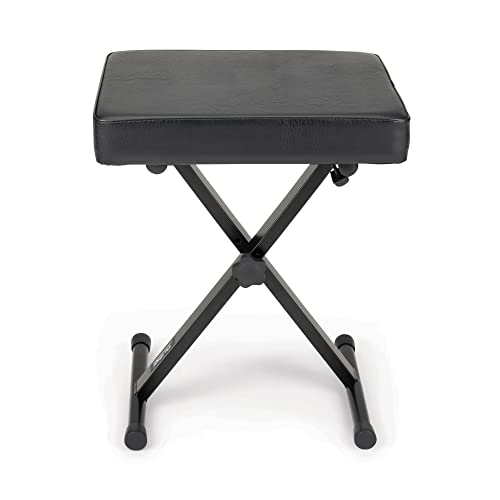
Prioritizing Ergonomics and Height Adjustability
The most vital feature of any keyboard bench is its ability to facilitate a healthy playing posture. Proper ergonomics require that your elbows are at a specific angle relative to the keys to prevent repetitive strain injuries. When shopping, look for benches with a wide range of height adjustment. While many fixed-height benches are stable, adjustable models allow you to fine-tune your position based on whether you are playing a low-slung digital piano, a standard synthesizer, or a high-mounted workstation. If you opt for an adjustable model, ensure the locking mechanism—whether it is a ratchet system or a screw-thread design—is robust. A bench that slowly sinks during a performance is a nightmare for any musician.
Stability vs. Portability
Onstage environments are unpredictable. You may be playing on a hollow wooden stage, a carpeted studio floor, or uneven outdoor surfaces. A bench with a wide, heavy base or a sturdy X-frame construction will provide the lateral stability needed to prevent wobbling when you are playing forceful chords or shifting your weight. However, there is a direct trade-off between stability and portability. If your gig involves frequent travel, you will want a lightweight design that can be folded or disassembled quickly. Look for lightweight aluminum frames that do not sacrifice structural integrity. If you are primarily a studio player, you can afford to prioritize a heavier, more substantial bench that offers maximum vibration dampening.
Upholstery and Durability
The material covering your bench affects both comfort and longevity. For long sets, padded benches are essential to prevent numbness. However, the type of padding matters. High-density foam retains its shape over years of use, whereas cheap, soft foam will flatten out within months, leaving you sitting on the hard frame. Regarding the outer material, synthetic leather (often called vinyl or faux leather) is the industry standard for onstage use because it is easy to wipe clean and resistant to sweat. While fabric upholstery can feel more premium, it tends to trap dust and can become uncomfortable if you sweat during an intense performance. For touring professionals, look for heavy-duty, tear-resistant materials that can handle being tossed into gear trunks.
Design Styles: X-Style, Folding, and Padded Benches
Deciding on a specific style depends on your workflow. X-style benches are the gold standard for portability. They fold flat and are incredibly easy to pack. They are ideal for gigging keyboardists who use multiple different setups. Padded, non-folding benches are often preferred by classical pianists or studio pros who prioritize a consistent, luxurious feel and maximum stability. If you frequently switch between different instruments, a height-adjustable folding bench offers a middle ground, providing the convenience of a portable seat with the ergonomic benefits of a traditional stool. Always consider the footprint of the bench. Ensure it is not so wide that it interferes with your pedalboard or your ability to move freely on a crowded stage.