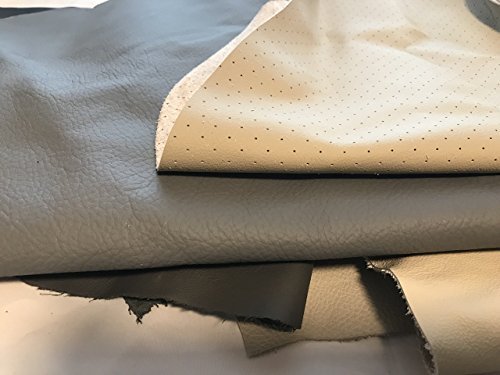
Understanding Grain Consistency and Texture
When purchasing memory cross leather scraps, the primary factor to evaluate is the uniformity of the grain. Memory cross leather is prized for its tactile, repetitive pattern. However, because these are scraps, you may encounter pieces where the pattern is interrupted by natural imperfections or where the embossing is inconsistent. If your project requires a high degree of visual symmetry—such as a small wallet where the pattern must align across a seam—look for bundles that specify 'premium grade' or 'consistent grain.' If you are simply practicing edge painting or tool testing, lower-grade scraps with more varied textures will provide a more realistic representation of how the leather behaves under stress.
Evaluating Thickness and Temper
Thickness, often measured in millimeters or ounces, is the most critical functional decision you will make. Memory cross leather is frequently used in accessories, meaning it tends to fall into the medium-to-heavyweight category. For small, intricate items like key fobs or jewelry, you should seek out thinner scraps (around 1.0mm to 1.5mm). For structural items like cardholders or small pouches, a thicker scrap (2.0mm and up) provides the necessary rigidity. Furthermore, pay attention to the 'temper'—the stiffness of the leather. A 'firm temper' is excellent for items that need to hold their shape, while a 'soft temper' is better for items that require draping or folding. Since you cannot feel the leather through a screen, look for descriptions that mention 'suppleness' or 'rigidity.'
Assessing Size Distribution and Usability
The term 'scraps' can be misleading. Some sellers offer 'micro-scraps' which are essentially dust-sized remnants, while others offer 'remnant pieces' which are substantial enough for small leather goods. Before committing, analyze the size distribution. A high-quality scrap pack should offer a variety of shapes: long, narrow strips (ideal for straps or handles), small irregular polygons (ideal for patchwork), and at least a few larger, more rectangular pieces. If a bundle is composed entirely of tiny, irregular shards, it may be better suited for leather inlay or mosaic work rather than traditional leathercrafting.
Color Saturation and Dye Quality
Memory cross leather often features deep, saturated dyes that settle into the cross-hatched grooves, creating a beautiful two-tone effect. When buying scraps, check if the colors are 'aniline' (showing natural variations) or 'pigmented' (more uniform and color-fast). For artists working with dyes or paints, knowing the base finish is vital. A heavily pigmented scrap will resist further dyeing, whereas an aniline scrap will absorb color beautifully, allowing you to experiment with patina effects. Ensure that the color descriptions are specific—distinguishing between 'Cognac' and 'Tan,' or 'Midnight Blue' and 'Navy'—to ensure your scraps match your existing inventory.
Recommendation Logic: Matching Scraps to Project Type
To make the best purchase, match your scrap selection to your specific craft:
- For Patchwork & Mosaic: Prioritize quantity and color variety over size. Small, irregular pieces are perfectly acceptable here.
- For Small Goods (Wallets/Cases): Prioritize thickness and grain consistency. You need pieces large enough to accommodate patterns and seams.
- For Tool Testing & Practice: Prioritize value. Look for 'utility grade' scraps where the aesthetic perfection is less important than the leather's structural integrity.