#TOP1
In the modern clinical environment, the ability to extract meaningful insights from vast oceans of unstructured data is the difference between reactive care and proactive precision medicine. Semantic medical computer applications represent the cutting edge of this evolution, moving beyond simple database retrieval to true clinical intelligence. These tools leverage Natural Language Processing (NLP) and ontologies to understand the context, intent, and relationships within medical notes, pathology reports, and imaging metadata. Selecting the right semantic engine is not merely an IT decision. It is a foundational clinical decision that impacts diagnostic accuracy, research velocity, and patient safety.
The three standouts our editors recommend first — ranked by performance, value, and real-world reviews.



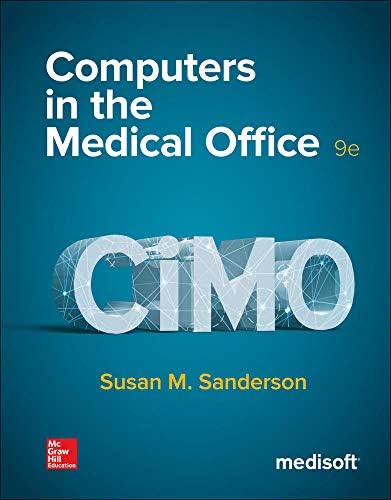
Computers in the Medical Office
| SELLER | SELLER SCORE | AMAZON FULFILLED | PRIME | FREE SHIPPING |
|---|---|---|---|---|
| Silver Arrow Bookstore | 7.76 | No | No | No |
Medical administrative students and healthcare professionals require a specialized technical foundation that general computer textbooks simply cannot provide. This McGraw-Hill Education resource serves as a critical bridge between standard IT literacy and the highly regulated, high-stakes environment of a modern clinic. While many guides focus on basic software, this text targets the specific workflows and digital precision necessary for managing patient data and office operations effectively. It is an essential investment for anyone looking to minimize errors in a clinical setting where data integrity is paramount. At a price point, it offers the kind of structured, professional guidance that turns a novice into a competent, tech-savvy medical office contributor.

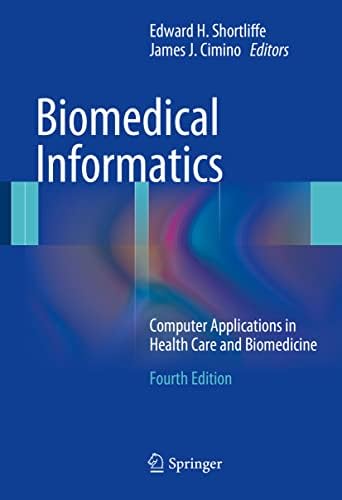
Biomedical Informatics: Computer Applications in Health Care and Biomedicine (Health Informatics)
| SELLER | SELLER SCORE | AMAZON FULFILLED | PRIME | FREE SHIPPING |
|---|---|---|---|---|
| Amazon.com | 9.68 | Yes | Yes | Yes |
Dense technical diagrams and complex data structures define the visual experience of diving into this Springer publication. This text serves as a foundational pillar for anyone serious about the intersection of computer science and clinical practice. Unlike many surface-level guides, this volume digs deep into how computational tools actually function within the high-stakes environment of modern healthcare and biomedicine. It is a heavy-duty resource that demands focus, but the depth of coverage makes it an essential addition to a professional or academic library. Whether you are navigating the nuances of health informatics or exploring broader biomedical applications, the clarity of the Springer editorial standard shines through every chapter.

Practical Imaging Informatics: Foundations and Applications for Medical Imaging
| SELLER | SELLER SCORE | AMAZON FULFILLED | PRIME | FREE SHIPPING |
|---|---|---|---|---|
| Amazon.com | 9.68 | Yes | Yes | Yes |
Medical imaging is often viewed through a purely clinical lens, yet the invisible architecture of informatics is what actually keeps modern diagnostics running. Practical Imaging Informatics: Foundations and Applications for Medical Imaging serves as a vital bridge for anyone looking to understand the complex data workflows behind the scans. Rather than getting bogged down in abstract theory, this text focuses on the functional intersection of technology and patient care. It is a specialized resource that demands attention if you want to move beyond basic hardware knowledge and into the actual logic of digital imaging systems. At a price point, it offers a focused deep dive into the foundational structures that support high-stakes medical environments.

Clinical Applications of Digital Dental Technology
| SELLER | SELLER SCORE | AMAZON FULFILLED | PRIME | FREE SHIPPING |
|---|---|---|---|---|
| Amazon.com | 9.68 | Yes | Yes | Yes |
Modern dentistry demands precision that outdated, analog methods simply cannot match. Clinical Applications of Digital Dental Technology serves as a vital bridge for practitioners looking to move beyond traditional workflows into a more streamlined, tech-driven era. While many dental professionals might settle for standard manual techniques, this text provides the necessary deep dive into how digital integration actually functions in a real-world clinical setting. It is an investment in professional evolution, offering a structured look at the tools shaping the future of oral healthcare. It is clearly positioned as a serious academic or professional resource for those committed to staying at the forefront of their field.

AI and ChatGPT Applications in Healthcare: Opportunities and Challenges: AI and ChatGPT in Healthcare: Revolutionizing Medicine and Wellness
| SELLER | SELLER SCORE | AMAZON FULFILLED | PRIME | FREE SHIPPING |
|---|---|---|---|---|
| Amazon.com Services LLC | 0.00 | No | No | No |
This digital guide stands as a definitive resource for medical professionals and tech enthusiasts navigating the intersection of artificial intelligence and modern medicine. It tackles the massive shift occurring in wellness and clinical practices by diving deep into how tools like ChatGPT are actually reshaping patient care. Rather than just skimming the surface, the text explores the complex tension between revolutionary opportunities and the very real ethical challenges inherent in automated healthcare. It is a dense, informative read that feels essential for anyone trying to understand how large language models will impact the future of diagnostics and wellness management. If you are looking to stay ahead of the curve in the digital health revolution, this download is a smart investment for your professional library.
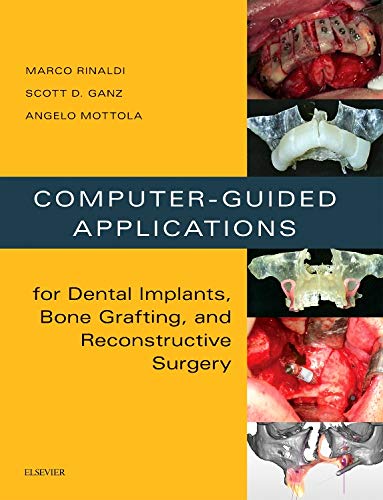

Computer-Guided Applications for Dental Implants, Bone Grafting, and Reconstructive Surgery (adapted translation)
| SELLER | SELLER SCORE | AMAZON FULFILLED | PRIME | FREE SHIPPING |
|---|---|---|---|---|
| Basi6 International | 9.60 | No | No | No |
A dental surgeon stares at a complex 3D radiographic scan, needing to bridge the gap between digital planning and precise physical execution. This Elsevier publication serves as that critical bridge, offering an adapted translation of essential protocols for implantology and reconstructive procedures. Instead of relying on guesswork, the text provides a structured framework for navigating bone grafting and computer-guided applications with clinical confidence. It is a heavy-duty resource designed for the high-stakes environment of a surgical suite where accuracy is non-negotiable. While the price point reflects its specialized professional nature, the depth of technical guidance makes it an indispensable asset for practitioners looking to master modern, digitally-driven restorative workflows.

Testing and Validation of Computer Simulation Models: Principles, Methods and Applications (Simulation Foundations, Methods and Applications)
| SELLER | SELLER SCORE | AMAZON FULFILLED | PRIME | FREE SHIPPING |
|---|---|---|---|---|
| Amazon.com | 9.68 | Yes | Yes | Yes |
How can you truly trust a digital model when the stakes of a simulation error are so high? This Springer publication, Testing and Validation of Computer Simulation Models, addresses that exact anxiety by bridging the gap between theoretical principles and practical application. It is a heavy hitter for anyone working in complex systems where accuracy isn't just a goal, but a requirement. Instead of just teaching you how to run a simulation, it dives deep into the rigorous methods needed to verify that your results actually reflect reality. It is an essential resource for engineers and researchers who need to move beyond guesswork and implement structured, scientific validation workflows into their existing modeling processes.
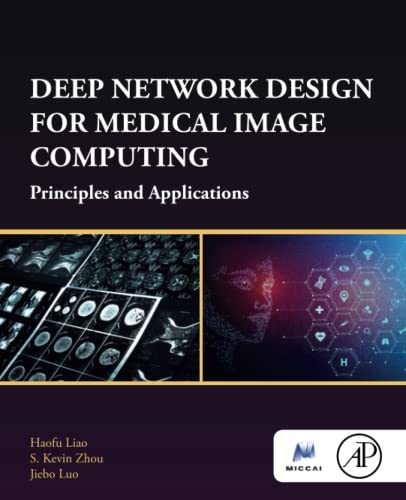

Deep Network Design for Medical Image Computing: Principles and Applications (The MICCAI Society book Series)
| SELLER | SELLER SCORE | AMAZON FULFILLED | PRIME | FREE SHIPPING |
|---|---|---|---|---|
| Amazon.com | 9.68 | Yes | Yes | Yes |
Deep Network Design for Medical Image Computing stands as a definitive technical pillar for anyone navigating the intersection of deep learning and clinical diagnostics. As part of the prestigious MICCAI Society book series, this volume bridges the gap between complex neural architecture and real-world medical applications. It is an essential resource for researchers and engineers who need to move beyond standard datasets and tackle the unique, high-stakes nuances of medical imaging. While the subject matter is undeniably dense, the structured approach to design principles makes it a vital tool for academic rigor. If you are looking to ground your understanding of how deep networks function within a healthcare context, this text provides the necessary theoretical and practical framework to succeed.

Health Care Evaluation Using Computer Simulation: Concepts, Methods, and Applications
| SELLER | SELLER SCORE | AMAZON FULFILLED | PRIME | FREE SHIPPING |
|---|---|---|---|---|
| Amazon.com | 9.68 | Yes | Yes | Yes |
A healthcare administrator sits staring at a complex bottleneck in emergency room patient flow, wondering how to optimize staffing without risking lives. This Springer publication provides the technical roadmap for solving exactly that kind of high-stakes operational puzzle. Rather than relying on guesswork, the text dives into the core concepts and methodologies required to build robust computer simulations for medical environments. Since this is a used copy in good condition, you are getting a heavy-hitting academic resource at a professional level without the brand-new price tag. It serves as a vital bridge between theoretical modeling and practical, real-world healthcare applications, making it an essential desk reference for anyone serious about systems engineering in medicine.

Processing of Hyperspectral Medical Images: Applications in Dermatology Using Matlab® (Studies in Computational Intelligence, 682)
| SELLER | SELLER SCORE | AMAZON FULFILLED | PRIME | FREE SHIPPING |
|---|---|---|---|---|
| Amazon.com | 9.68 | Yes | Yes | Yes |
Bridging the gap between complex spectral data and practical dermatological diagnosis requires a highly specialized technical roadmap. This Springer publication serves as that exact bridge, offering a deep dive into hyperspectral imaging through the lens of Matlab software. Instead of wading through abstract theory, you get a focused look at how computational intelligence can actually be applied to skin health analysis. It is a dense, academic resource, but for researchers or clinicians working at the intersection of computer science and medicine, it provides the specific algorithmic frameworks needed to turn raw image data into actionable diagnostic insights. It turns a daunting mathematical challenge into a structured, programmable workflow.

Computational Hemodynamics – Theory, Modelling and Applications (Biological and Medical Physics, Biomedical Engineering)
| SELLER | SELLER SCORE | AMAZON FULFILLED | PRIME | FREE SHIPPING |
|---|---|---|---|---|
| Amazon.com | 9.68 | Yes | Yes | Yes |
After weeks of diving into complex fluid dynamics, I finally realized how essential this Springer publication is for anyone serious about biomedical engineering. Computational Hemodynamics bridges the gap between abstract theory and practical medical applications, making it a cornerstone for researchers studying blood flow modeling. The text navigates the intricate intersection of biological physics and mathematical modeling with a level of precision that is rare in academic literature. It isn't just a textbook. It is a deep dive into the mechanics of life itself. While the subject matter is undeniably dense, the structured approach to modeling helps demystify the complexities of hemodynamic behavior, making it a vital resource for advanced students and professionals alike.

Handbook of Behavior Modification with the Mentally Retarded (Computer Applications in the Earth Sciences)
| SELLER | SELLER SCORE | AMAZON FULFILLED | PRIME | FREE SHIPPING |
|---|---|---|---|---|
| Amazon.com | 9.68 | Yes | Yes | Yes |
How can practitioners effectively implement behavioral strategies for individuals with intellectual disabilities? This Springer publication serves as a specialized resource for those navigating the complexities of behavioral modification. While the title reflects the historical terminology used during its era of publication, the core focus remains on the systematic application of behavioral principles. It functions as a technical guide for professionals looking to understand structured interventions. Even though it sits within a niche academic category, the depth of subject matter provides a foundational look at clinical methodologies. It is a sturdy addition to a specialized library for anyone studying the evolution of behavioral science and its practical applications in developmental care.
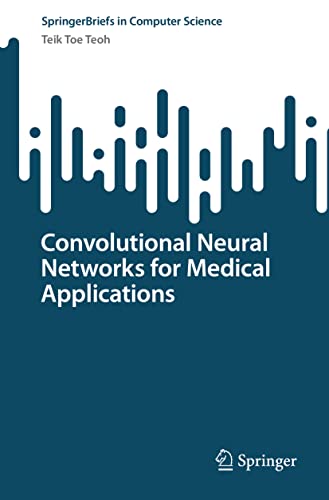
Convolutional Neural Networks for Medical Applications (SpringerBriefs in Computer Science)
| SELLER | SELLER SCORE | AMAZON FULFILLED | PRIME | FREE SHIPPING |
|---|---|---|---|---|
| Amazon.com | 9.68 | Yes | Yes | Yes |
This technical volume serves as a vital bridge between deep learning theory and practical clinical implementation for researchers and engineers. As part of the SpringerBriefs in Computer Science series, it distills complex architectural concepts into a focused format that makes sense for the high-stakes world of medical imaging and diagnostics. You won't find any fluff here. Instead, the text dives straight into how convolutional layers can be optimized to detect pathologies and interpret biological data. At a price point, it offers a remarkably accessible entry into a highly specialized niche, making it a solid addition to any professional library looking to master the intersection of AI and healthcare.

The primary differentiator in semantic applications is the depth of their underlying medical knowledge base. A basic application might recognize keywords, but a true semantic engine understands that 'myocardial infarction' and 'heart attack' are synonymous, and that a 'left ventricular ejection fraction' is a specific metric related to cardiac function. When evaluating software, determine whether the system utilizes standardized medical ontologies such as SNOMED CT, LOINC, or ICD-10. A high-quality application should be able to map unstructured text to these controlled vocabularies automatically, allowing for seamless integration with Electronic Health Records (EHR) and facilitating complex longitudinal studies.
Medical language is notoriously ambiguous. A term like 'discharge' can refer to a bodily fluid or the act of releasing a patient from a hospital. Your chosen application must possess sophisticated disambiguation capabilities. Look for tools that utilize context-aware algorithms to differentiate between a patient's history (e.g., 'history of diabetes') and a current acute condition. The ability to distinguish between negation (e.g., 'patient denies chest pain') and affirmation is critical. A failure in semantic negation detection can lead to catastrophic errors in automated clinical decision support.
A semantic application is only as useful as its ability to ingest and export data within your existing ecosystem. Prioritize solutions that support HL7 FHIR (Fast Healthcare Interoperability Resources) standards. The application should act as a bridge, transforming messy, unstructured clinical narratives into structured, machine-readable data that can be utilized by downstream analytics engines or population health management tools. Evaluate how the software handles diverse data types, including structured lab results, semi-structured radiology reports, and completely unstructured physician progress notes.
In a clinical setting, latency can impede workflow. If the application is being used for real-time clinical decision support, the semantic processing must occur in near real-time. Conversely, if the tool is intended for large-scale retrospective research, the priority shifts to high-throughput processing capabilities. Consider the computational overhead required to run the semantic models. Does the application require massive on-premise GPU clusters, or is it optimized for efficient cloud-based processing? Understanding the infrastructure requirements is essential for calculating the true Total Cost of Ownership (TCO).
Because these applications process Protected Health Information (PHI), rigorous adherence to HIPAA and other regional data privacy regulations is non-negotiable. Beyond encryption, look for 'semantic provenance'—the ability of the software to show its work. If the system flags a patient as high-risk for sepsis, a clinician must be able to trace that conclusion back to the specific semantic tokens and clinical evidence within the raw text. This transparency is vital for clinical trust and regulatory auditing.
Quick answers about Medical Computer Applications before you buy.
Share of top-ranked products by brand, from our editorial analysis.
We've carried out a comprehensive analysis of 277 reviews on Medical Computer Applications, using our selection criteria to identify the best options in the categories. Our findings reveal that most customers typically select Medical Computer Applications priced around $104.94, with top brands including springer and elsevier and mcgraw-hill education.
Our team of expert editors reviewed these high-quality items and handpicked the top 13 Medical Computer Applications for your consideration. We've also done extensive research on numerous sellers, identifying the best ones in the categories category — including amazon.com, basi6 international and amazon.com services llc and silver arrow bookstore.
We are dedicated to assisting our users in finding the right semantics Products based on their needs, saving them considerable time when choosing which Medical Computer Applications to buy. We take pride in the number of satisfied users we've helped through our thorough and insightful reviews.
Compare the top 13 picks at a glance — select a column to sort.