#TOP1

In the realm of high-performance computing and software architecture, memory management algorithms are the invisible architects of system stability. Whether you are designing a custom operating system, optimizing a database engine, or fine-tuning a real-time embedded system, the way your software handles allocation, deallocation, and fragmentation determines whether your application scales gracefully or crashes under load. Choosing the right algorithmic approach is not a one-size-fits-all decision. It requires a deep understanding of your workload's temporal and spatial locality.
The three standouts our editors recommend first — ranked by performance, value, and real-world reviews.


| SELLER | SELLER SCORE | AMAZON FULFILLED | PRIME | FREE SHIPPING |
|---|---|---|---|---|
| Amazon.com | 9.68 | Yes | Yes | Yes |

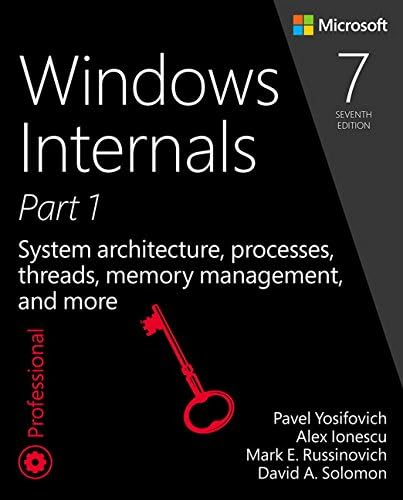
Windows Internals: System architecture, processes, threads, memory management, and more, Part 1 (Developer Reference)
| SELLER | SELLER SCORE | AMAZON FULFILLED | PRIME | FREE SHIPPING |
|---|---|---|---|---|
| Amazon.com | 9.68 | Yes | Yes | Yes |
Low-level systems engineers and kernel developers cannot afford to work without this definitive technical blueprint. Windows Internals serves as the ultimate deep dive into the engine room of the operating system, stripping away the abstraction layers that most developers take for granted. I found that the breakdown of system architecture, process management, and thread execution provides the exact level of granular detail required for high-stakes debugging and optimization. It isn't just a casual read. It is a rigorous professional resource that covers everything from memory management to the core mechanics of how the OS actually breathes. If you want to move past being a user and start understanding the actual logic driving the hardware, this is your roadmap.

Understanding and Using C Pointers: Core Techniques for Memory Management
| SELLER | SELLER SCORE | AMAZON FULFILLED | PRIME | FREE SHIPPING |
|---|---|---|---|---|
| Amazon.com | 9.68 | Yes | Yes | Yes |
Low-level programming is a nightmare for anyone who hasn't mastered the art of memory manipulation, making this O'Reilly Media guide an absolute necessity for serious C developers. This book cuts straight through the complexity of pointer logic to provide the core techniques required for efficient memory management. Since this specific copy is a used book in good condition, you are getting a high-value technical resource without the premium price tag of a brand-new edition. It serves as a vital roadmap for navigating the often-treacherous waters of manual memory allocation. Whether you are debugging a memory leak or optimizing system performance, the foundational concepts presented here are indispensable for your professional toolkit.

| SELLER | SELLER SCORE | AMAZON FULFILLED | PRIME | FREE SHIPPING |
|---|---|---|---|---|
| ayvax | 9.89 | Yes | Yes | Yes |


| SELLER | SELLER SCORE | AMAZON FULFILLED | PRIME | FREE SHIPPING |
|---|---|---|---|---|
| ayvax | 9.89 | Yes | Yes | Yes |


| SELLER | SELLER SCORE | AMAZON FULFILLED | PRIME | FREE SHIPPING |
|---|---|---|---|---|
| allnewbooks | 9.66 | No | No | No |

Organisational structure: Making strategy happen
| SELLER | SELLER SCORE | AMAZON FULFILLED | PRIME | FREE SHIPPING |
|---|---|---|---|---|
| Amazon.com Services LLC | 0.00 | No | No | No |
Most leaders settle for chaotic workflows and reactive management, but this digital guide offers a blueprint for intentional alignment. Instead of letting your long-term goals wither due to poor communication or misaligned roles, this ebook dives into the mechanics of how structure actually drives execution. It is a practical resource for anyone tired of seeing great ideas stall because the underlying framework is broken. For under ten dollars, you get immediate access to insights that bridge the gap between high-level vision and daily operations. It is an essential download if you want to stop firefighting and start building a scalable, strategic foundation for your team.


Memory Management Algorithms And Implementation In C/C++ (Windows Programming/Development)
| SELLER | SELLER SCORE | AMAZON FULFILLED | PRIME | FREE SHIPPING |
|---|---|---|---|---|
| sweethomeliquid2 | 9.85 | No | No | No |
Manual memory management in C and C++ is a notorious source of leaks and system instability for developers working in Windows environments. This Jones Bartlett Learning text tackles that complexity head-on by bridging the gap between theoretical algorithms and practical, hands-on implementation. Since this is a used copy in good condition, it serves as a highly cost-effective resource for students or engineers needing to master low-level resource allocation. Instead of just reading about theory, you are looking at how these processes actually function within the development lifecycle. It is a dense, technical deep dive that turns the daunting task of managing heap and stack memory into a structured, manageable skill set for any serious programmer.

| SELLER | SELLER SCORE | AMAZON FULFILLED | PRIME | FREE SHIPPING |
|---|---|---|---|---|
| Amazon.com | 9.68 | Yes | Yes | Yes |

The first decision factor is determining whether your workload favors speed or space. Allocation algorithms generally fall into two camps: those optimized for low latency and those optimized for high memory density. If you are working in high-frequency trading or real-time signal processing, you need algorithms like Fixed-Size Block Allocation or Buddy Systems. These minimize the computational overhead of finding a free block, ensuring predictable execution times. However, these often lead to internal fragmentation. Conversely, if you are working in memory-constrained environments like IoT devices, you should look for Best-Fit or First-Fit strategies that prioritize packing data tightly, even if the search time for a free block is higher.
A critical component of any memory management logic is how it handles fragmentation. External fragmentation occurs when free memory is broken into small, non-contiguous holes that are collectively large enough to satisfy a request but individually too small. To combat this, look for algorithms that support Compaction or Paging. Paging allows the system to map non-contiguous physical memory into a contiguous virtual address space, effectively eliminating external fragmentation at the cost of hardware complexity (the MMU). Internal fragmentation, on the other hand, occurs when you allocate more memory than requested. If your application frequently requests wildly different object sizes, avoid rigid slab allocators and instead look for Segregated Free Lists that categorize memory blocks by size classes.
When selecting an algorithmic framework for higher-level languages, you must decide between deterministic manual management and non-deterministic garbage collection (GC). If your application requires strict real-time guarantees, avoid standard generational GC, as the 'stop-the-world' pauses can be catastrophic. Instead, look for Reference Counting algorithms or Incremental/Concurrent Garbage Collection. These allow the system to reclaim memory in small bursts or alongside the main execution thread, preventing long latency spikes. For systems where predictability is king, manual memory management via custom pool allocators is often the superior choice.
Modern memory management cannot ignore the CPU cache hierarchy. An algorithm that is mathematically efficient but ignores spatial locality will suffer from constant cache misses, dragging down performance. When evaluating an algorithm, consider how it organizes data. Cache-oblivious algorithms are designed to perform well regardless of the specific cache sizes of the hardware, making them excellent for portable software. Look for strategies that promote contiguous data placement, ensuring that when one piece of data is fetched, its neighbors are brought into the cache simultaneously, drastically reducing the effective memory access time.
Quick answers about Memory Management before you buy.
Share of top-ranked products by brand, from our editorial analysis.
We've carried out a comprehensive analysis of 201 reviews on Memory Management, using our selection criteria to identify the best options in the computers & technology. Our findings reveal that most customers typically select Memory Management priced around $32.49, with top brands including apress, o'reilly media, chapman and hall/crc, tck publishing and brand: jones bartlett learning and microsoft press.
Our team of expert editors reviewed these high-quality items and handpicked the top 9 Memory Management for your consideration. We've also done extensive research on numerous sellers, identifying the best ones in the computers & technology category — including amazon.com services llc, ayvax, amazon.com and allnewbooks and sweethomeliquid2.
We are dedicated to assisting our users in finding the right algorithms Products based on their needs, saving them considerable time when choosing which Memory Management to buy. We take pride in the number of satisfied users we've helped through our thorough and insightful reviews.
Compare the top 9 picks at a glance — select a column to sort.


