Prioritize Material Composition and Breathability
The foundation of a premium calf sock lies in its fiber blend. For professional environments, you want a balance between natural fibers and synthetic reinforcement. Cotton blends are the industry standard because they offer superior moisture absorption, keeping your feet dry during long hours in leather dress shoes. However, look for blends that incorporate a small percentage of elastane or spandex. This is crucial for calf-length socks. Without these elastic fibers, the sock will lose its shape and begin to bunch around the ankle after only a few hours of wear. If you are looking for a luxury feel, higher-quality mercerized cotton provides a slight sheen that complements polished oxfords and loafers.
Understanding the Compression and Stay-Up Factor
The defining characteristic of a true calf sock is its ability to remain taut against the lower leg. When evaluating options, consider the 'stay-up' technology. This isn't about medical-grade compression, but rather a targeted elastic band located just below the calf muscle. A well-constructed sock will provide enough tension to resist gravity without being so tight that it restricts circulation or leaves deep indentations on your skin. If you have particularly muscular calves, look for socks that emphasize stretch recovery, ensuring the fabric expands to fit your shape and then snaps back to its original tension rather than sagging.
Color Coordination and Pattern Versatility
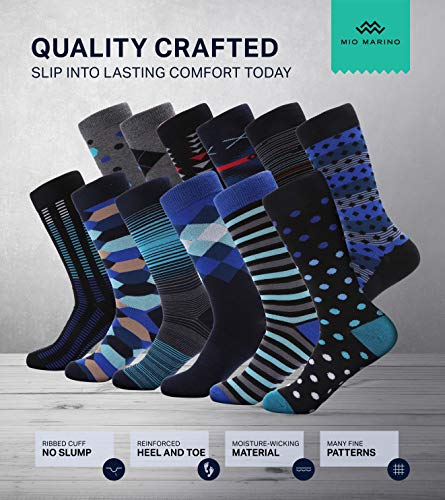
In men's formalwear, your socks serve one of two purposes: they either blend in or they make a statement. For a conservative corporate environment, stick to the 'continuity rule.' This means choosing sock colors that closely match your trousers rather than your shoes. For example, navy trousers should be paired with navy socks to create a visual extension of the leg. If you want to introduce personality, subtle patterns like argyle, herringbone, or fine stripes can add texture to an outfit. The key is to ensure the scale of the pattern is appropriate. Oversized patterns can look too casual, whereas micro-patterns maintain a professional demeanor.
Durability and Construction Details
A high-quality sock is defined by its construction at the stress points. Pay close attention to the toe seam. A 'hand-linked' or seamless toe construction is the gold standard, as it eliminates the bulky ridge that can cause irritation inside tight-fitting dress shoes. Additionally, check the heel reinforcement. Because calf socks are subject to more tension than standard socks, a reinforced heel prevents premature thinning and holes. A sturdy cuff is also essential. It should be thick enough to hold its position but soft enough to avoid irritation against the skin.
Summary Recommendation Logic
To make the best decision, follow this hierarchy: First, select your primary color based on your most frequent trouser colors. Second, prioritize cotton-elastane blends for the best balance of comfort and longevity. Finally, verify that the product description specifically mentions a reinforced cuff or stay-up fit to ensure you are getting a true calf-length experience rather than a standard crew sock that has simply been marketed as longer.