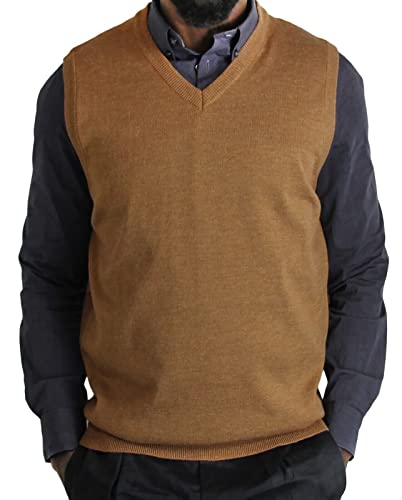
Prioritize Fiber Composition for Longevity
The most critical decision you will make is the material. Because sweater vests are often worn close to the body, breathability and shape retention are paramount. For a premium feel that offers natural temperature regulation, look for Merino wool. It is fine-gauge, meaning it won't look overly chunky under a blazer, and it resists odors effectively. If you are aiming for a more rugged, heritage look, a cotton-blend vest provides a matte finish that works well with denim. Avoid high percentages of synthetic acrylic if possible. While they are budget-friendly, they tend to pill quickly around the armholes and lose their structure after a few washes, leading to a saggy silhouette.
Evaluate Knit Patterns and Textures
The visual weight of your vest depends entirely on the knit pattern. A fine-gauge, smooth knit is the most versatile option, making it suitable for professional environments where it can be layered under a suit jacket. If you want to lean into the 'blue ocean' aesthetic—often characterized by maritime or coastal vibes—look for cable knits or textured weaves. A cable-knit vest adds significant visual interest and depth, making it a standalone piece that works perfectly over a simple polo or a crisp Oxford shirt. Remember: the heavier the texture, the more casual the garment becomes. A chunky fisherman-style knit is excellent for outdoor autumn settings but may look out of place in a formal boardroom.
Mastering the Fit and Silhouette
A sweater vest lives or dies by its fit. The most common mistake is choosing a vest that is too large, which results in excess fabric bunching around the waist and making the wearer appear shorter. Ideally, the armholes should sit close to your natural shoulder line without restricting movement. The hem should hit just below your belt line. If it is too long, it will create unsightly folds when tucked or untucked. For a modern, streamlined look, seek out a 'slim fit' or 'tailored fit' that follows the contours of the torso. If you prefer a more relaxed, academic style, a slightly looser fit can work, provided the shoulder seams remain crisp.
Color Coordination and Versatility
While the category focuses on blue ocean tones, not all blues are created equal. Navy is the most versatile, acting as a neutral that pairs seamlessly with khaki, grey, or white trousers. Lighter shades like cerulean or sky blue are more seasonal and work best in spring and summer settings. When selecting a color, consider your existing wardrobe: if you own many light-colored shirts, a darker navy vest will provide necessary contrast. If you prefer a monochromatic look, choose a vest that is a few shades darker or lighter than your shirt to create depth without clashing.