#TOP1

Microwave electrical engineering represents a specialized intersection of high-frequency electromagnetic theory, circuit design, and power management. Whether you are sourcing components for a laboratory-grade signal generator, designing RF shielding for telecommunications, or developing high-frequency microwave ovens, understanding the underlying physics and hardware specifications is critical. This guide is designed for engineers and procurement specialists who require precision-grade electronics that can handle gigahertz-range frequencies without signal degradation or thermal instability.
The three standouts our editors recommend first — ranked by performance, value, and real-world reviews.

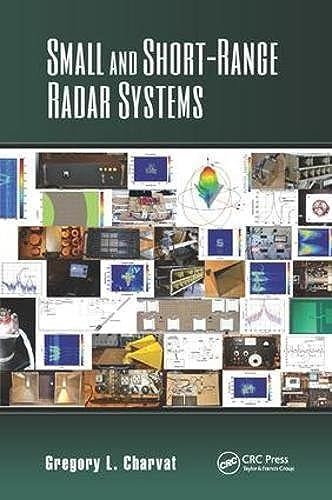

Electrical engineering without prior knowledge : Understand the basics within 7 days (Become an Engineer Without Prior Knowledge)
| SELLER | SELLER SCORE | AMAZON FULFILLED | PRIME | FREE SHIPPING |
|---|---|---|---|---|
| Amazon.com Services LLC | 0.00 | No | No | No |
This digital ebook serves as a high-speed entry point into the world of circuitry, offering a surprisingly condensed roadmap for absolute beginners. Instead of getting bogged down in years of academic theory, the guide focuses on a rapid seven-day learning structure designed to demystify complex concepts quickly. It feels like a pragmatic crash course for anyone who needs to grasp the fundamentals of electrical engineering without the daunting overhead of a full degree. At just under ten dollars, the value proposition is clear for hobbyists or students looking for a quick conceptual foundation. While it is clearly an introductory resource rather than an exhaustive technical manual, its ability to transform zero prior knowledge into basic literacy in a single week is its strongest selling point.

| SELLER | SELLER SCORE | AMAZON FULFILLED | PRIME | FREE SHIPPING |
|---|---|---|---|---|
| HPB-Red | 9.91 | No | No | No |

| SELLER | SELLER SCORE | AMAZON FULFILLED | PRIME | FREE SHIPPING |
|---|---|---|---|---|
| Amazon.com | 9.68 | Yes | Yes | Yes |

| SELLER | SELLER SCORE | AMAZON FULFILLED | PRIME | FREE SHIPPING |
|---|---|---|---|---|
| Amazon.com | 9.68 | Yes | Yes | Yes |
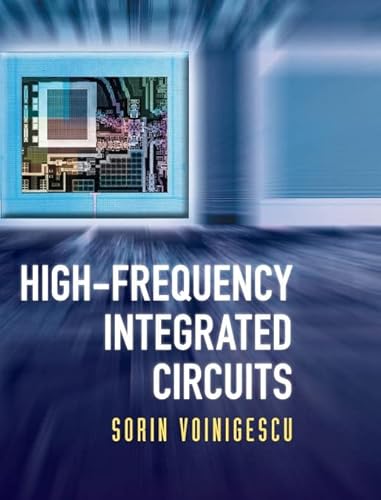
High-Frequency Integrated Circuits (The Cambridge RF and Microwave Engineering Series)
| SELLER | SELLER SCORE | AMAZON FULFILLED | PRIME | FREE SHIPPING |
|---|---|---|---|---|
| Amazon.com | 9.68 | Yes | Yes | Yes |
RF and microwave engineers working on next-generation semiconductor design require this specific text to bridge the gap between theoretical physics and practical circuit application. As part of the prestigious Cambridge RF and Microwave Engineering Series, this volume serves as a rigorous technical roadmap for anyone navigating the complexities of high-frequency signals. Because this is a used copy in good condition, you are getting a heavy-hitting academic resource without the brand-new textbook price tag. It is the kind of deep-dive material that stays on your desk for years rather than just one semester. Whether you are tackling advanced coursework or refining professional design workflows, the technical depth provided by Cambridge University Press is indispensable for mastering integrated circuit architecture.

| SELLER | SELLER SCORE | AMAZON FULFILLED | PRIME | FREE SHIPPING |
|---|---|---|---|---|
| ---SuperBookDeals | 9.72 | No | No | No |

| SELLER | SELLER SCORE | AMAZON FULFILLED | PRIME | FREE SHIPPING |
|---|---|---|---|---|
| Book Depository US | 9.95 | No | No | No |

| SELLER | SELLER SCORE | AMAZON FULFILLED | PRIME | FREE SHIPPING |
|---|---|---|---|---|
| Amazon.com | 9.68 | Yes | Yes | Yes |

| SELLER | SELLER SCORE | AMAZON FULFILLED | PRIME | FREE SHIPPING |
|---|---|---|---|---|
| Amazon.com | 9.68 | Yes | Yes | Yes |

| SELLER | SELLER SCORE | AMAZON FULFILLED | PRIME | FREE SHIPPING |
|---|---|---|---|---|
| Amazon.com | 9.68 | Yes | Yes | Yes |

The most fundamental decision factor in microwave electronics is the operating frequency. Unlike standard low-frequency electronics, microwave components must be rated for specific bands, such as S-band, X-band, or Ka-band. When selecting components, you must look beyond the nominal frequency and evaluate the fractional bandwidth. A component that operates effectively only within a narrow window may lead to signal attenuation or impedance mismatch if your application requires frequency hopping or wideband modulation. Always verify the S-parameters (specifically S11 and S21) to ensure the component maintains signal integrity and minimal return loss across your intended operating spectrum.
In the microwave domain, traces on a PCB act as transmission lines rather than simple wires. Therefore, impedance matching is paramount. When purchasing microwave-grade substrates or connectors, ensure they are designed for a standard characteristic impedance (typically 50 ohms). Any mismatch between your source, the component, and the load will cause standing waves, leading to power loss and potential damage to sensitive semiconductor devices. Look for components that offer high precision in their dielectric constant and low loss tangents to minimize signal dissipation in the substrate.
Microwave engineering often involves high energy densities concentrated in very small physical volumes. This creates significant thermal challenges. When selecting amplifiers, oscillators, or waveguides, you must assess the maximum peak power and continuous wave (CW) power ratings. A component might perform perfectly at low power but fail catastrophically due to thermal runaway when driven at its limit. Prioritize electronics that feature advanced heat dissipation architectures, such as integrated heat sinks, ceramic packaging, or specialized thermal interface materials, to ensure long-term reliability under high-duty cycles.
The physical interface is just as important as the electrical performance. In microwave engineering, standard connectors like SMA, K, or 2.92mm are used to maintain signal continuity. You must match the connector type to your frequency requirements. For example, while an SMA connector is versatile, it may introduce excessive loss at millimeter-wave frequencies where a precision-machined connector would be required. Ensure that all interconnects are rated for the specific frequency range and that the mechanical tolerances are tight enough to prevent phase noise and signal leakage.
Our recommendation logic follows a hierarchy of needs: first, define the frequency band. Second, establish the power requirements. Third, validate the impedance stability. For research and development, prioritize modular components that allow for easy testing and reconfiguration. For integrated production environments, focus on surface-mount microwave components that offer high repeatability and low parasitic inductance. Always prioritize components with documented, peer-reviewed data sheets that provide comprehensive sweep plots rather than single-point measurements.
Quick answers about Microwave Electrical Engineering before you buy.
Share of top-ranked products by brand, from our editorial analysis.
We've carried out a comprehensive analysis of 267 reviews on Microwave Electrical Engineering, using our selection criteria to identify the best options in the categories. Our findings reveal that most customers typically select Microwave Electrical Engineering priced around $90.06.
Our team of expert editors reviewed these high-quality items and handpicked the top 10 Microwave Electrical Engineering for your consideration..
We are dedicated to assisting our users in finding the right electronics Products based on their needs, saving them considerable time when choosing which Microwave Electrical Engineering to buy. We take pride in the number of satisfied users we've helped through our thorough and insightful reviews.
Compare the top 10 picks at a glance — select a column to sort.


