Understanding the Scale and Range
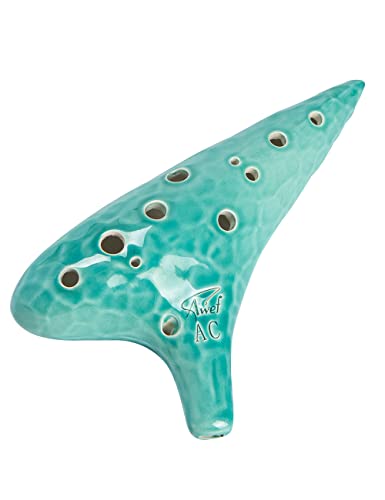
The most critical decision you will make is choosing the right key. Most players begin with a 12-hole alto ocarina, typically tuned to the key of C. This is the industry standard for a reason: it provides a comfortable range that covers most folk melodies and allows for easy access to sheet music designed for beginner and intermediate players. However, if you are looking for a deeper, more resonant tone, you might explore bass ocarinas. Conversely, soprano models offer a brighter, more piercing sound that excels in high-register melodies. Before purchasing, consider your vocal range and the types of songs you intend to play. A 12-hole alto is the most versatile starting point for anyone serious about the instrument.
Material Matters: Ceramic vs. Plastic
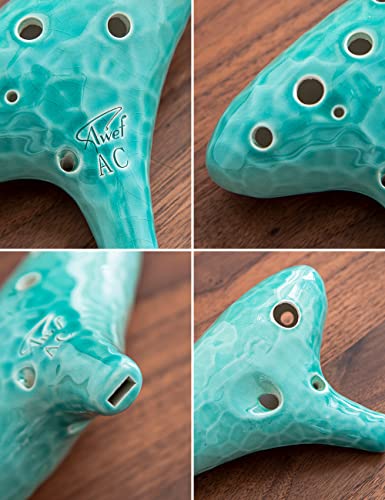
The material of your ocarina dictates both its durability and its tonal color. Ceramic ocarinas—often made from high-fired clay or porcelain—are the gold standard for serious musicians. They provide a rich, warm, and complex timbre that plastic simply cannot replicate. The density of the ceramic helps stabilize the pitch and adds a certain 'soul' to the notes. However, ceramic is fragile and can crack if dropped. If you are a traveling musician or a beginner prone to accidents, a high-quality resin or polymer ocarina is a practical alternative. While resin models may lack the acoustic depth of clay, modern manufacturing has significantly closed the gap, offering instruments that are much more forgiving and easier to maintain.
Finger Hole Placement and Ergonomics
An ocarina is an intimate instrument held close to the body, meaning ergonomics are vital. When browsing, look closely at the layout of the finger holes. Some designs use a traditional arrangement, while others employ an ergonomic layout designed to reduce hand strain during long practice sessions. If you have smaller hands, a compact alto may feel more natural. If you have larger hands, you may find yourself struggling with a tiny instrument. Pay attention to the 'feel' of the edges around the holes. They should be smooth and rounded to allow for seamless finger transitions and precise 'half-holing' techniques used to play chromatic notes.
Tuning Accuracy and Breath Control
A high-quality ocarina must be precisely tuned across its entire scale. A common issue with low-end models is 'pitch drift,' where the notes become sharp or flat as you move from the bottom to the top of the range. Look for instruments that emphasize stable intonation. Additionally, consider the 'response' of the instrument—how much breath pressure is required to trigger a clean note. A well-crafted ocarina should respond to subtle changes in air pressure, allowing for delicate vibrato and dynamic expression. If an instrument requires too much force to play, it will lead to fatigue and inconsistent pitch.
Final Recommendation Logic
To make your final choice, follow this hierarchy: First, decide on your skill level and select your material (Ceramic for tone, Resin for durability). Second, prioritize a 12-hole alto if you want the most musical versatility. Finally, if you have the opportunity to test the instrument, ensure the finger holes feel natural to your grip and that the pitch remains stable through the highest and lowest registers. By focusing on these acoustic and ergonomic pillars, you will secure an instrument that grows with you from your first scale to your most complex performance.