Understanding Paint Grades: Student vs. Professional
The most critical decision you will make is choosing between student-grade and professional-grade paints. Student-grade paints are designed to be budget-friendly, often using more fillers and less pigment. This results in a thinner consistency and colors that may appear 'chalky' or lose their vibrancy once dry. These are excellent for practice, color mixing experiments, and children. However, if you intend to sell your work or create pieces meant to last decades, professional-grade paints are non-negotiable. Professional paints have a much higher pigment load, meaning you need less paint to achieve deep, saturated colors, and they offer superior lightfastness—the ability of a color to resist fading over time.
Choosing Your Medium: Oil, Acrylic, or Watercolor
Your choice of medium will dictate every other supply you buy. Acrylics are favored for their versatility and fast drying times; they are water-soluble, making cleanup easy, but they can be difficult to blend once they set. Oils offer unparalleled blending capabilities and a rich, buttery texture, but they require solvents like turpentine or mineral spirits and a much longer drying period. Watercolors are prized for their transparency and luminosity, requiring specific heavy-weight papers to prevent warping. When choosing, consider your workspace: oils require ventilation due to fumes, while acrylics and watercolors are much more forgiving in small, domestic environments.
Substrates and Surfaces
A common mistake is pairing high-quality paint with low-quality surfaces. Your substrate—the surface you paint on—must be compatible with your medium. For oils, you need primed canvases or linen to prevent the oil from rotting the fibers. For acrylics, almost any primed surface works, from canvas to wood panels. For watercolors, the surface is everything; you must look for high-cotton content papers (rather than wood pulp) to ensure the paint absorbs and flows correctly. Look for 'acid-free' labels on all surfaces to prevent your artwork from yellowing or becoming brittle over time.
Brushes and Applicators
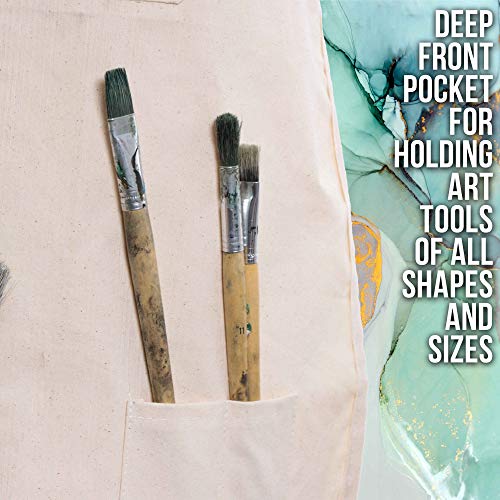
Brushes are the extension of your hand. Instead of buying large sets of cheap, synthetic brushes that shed hairs into your paint, it is often better to invest in a small selection of high-quality brushes. Synthetic brushes are excellent for acrylics because they can withstand the chemical nature of the paint. Natural hair brushes, such as sable or hog bristle, are preferred for oils and watercolors due to their superior ability to hold a specific amount of liquid and their unique 'spring' or snap. Consider the shape: 'rounds' are great for detail, 'flats' for coverage, and 'filberts' for a mix of both.
Essential Additives and Mediums
To truly master painting, you must look beyond the tubes of color. Mediums allow you to alter the behavior of your paint. For acrylics, gels can add texture or increase transparency. For oils, mediums can control drying time or create a glossy finish. Always ensure your mediums are chemically compatible with your specific brand of paint to avoid cracking or peeling. A well-thought-out kit includes not just the pigment, but the tools that manipulate its physics.