Material Composition and Weight Dynamics
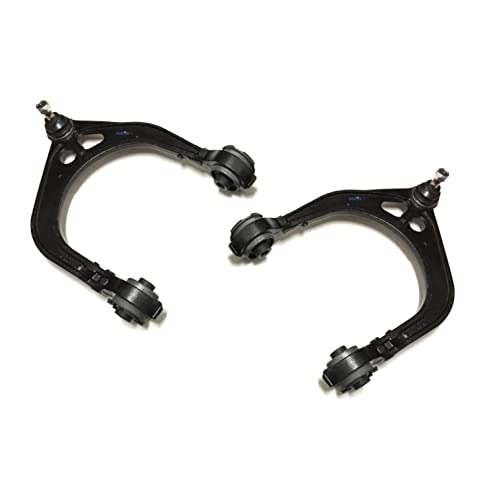
The first major decision factor in selecting performance control arms is the material. Most standard vehicles use stamped steel, which is heavy and prone to flexing under extreme stress. Performance enthusiasts typically look toward forged aluminum or high-strength chromoly steel. Forged aluminum arms are highly sought after in racing and track-day applications because they offer an incredible strength-to-weight ratio. Reducing unsprung weight—the weight not supported by the suspension springs—allows the suspension to react more quickly to bumps and changes in terrain, significantly improving mechanical grip. However, if your goal is maximum durability for heavy off-road use or high-torque drag racing, heavy-duty steel arms may be more appropriate due to their sheer structural resilience.
Bushings: Solid vs. Spherical vs. Polyurethane
The bushing is arguably the most important functional element of a control arm. It acts as the interface between the arm and the vehicle frame. You must choose based on your intended driving environment:
- Rubber Bushings: These provide the most comfort by absorbing road noise and vibration, but they tend to deflect under heavy cornering, leading to 'sloppy' steering.
- Polyurethane Bushings: A middle ground that offers much higher stiffness than rubber. They improve steering response and precision but will transmit more road vibration into the cabin.
- Spherical Bearings (Uniballs): Found in high-end race arms, these eliminate all deflection. They provide absolute precision in alignment, but they are noisy and require frequent maintenance or replacement.
If you are building a street-driven car, look for high-quality polyurethane. If you are building a dedicated track car, spherical bearings are the gold standard.
Adjustability and Alignment Correction
One of the primary reasons to upgrade to performance arms is the ability to correct camber and caster angles. When you lower a vehicle or change spring rates, the factory geometry is often thrown out of spec, leading to poor handling and rapid tire degradation. Performance arms often feature adjustable mounting points or eccentric bolts that allow a technician to dial in the exact alignment needed for your specific setup. When shopping, check if the arms are 'fixed' or 'adjustable.' For modified suspension setups, adjustable arms are almost always a necessity to ensure the tires maintain a flat contact patch with the road.
Ball Joint Integrity and Longevity
The control arm is only as strong as its weakest link, which is frequently the ball joint. High-performance arms should feature upgraded ball joints with heavy-duty housings and improved sealing to prevent grit and moisture from entering the joint. Look for designs that offer a greater range of motion without binding. If the arm uses a serviceable ball joint, it adds significant value, as you can replace the joint itself rather than the entire arm when wear eventually occurs.
Recommendation Logic
When making your final selection, categorize your vehicle's use case. For a daily driver seeking better responsiveness, prioritize forged aluminum arms with high-density polyurethane bushings. For a dedicated track machine, prioritize spherical bearing arms with adjustable geometry to maximize cornering speeds. For off-road/overland builds, prioritize heavy-duty steel construction with reinforced ball joints to withstand impact loads from rocks and uneven terrain.